

NVIDIA Expands Omniverse Blueprint for Factory-Scale Digital Twin Simulation
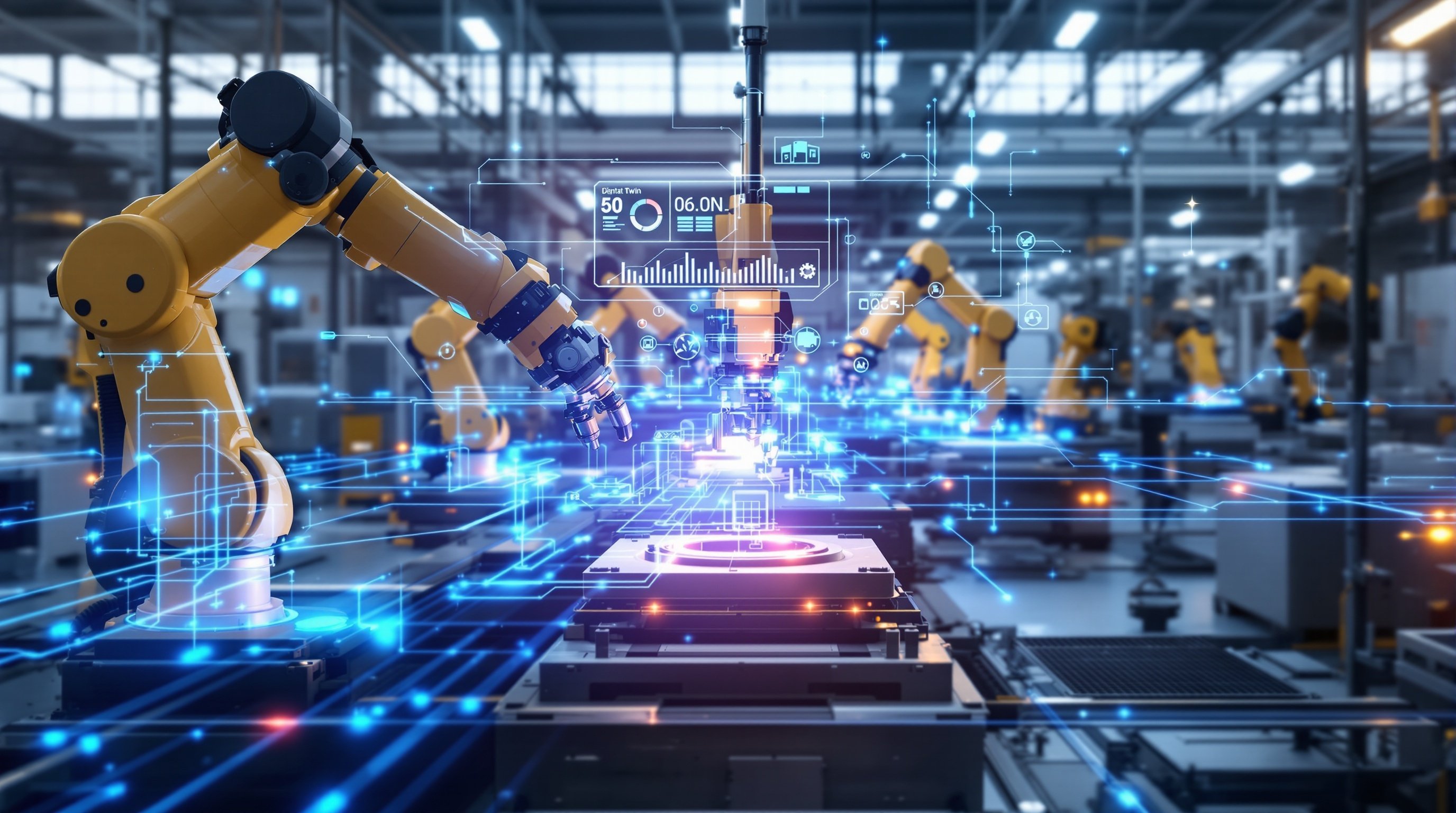
NVIDIA announced a transformative expansion of its "Mega" Omniverse Blueprint on October 28, 2025, extending the simulation platform's capabilities to support factory-scale digital twin development. The enhancement positions Omniverse as a comprehensive operating system for the industrial AI era, with immediate adoption by leading manufacturing and robotics companies across the United States.
Siemens Leads Digital Twin Integration
Siemens Digital Industries Software became the first company to develop digital twin software supporting the expanded Omniverse Blueprint. The technology stack, integrated into the Siemens Xcelerator platform, combines high-fidelity 3D models with live operational data streams to enable real-time factory simulation and optimization. This approach allows engineers to design, test, and refine manufacturing processes entirely within virtual environments before physical implementation.
FANUC and Foxconn Fii emerged as the first robot manufacturers to integrate OpenUSD-based digital twins of their robotic systems into the Omniverse framework. This standardization enables drag-and-drop functionality for robot model integration during factory design phases, significantly reducing configuration complexity and simulation setup time.

Industrial Adoption Accelerates
Several major U.S. manufacturers have deployed Omniverse for production optimization initiatives. Belden implemented Accenture's Physical AI Orchestrator with Omniverse to create virtual safety perimeters and AI-powered quality inspection systems operating in real time. Caterpillar leveraged the platform to construct comprehensive digital twins spanning both factory floors and supply chain networks, enabling predictive maintenance algorithms and automated workflow orchestration.
Semiconductor manufacturer TSMC and electronics producer Wistron adopted Omniverse for fabrication facility design, robotics optimization, and process validation workflows. Lucid Motors utilized the platform for dynamic factory layout planning and reinforcement learning-based robotics training, while Toyota integrated idealworks' iw.sim technology to evaluate automation scenarios across assembly operations.
Physical AI and Collaborative Robotics
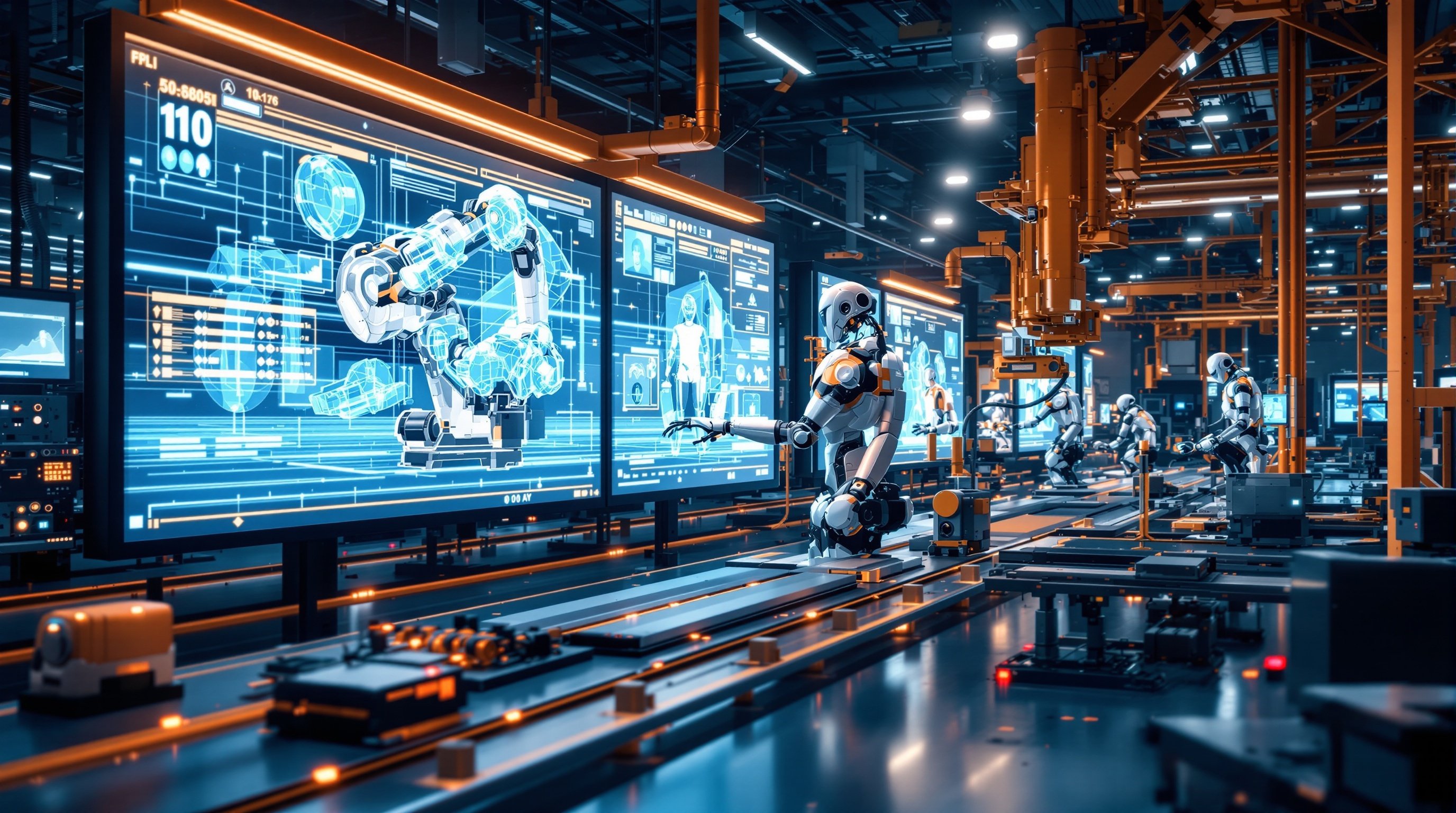
The announcement emphasized NVIDIA's three-computer architecture as the foundation for next-generation collaborative robots. Figure AI partnered with NVIDIA on humanoid robotics development using Isaac and Jetson AGX Thor platforms. Agility Robotics deployed Isaac Lab for reinforcement learning simulations of its Digit humanoid robot, enabling whole-body control refinement in complex manufacturing environments.
Amazon Robotics accelerated mobile robot development cycles using Omniverse simulation alongside Jetson edge computing platforms. Skild AI utilized Isaac Lab and NVIDIA Cosmos to train a general-purpose robotics foundation model capable of transferring learned behaviors across diverse physical tasks.
Technical Infrastructure
The expanded Omniverse Blueprint leverages NVIDIA IGX Thor for edge AI processing and integrates with Google Cloud and Microsoft Azure for scalable cloud-based simulation workloads. Both cloud providers launched RTX PRO 6000 Blackwell Server Edition GPUs optimized for industrial digital twin applications requiring high-throughput physics calculations and real-time rendering.
NVIDIA CEO Jensen Huang characterized the development as fundamental to America's reindustrialization efforts: "AI is transforming the world's factories into intelligent thinking machines—the engines of a new industrial revolution."
The platform's adoption reflects growing recognition that simulation-driven development can substantially compress manufacturing innovation cycles while reducing capital risk associated with physical prototyping and facility reconfiguration.
Further Reading:
NVIDIA Press Release
Siemens Xcelerator Platform
NVIDIA Omniverse