
Siemens Completes $10 Billion Acquisition of Altair Engineering, Creating Industry's Most Comprehensive AI-Powered Simulation Portfolio
Industry Consolidation Reshapes Simulation Software Landscape
In one of the most significant mergers in the simulation software industry's history, Siemens completed its acquisition of Altair Engineering Inc. on March 26, 2025, for an enterprise value of approximately $10 billion. This strategic move marks a pivotal moment in the evolution of industrial simulation and artificial intelligence capabilities, creating what industry analysts are calling the world's most comprehensive AI-powered design and simulation portfolio.
The Strategic Rationale Behind the Acquisition
The acquisition, first announced on October 30, 2024, represents Siemens' largest deal to date and a cornerstone of its "ONE Tech Company" program. Under the agreement, Altair stockholders received $113 per share in cash—a 19% premium over the company's closing price prior to merger speculation. The deal received unanimous approval from Altair's Board of Directors and was subsequently approved by stockholders on January 22, 2025.
Siemens' strategic intent centers on integrating Altair's computational intelligence capabilities into its Siemens Xcelerator platform. This integration aims to create an end-to-end solution spanning design, engineering, simulation, and manufacturing—all powered by advanced AI technologies. The combined entity will serve customers across automotive, aerospace, electronics, energy, and manufacturing sectors with unprecedented depth and breadth.

Complementary Technology Portfolios
Altair, founded in 1985 and headquartered in Troy, Michigan, brings formidable capabilities to the merger. The company's portfolio includes:
- Mechanical and electromagnetic simulation through its flagship HyperWorks suite
- High-performance computing (HPC) infrastructure and optimization tools
- Data science and AI platforms for predictive analytics
- Cloud-based simulation solutions for scalable computing
These capabilities complement Siemens' existing strengths in mechanical design automation, electronic design automation (EDA), and industrial automation. The combination addresses a critical industry need: making sophisticated simulation accessible to companies of all sizes while maintaining the high-fidelity modeling required for complex engineering challenges.
Enhanced Digital Twin Capabilities
One of the most significant outcomes of this merger is the enhancement of Siemens' Digital Twin technology. By incorporating Altair's simulation expertise, Siemens can now offer more comprehensive virtual prototyping capabilities that span multiple physics domains—structural mechanics, fluid dynamics, electromagnetics, and thermal analysis—within a unified environment.
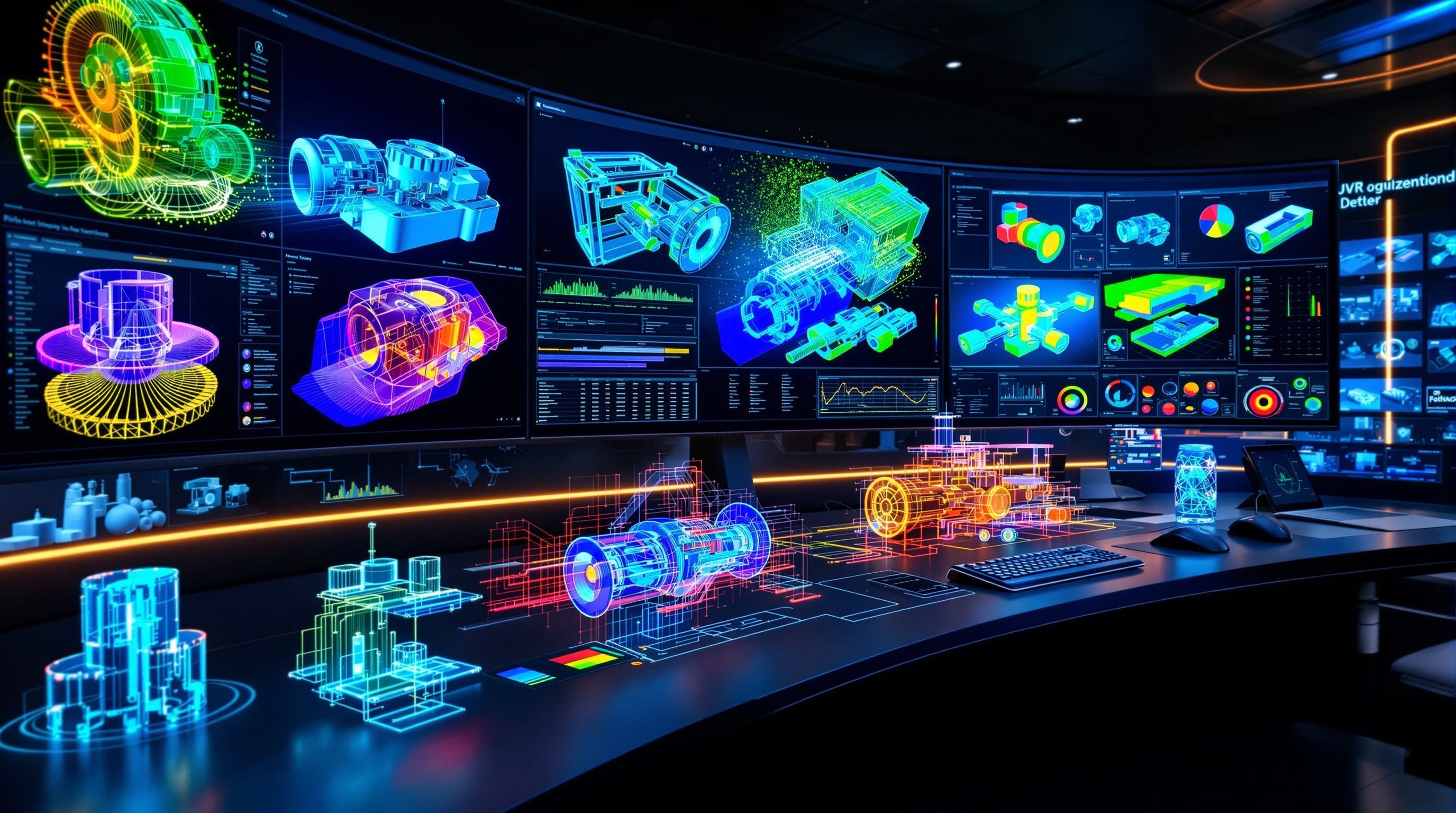
This integrated approach enables engineers to:
- Conduct multiphysics simulations with tighter coupling between different analysis types
- Leverage AI-driven optimization to explore larger design spaces more efficiently
- Access HPC resources on-demand through cloud infrastructure
- Integrate simulation results directly into product lifecycle management (PLM) workflows
The enhanced Digital Twin capabilities are particularly valuable for industries developing complex products like electric vehicles, where battery thermal management, electromagnetic compatibility, and structural integrity must be optimized simultaneously.
Financial Projections and Market Impact
Siemens projects substantial synergies from the acquisition. The company anticipates over $500 million in annual revenue synergies mid-term, growing to over $1 billion long-term, primarily through cross-selling opportunities and Altair's access to Siemens' global customer base. Cost synergies are expected to reach over $150 million annually by the second year post-closing.
The acquisition is projected to increase Siemens' digital business revenue by approximately €600 million, adding to the €7.3 billion reported in fiscal year 2023. Siemens expects the transaction to be earnings-per-share accretive by year two post-closing.
Implications for the Simulation Software Industry
This acquisition signals a broader trend of consolidation in the simulation software market, where companies are seeking to offer comprehensive, AI-powered solutions rather than point tools. The merger creates competitive pressure on other major players like Ansys, Dassault Systèmes, and Autodesk to expand their own AI and cloud capabilities.
For end users, the acquisition promises several benefits:
- Broader tool access: Customers gain access to a wider range of simulation capabilities through a single vendor relationship
- Improved integration: Tighter coupling between design, simulation, and manufacturing tools reduces data translation issues
- AI acceleration: Enhanced AI capabilities promise to reduce simulation setup time and accelerate design optimization
- Cloud scalability: Combined HPC resources enable more complex simulations without local infrastructure investments
However, the consolidation also raises questions about vendor lock-in and the future of open, interoperable simulation ecosystems. The industry will be watching closely to see how Siemens balances proprietary integration with support for open standards.
Looking Forward
With approximately 1,400 of Altair's 3,500 employees dedicated to research and development, the combined entity possesses substantial innovation capacity. The integration of these R&D resources with Siemens' own development teams positions the company to drive significant advances in AI-powered simulation, particularly in areas like generative design, real-time simulation, and predictive maintenance.
As the simulation software market continues to grow—projected to reach $36 billion by 2030—this acquisition establishes Siemens as a dominant force in the industry. The success of this integration will likely influence future M&A activity and shape the competitive landscape for years to come.
For more information about the acquisition, visit Siemens' official announcement and Altair's investor relations page.