
Skip to content

Social Systems & Agent Dynamics

Opinion formation, crowd behavior, organizational workflows, market adoption

13 articles

Article

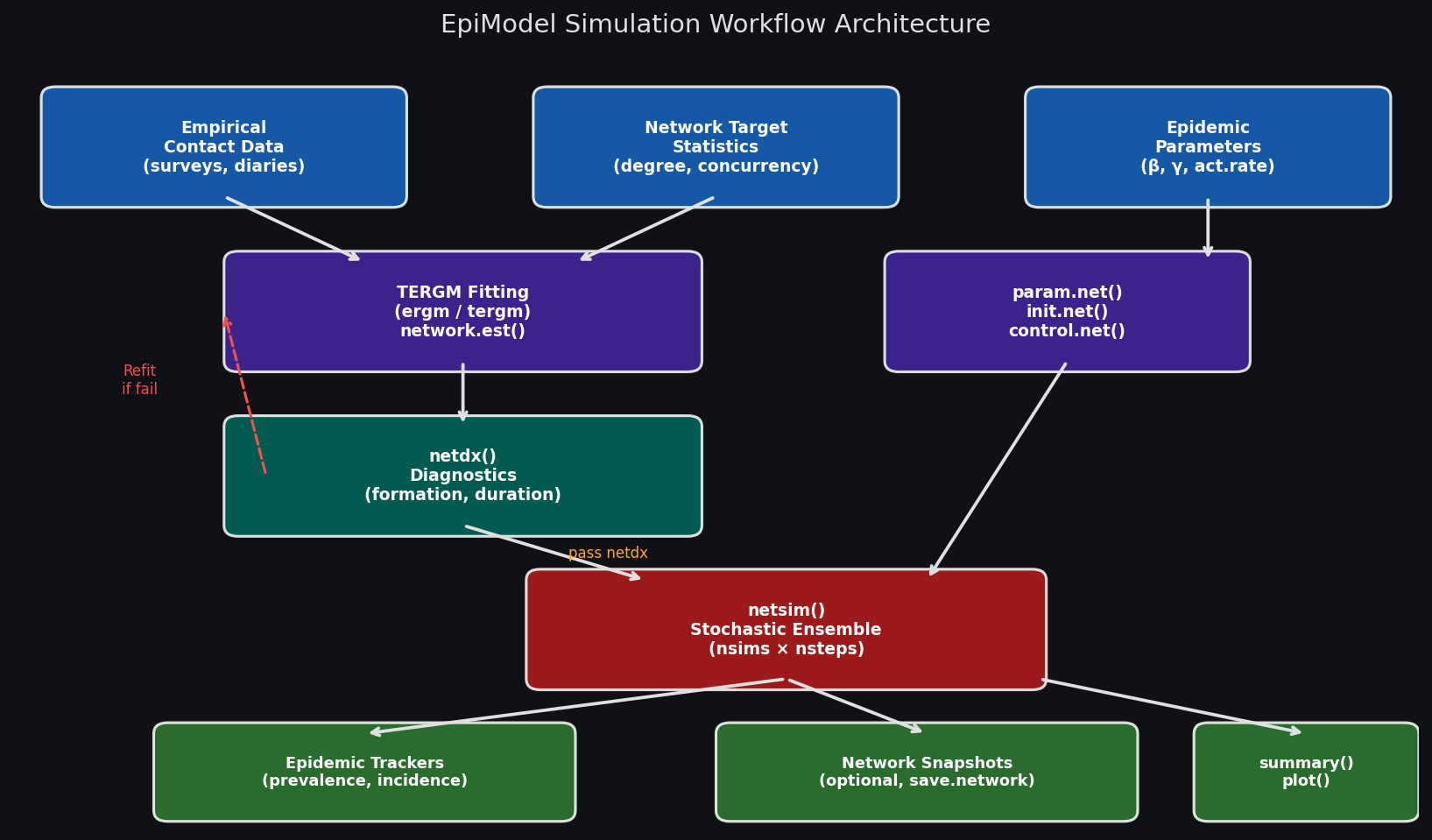
EpiModel: Stochastic Network Epidemiology for Social Contagion Simulation

EpiModel is an open-source R package that simulates infectious disease and social contagion dynamics across dynamic contact networks. By coupling Temporal Exponential Random Graph Models (TERGMs) with stochastic epidemic engines, it captures heterogeneous mixing patterns that homogeneous compartmental models miss. Its modular architecture supports custom transmission, treatment, and behavioral intervention modules.

By Jeff 24 views
Article

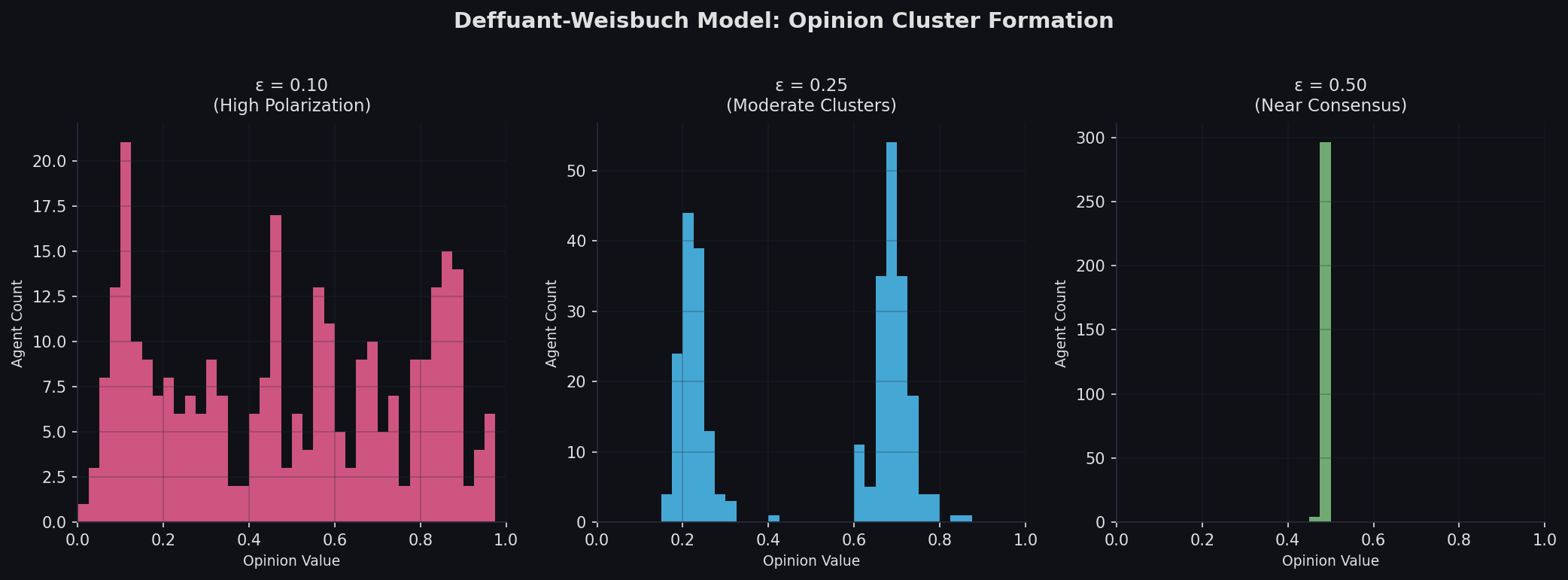
Deffuant-Weisbuch Bounded Confidence Model: Simulating Opinion Dynamics in Polarized Societies

The Deffuant-Weisbuch bounded confidence model provides a mathematically tractable framework for simulating how populations fragment into ideological clusters or converge on consensus. This article covers the core mechanics, Python/Mesa implementation, network-structured variants, calibration strategies, and active research extensions including algorithmic amplification and radicalization dynamics.

By Jeff 29 views
Article

OpenABM-Covid19: Individual-Level Network Simulation for Epidemic Policy Analysis

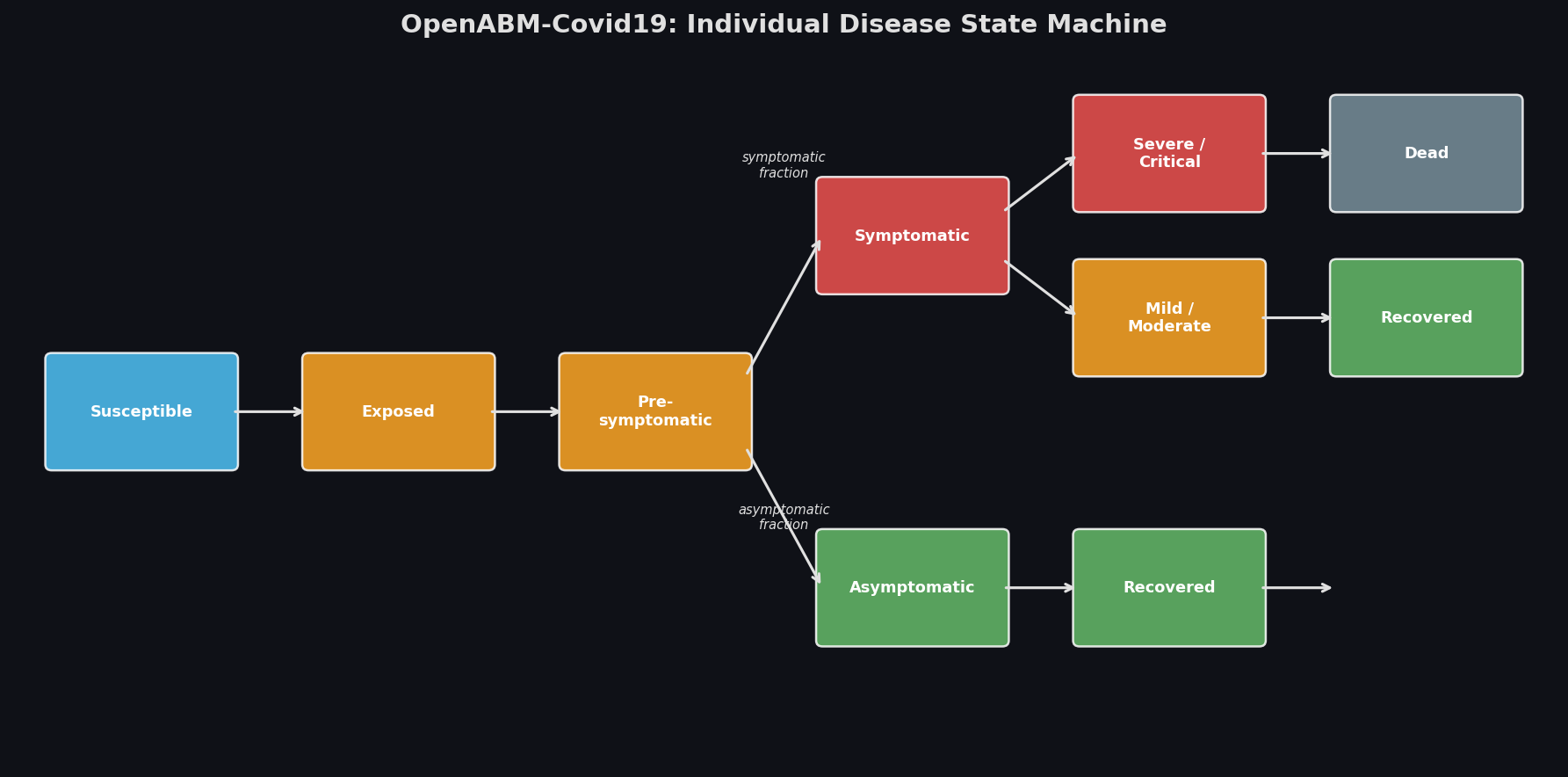
OpenABM-Covid19 is an individual-based epidemic model from Oxford that tracks every person across stratified household, occupational, and community contact networks. It supports dynamic intervention toggling, multi-dose vaccination schedules, and explicit healthcare capacity constraints. The C/Python tool enables ensemble policy analysis with full uncertainty quantification.

By Jeff 40 views
Article

Pandora: High-Performance C++ Agent-Based Modeling for Large-Scale Social Simulations

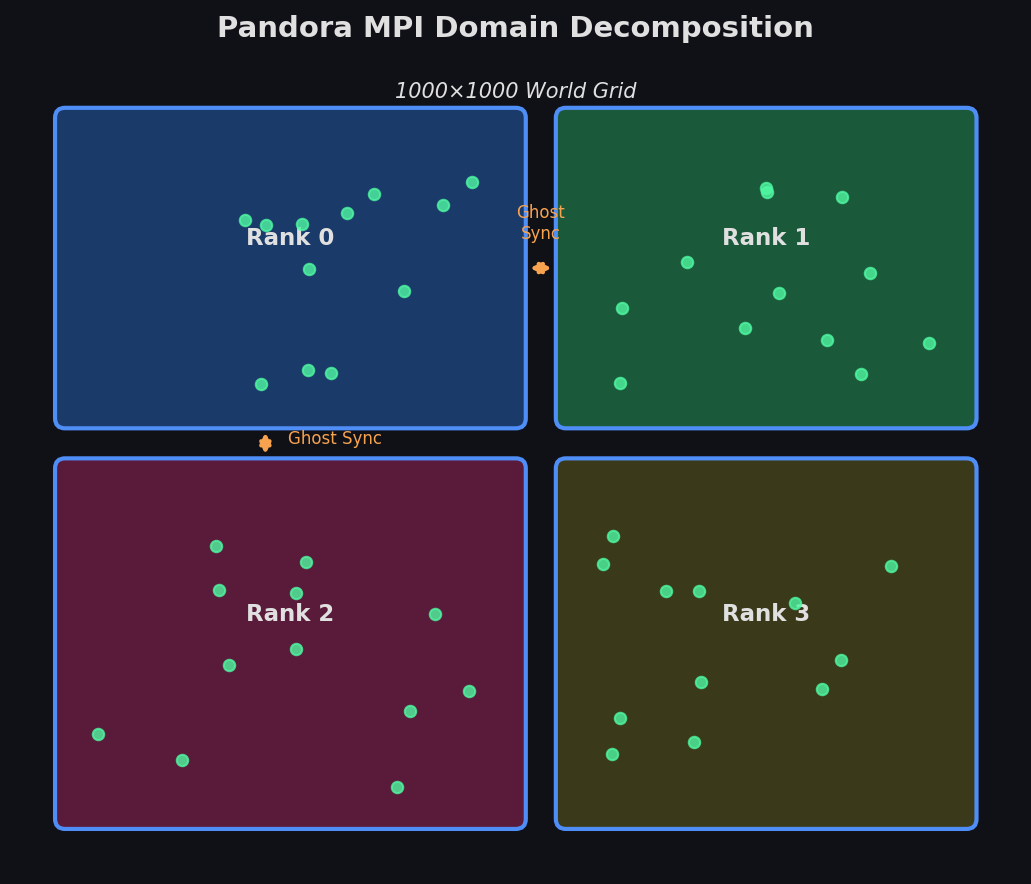
Pandora is an open-source C++ agent-based modeling framework from the Barcelona Supercomputing Center designed for HPC-scale social simulations. Using MPI domain decomposition, it scales spatially explicit models to millions of agents across hundreds of compute cores. This article covers its architecture, scaling characteristics, and practical applications in land-use change and forced migration research.

By Jeff 46 views
Article

Agents.jl: High-Performance Agent-Based Modeling in Julia for Social System Simulation

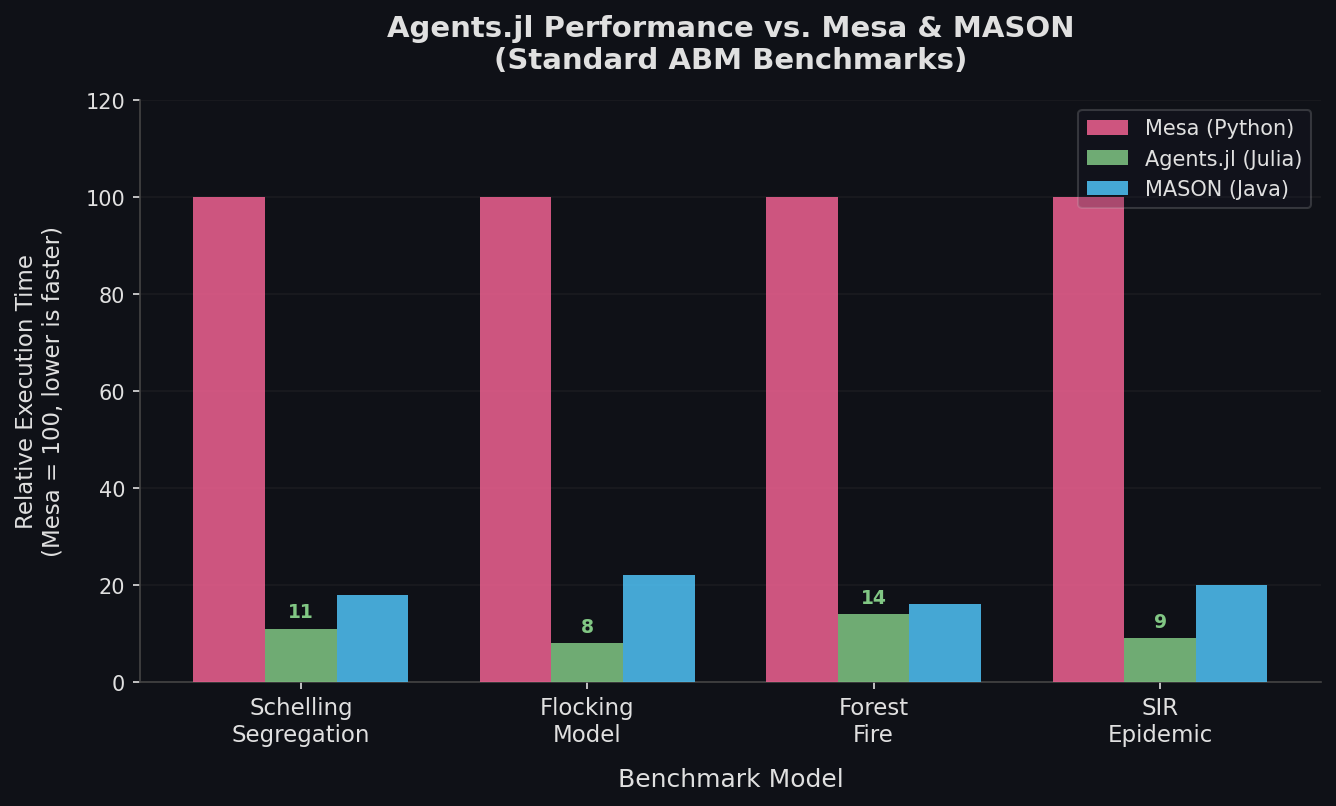
Agents.jl is a high-performance Julia framework for agent-based modeling that combines expressive model design with near-C execution speeds. It integrates seamlessly with the Julia scientific ecosystem for hybrid ODE/ABM models, parameter sweeps, and interactive visualization. Researchers studying social dynamics, epidemics, or urban systems gain 10–100× speedups over Python-based alternatives without sacrificing code clarity.

By Jeff 88 views
Article

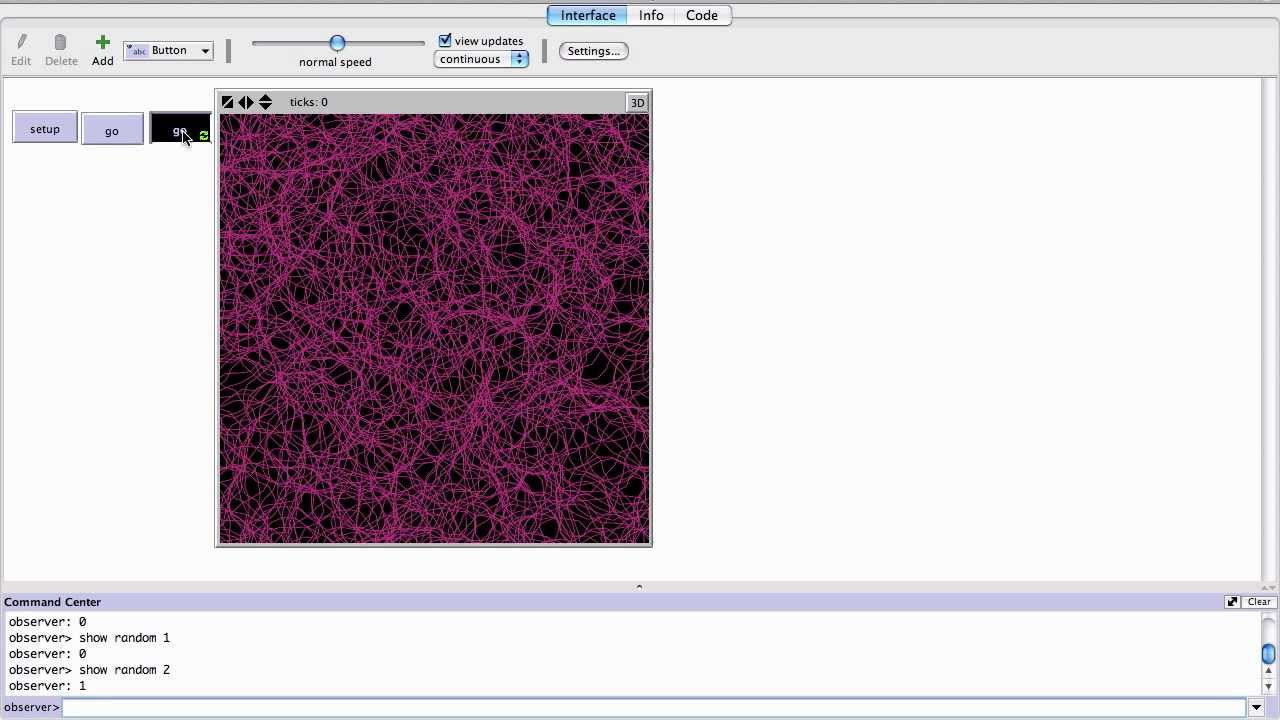
NetLogo BehaviorSpace: Systematic Parameter Sweeps and Experiment Design for Agent-Based Models

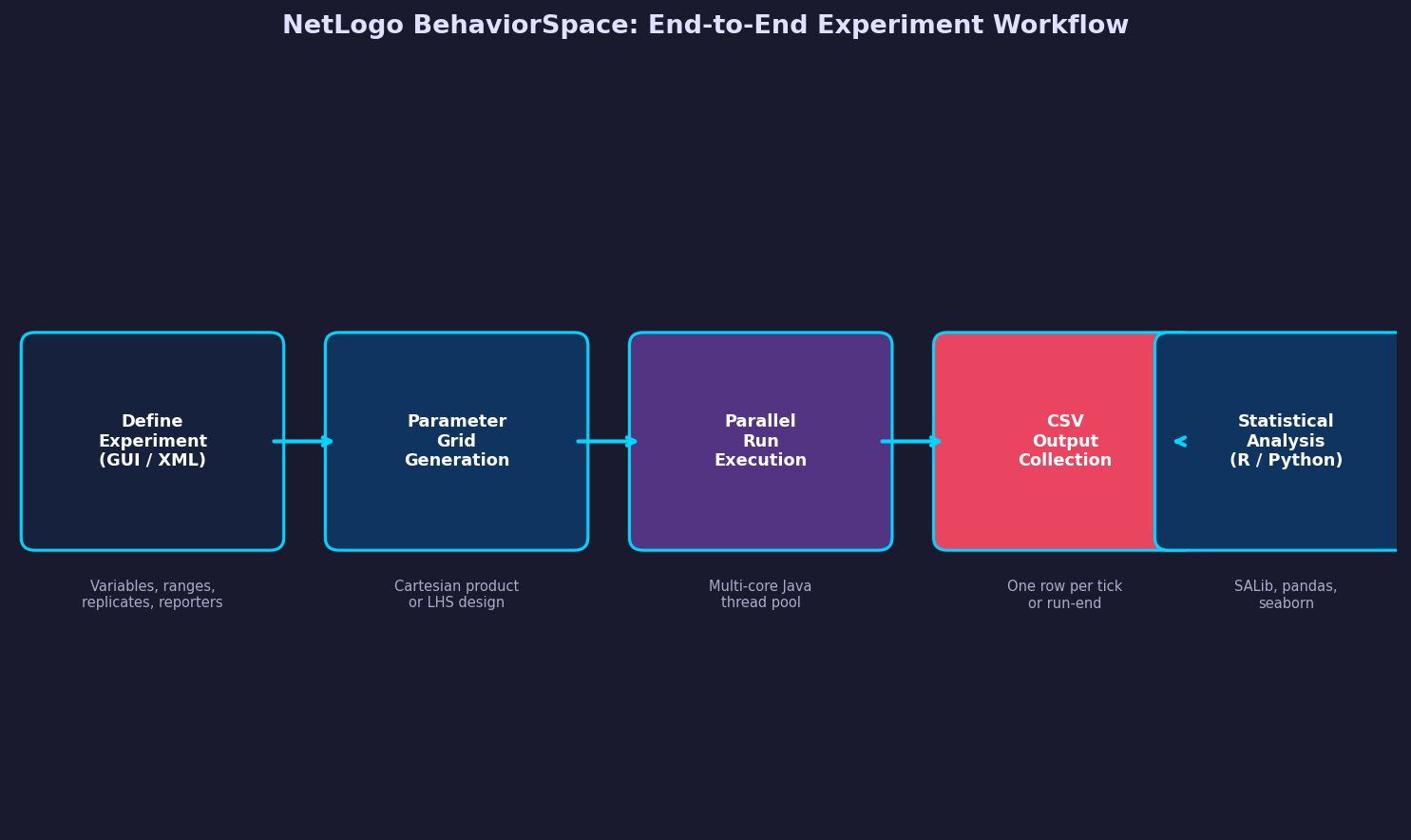
NetLogo's BehaviorSpace framework enables rigorous, reproducible parameter sweeps across agent-based models by automating factorial experiment execution, multi-core parallel runs, and structured CSV output. This article examines BehaviorSpace's experiment definition syntax, measurement strategies, parallel execution options, and integration with Python and R for downstream sensitivity analysis. From coarse exploration sweeps to Latin Hypercube designs, BehaviorSpace transforms NetLogo into a production-grade scientific instrument for social-system modelers.

By Jeff 224 views
Article

FLAME GPU 2: GPU-Accelerated Agent-Based Modeling for Large-Scale Social Simulations

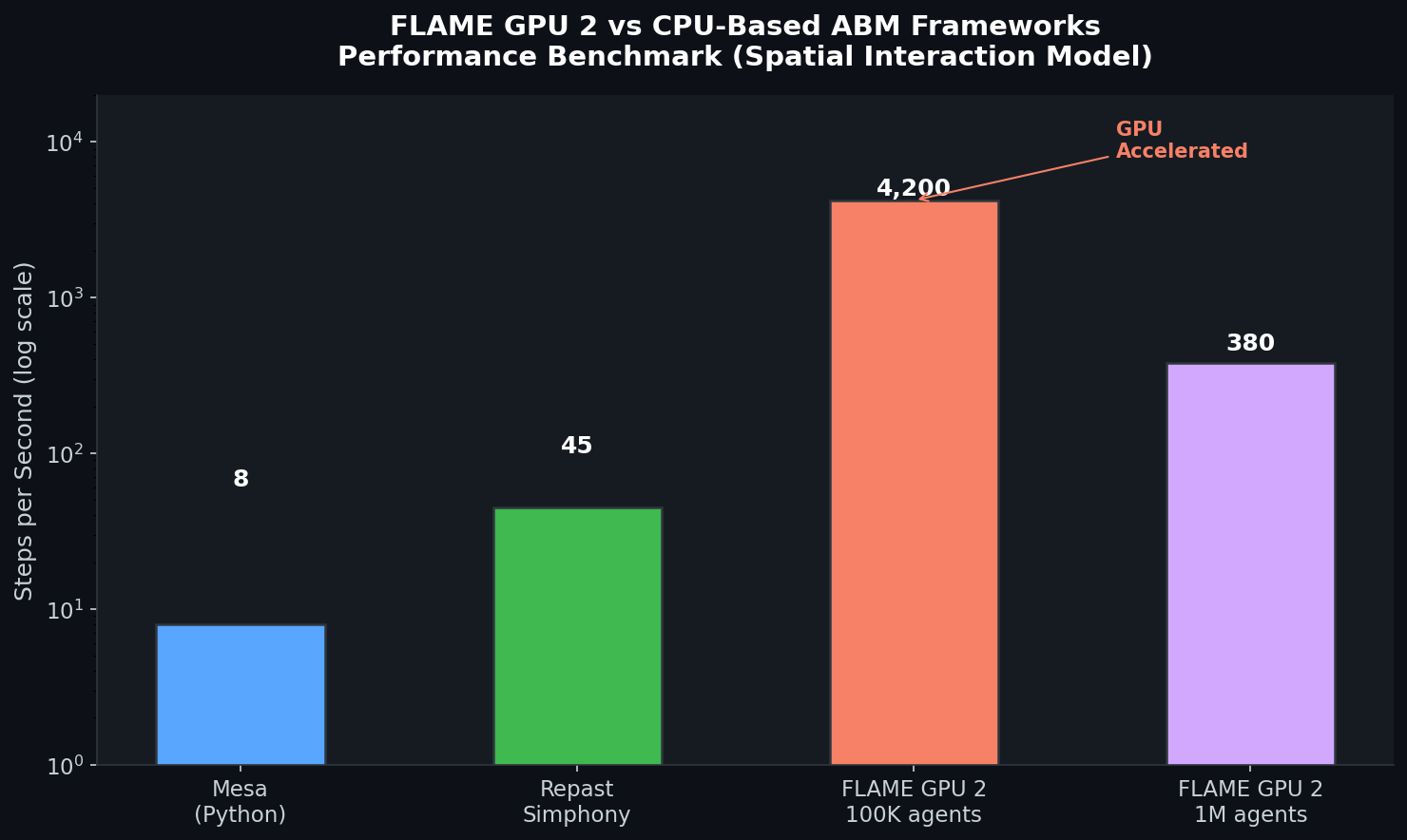
FLAME GPU 2 is an open-source C++/CUDA framework that executes agent-based models entirely on the GPU, delivering 100x or more throughput over CPU-based frameworks like Mesa and Repast Simphony. This article examines its architecture, message communication layer, spatial partitioning, and practical workflow for social-system modelers tackling million-agent simulations.

By Jeff 442 views
Article

GAMA Platform: Spatial Agent-Based Modeling for Complex Social and Environmental Systems

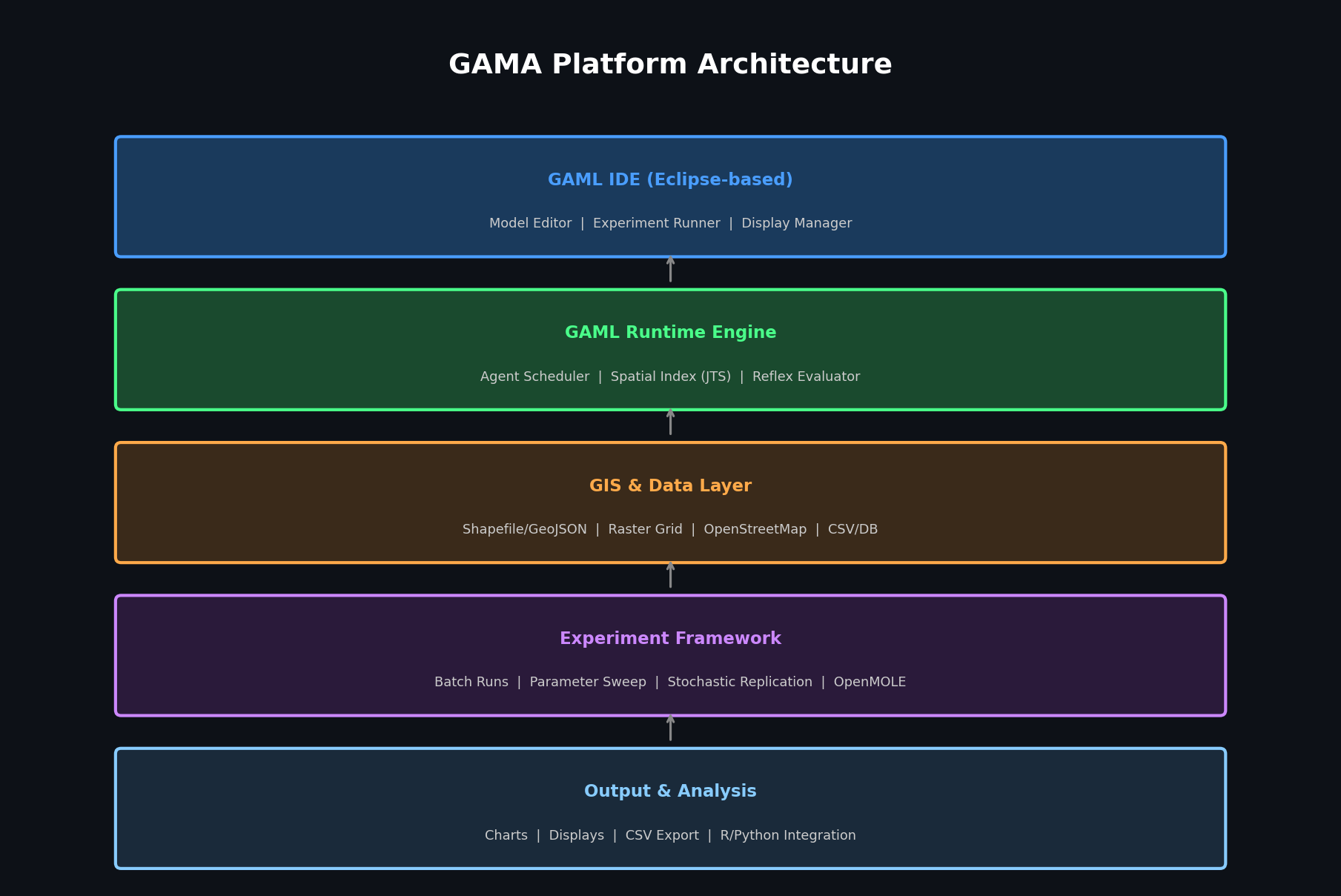
GAMA (GIS & Agent-based Modeling Architecture) is an open-source, spatially explicit agent-based modeling platform that treats real-world GIS data as a first-class citizen. This article examines GAMA's GAML domain-specific language, native shapefile and raster integration, built-in batch experiment framework, and multi-level agent architecture. For technical teams building spatially grounded social simulations — from epidemic spread to urban mobility — GAMA is one of the most capable open-source tools available.

By Jeff 628 views
Article

AnyLogic Pedestrian Library: Simulating Crowd Behavior and Evacuation Dynamics

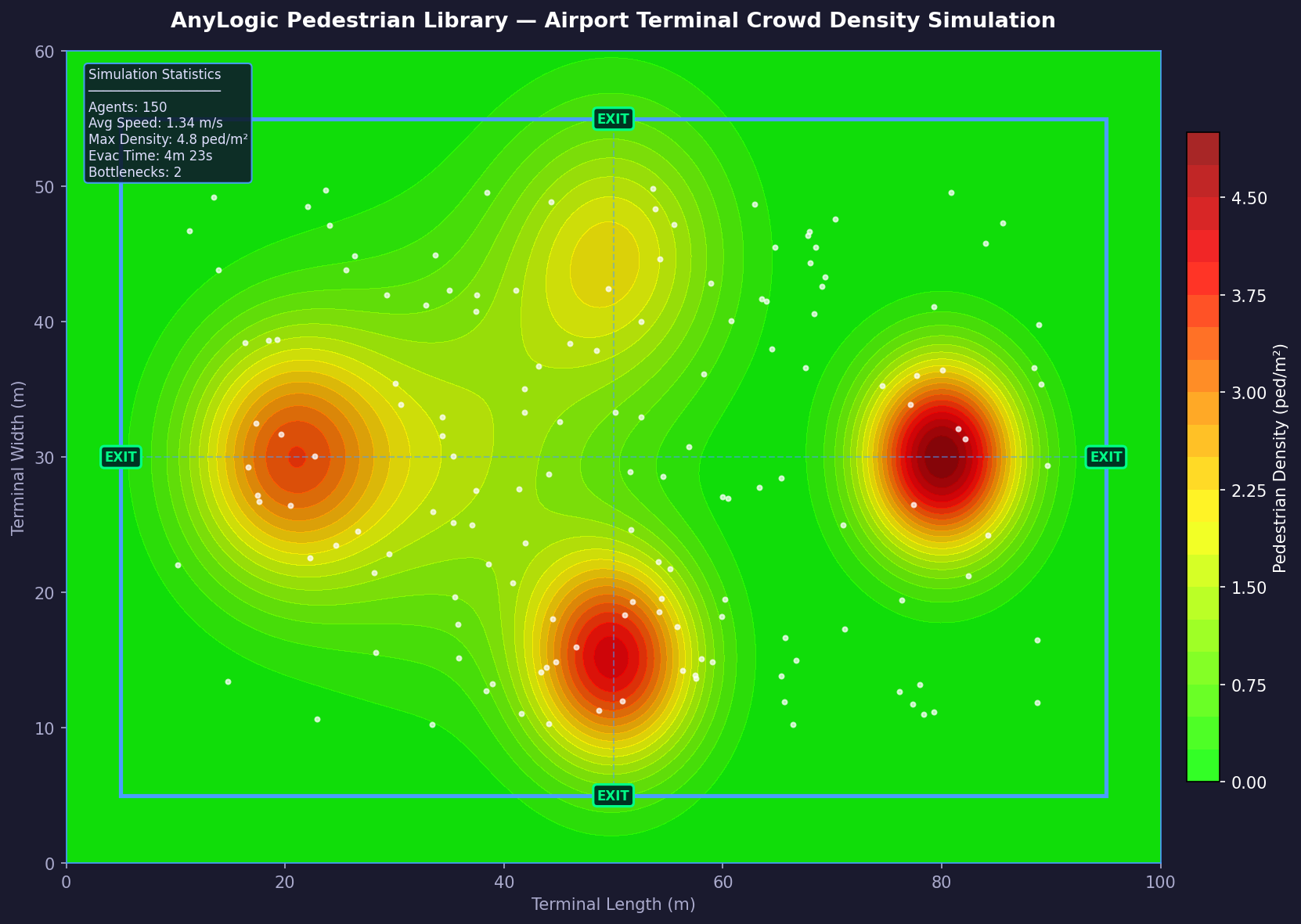
AnyLogic Pedestrian Library combines the Social Force Model with statechart-driven behavioral logic for production-grade crowd simulation. This article examines the physics engine, behavioral layering, calibration workflow, and performance strategies for large-scale pedestrian models. From airport terminal optimization to stadium evacuation analysis, it is one of the most complete pedestrian modeling toolkits available today.

By Jeff 573 views
Article

Repast Simphony: Statecharts and Priority Scheduling for Complex Social Simulations

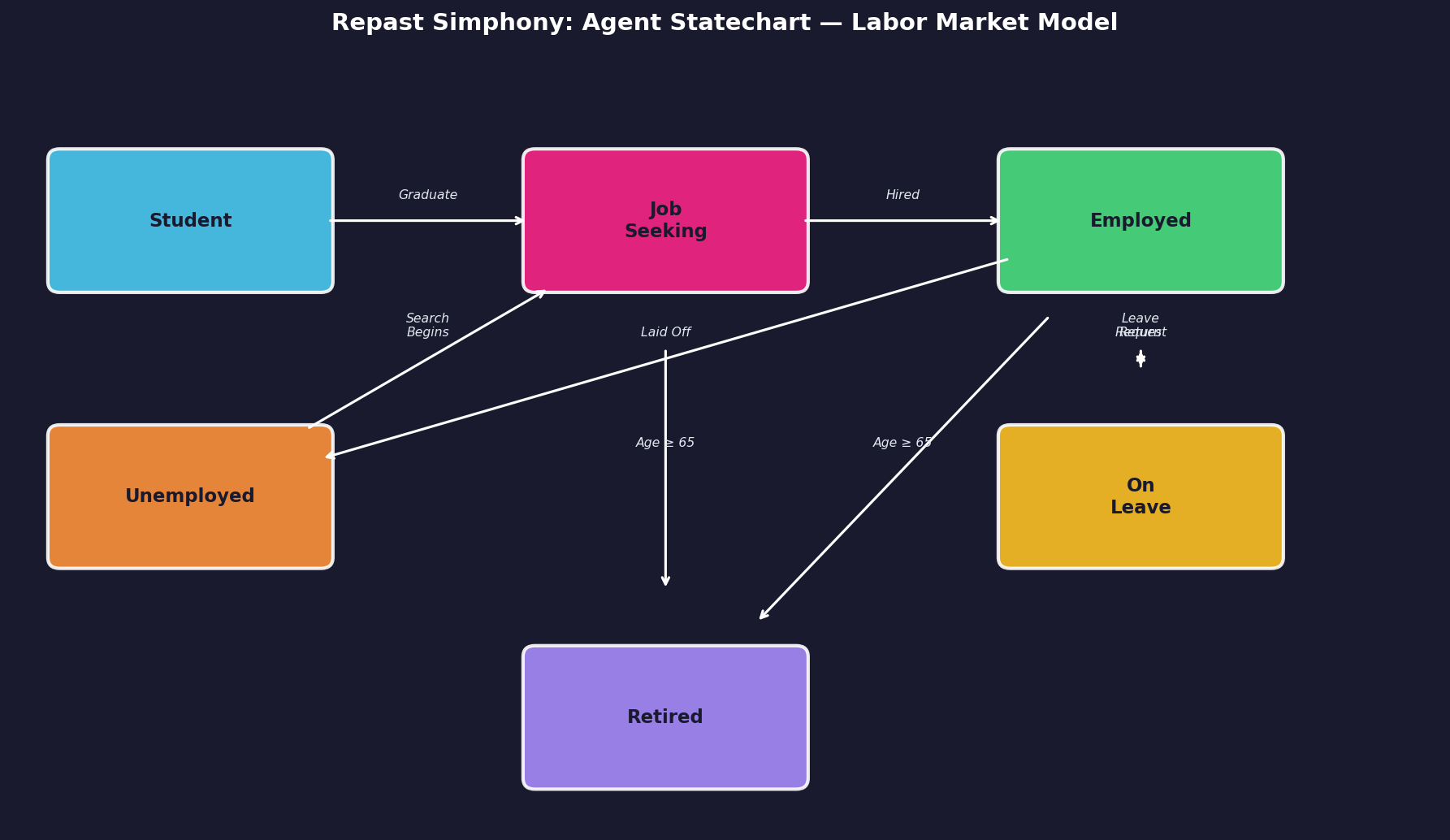
Repast Simphony is a mature, Java-based agent-based modeling platform developed at Argonne National Laboratory that combines UML-style statechart-driven agent behavior with a priority-aware tick scheduler. This article examines how statecharts enable auditable, state-dependent agent logic and how the priority scheduling API eliminates subtle ordering artifacts in large-scale social simulations. Technical teams building production-grade models of labor markets, organizational dynamics, or epidemiological systems will find Repast Simphony's architecture uniquely suited to their needs.

By Jeff 241 views
Article

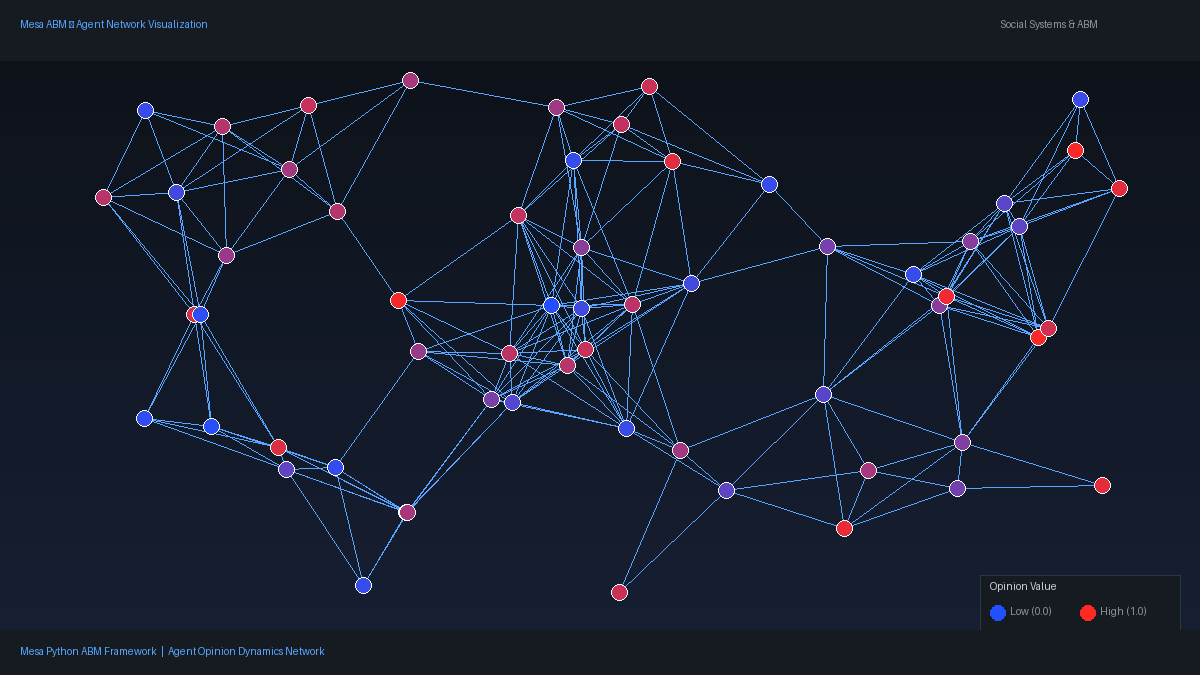
Mesa: Python-Native Agent-Based Modeling for Social System Simulation

Mesa is an open-source Python framework that brings agent-based modeling directly into the scientific Python ecosystem, enabling researchers to build, analyze, and visualize complex social-system simulations using NumPy, pandas, and Jupyter. This article examines Mesa's core architecture, its powerful batch_run parameter-sweep utility, and best practices for building rigorous, reproducible ABM studies. From opinion-dynamics models to organizational behavior simulations, Mesa eliminates toolchain friction for teams already working in Python.

By Jeff 634 views
Article

MASON: High-Performance Agent-Based Simulation for Large-Scale Social Systems

Discover MASON, a Java-based agent-based modeling framework optimized for large-scale social system simulations. Learn how its high-performance architecture, distributed computing capabilities, and efficient scheduling enable researchers to model millions of agents with unprecedented computational speed.

By Jeff 498 views