

NVIDIA Isaac Sim 6.0: Newton Physics Engine, Browser Streaming, and MCP-Driven Agentic Robotics Simulation
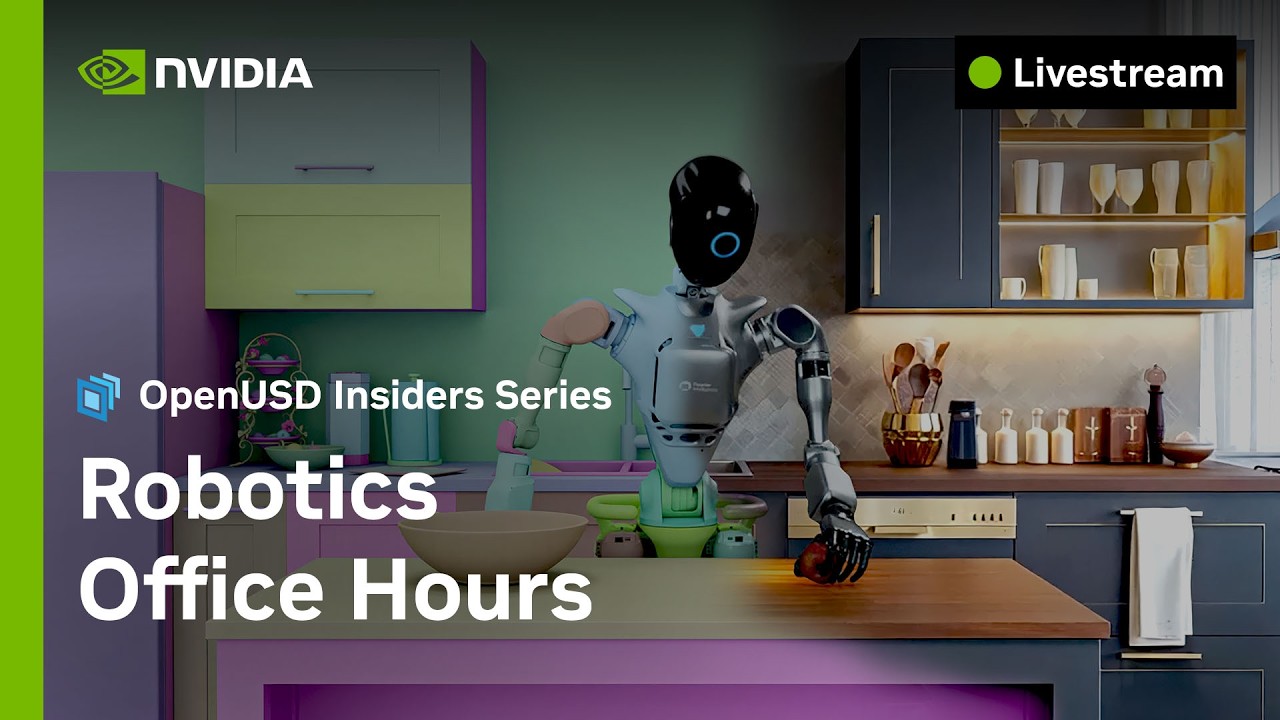
NVIDIA released Isaac Sim 6.0 on June 8, 2026, marking the most architecturally significant update to its robotics simulation platform since the transition to Omniverse. The release introduces a second physics backend, browser-based access, and a new agentic AI interface that allows external coding assistants to control simulations through natural language.
Dual-Physics Architecture: Newton Joins PhysX
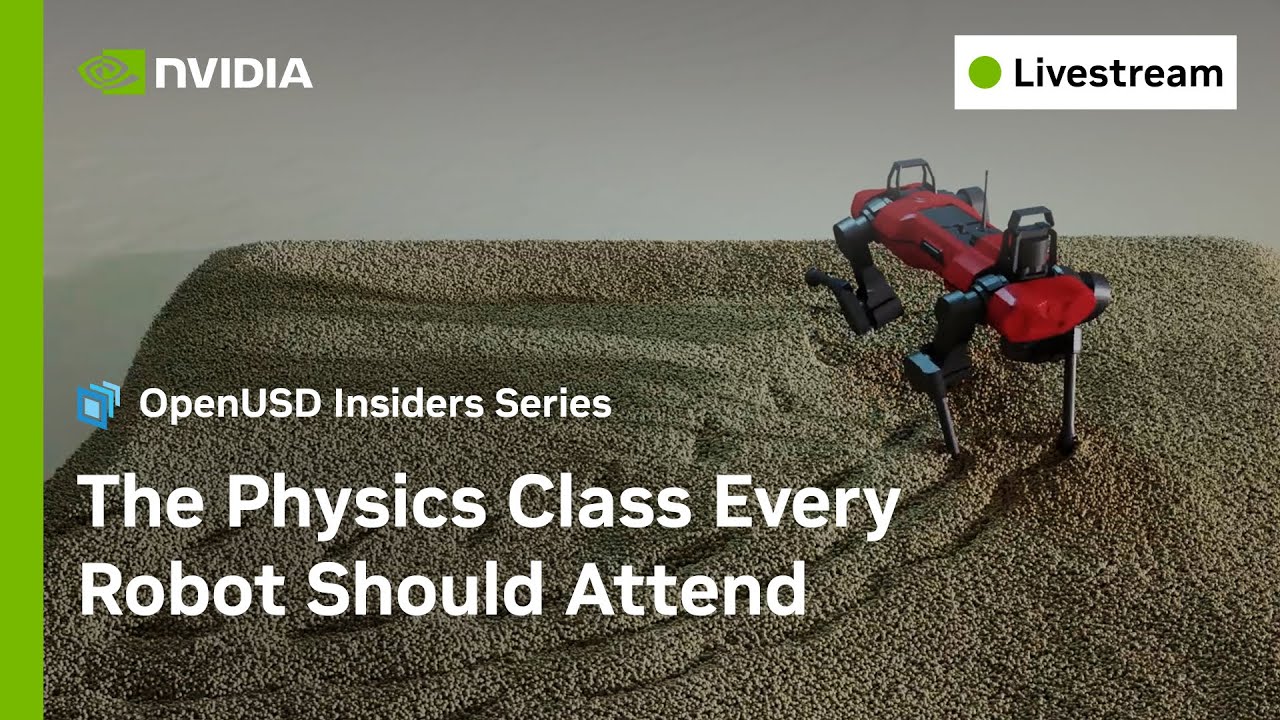
The headline feature of Isaac Sim 6.0 is first-class support for the Newton physics engine alongside the established PhysX SDK. Newton is an open-source, GPU-native physics engine co-developed by Google DeepMind and Disney Research, now governed by the Linux Foundation under an Apache 2.0 license. It supports multiple solver implementations—XPBD, MuJoCo, Featherstone, and SemiImplicit—and is built on NVIDIA Warp and OpenUSD for differentiable, extensible simulation.
Engineers can launch Isaac Sim with Newton as the default backend using dedicated scripts (isaac-sim.newton.sh on Linux, isaac-sim.newton.bat on Windows), or switch backends programmatically at runtime via the SimulationManager class. URDF and MJCF importers have been rebuilt on the USD Exchange SDK to generate assets compatible with both engines, and standard authoring tools—Gains Tuner, Robot Assembler, Robot Inspector, Robot Poser, and Self-Collision Detector—all support Newton.

A new engine-agnostic isaacsim.core.experimental API allows simulation code to run identically across PhysX and Newton, reducing the effort required to evaluate which backend best suits a given robot or task. Actuator implementations have also moved to the Newton repository, ensuring that models trained in Isaac Lab and tested in Isaac Sim share identical behavioral definitions.
Browser-Based GUI Streaming
Isaac Sim 6.0 integrates a streaming client directly into the Isaac Sim container, enabling the full GUI to be served to any Chromium-based browser. This removes the requirement for a high-performance local workstation: rendering and physics computation run on cloud or datacenter GPUs, while engineers interact through a thin-client browser session. The release also replaces the previous Windows Subsystem for Linux (WSL) deployment path with a native Windows installation using the Pixi package manager.
MCP Server for Agentic Simulation Workflows
A new Isaac Sim MCP (Model Context Protocol) server enables AI coding assistants—including Claude Code and Cursor—to connect directly to a running Isaac Sim instance. Through this interface, agents can access extension documentation and APIs, control the simulation via natural language, execute code, modify USD stages, and interact with UI elements. This positions Isaac Sim as a participant in agentic engineering workflows where AI agents orchestrate simulation tasks end-to-end.
Expanded Sensor and Synthetic Data Capabilities
Version 6.0 adds GPU-accelerated acoustic sensors that simulate ultrasonic wave propagation at render time—relevant for sonar-equipped mobile robots and ultrasonic inspection systems. Structured light cameras gain support for custom projector patterns and timing schedules, and RTX LiDAR now handles full-scan accumulation natively with improved point cloud deskewing and motion compensation.
The Replicator synthetic data framework has been extended with behavior-tree-based actor controllers, a "Metropolis" pipeline for centralized orchestration of action and event data generation, and episode recording/replay features that capture simulation state to HDF5 files. A "Chat IRO" interface allows users to randomize 3D scenes via natural language prompts using generative AI models such as Llama-4.
Teleoperation and Reinforcement Learning Integration
Isaac Sim 6.0 adds native support for the NVIDIA Isaac Teleop framework, enabling developers to remotely control robots in simulation to collect demonstration data for imitation learning pipelines. The Warehouse Creator extension has been refactored with a redesigned UI and headless execution support for agentic workflows. Motion generation now includes task-based differential inverse kinematics via the Python PINK implementation.
Availability and Migration Notes
Isaac Sim 6.0 is available through the NVIDIA Omniverse platform. NVIDIA advises treating Newton migration as a parallel track rather than an immediate replacement for production PhysX pipelines, as not all examples have been fully tested against Newton. Documentation for Isaac Sim 4.5 will be removed in the upcoming 6.1 release, making 6.0 the recommended upgrade target for teams still on older versions.
For full release notes and migration guidance, visit the Isaac Sim 6.0 documentation and the GitHub discussion thread.