

GEOS-Chem: Global 3-D Atmospheric Chemistry Modeling for Trace Gas Analysis
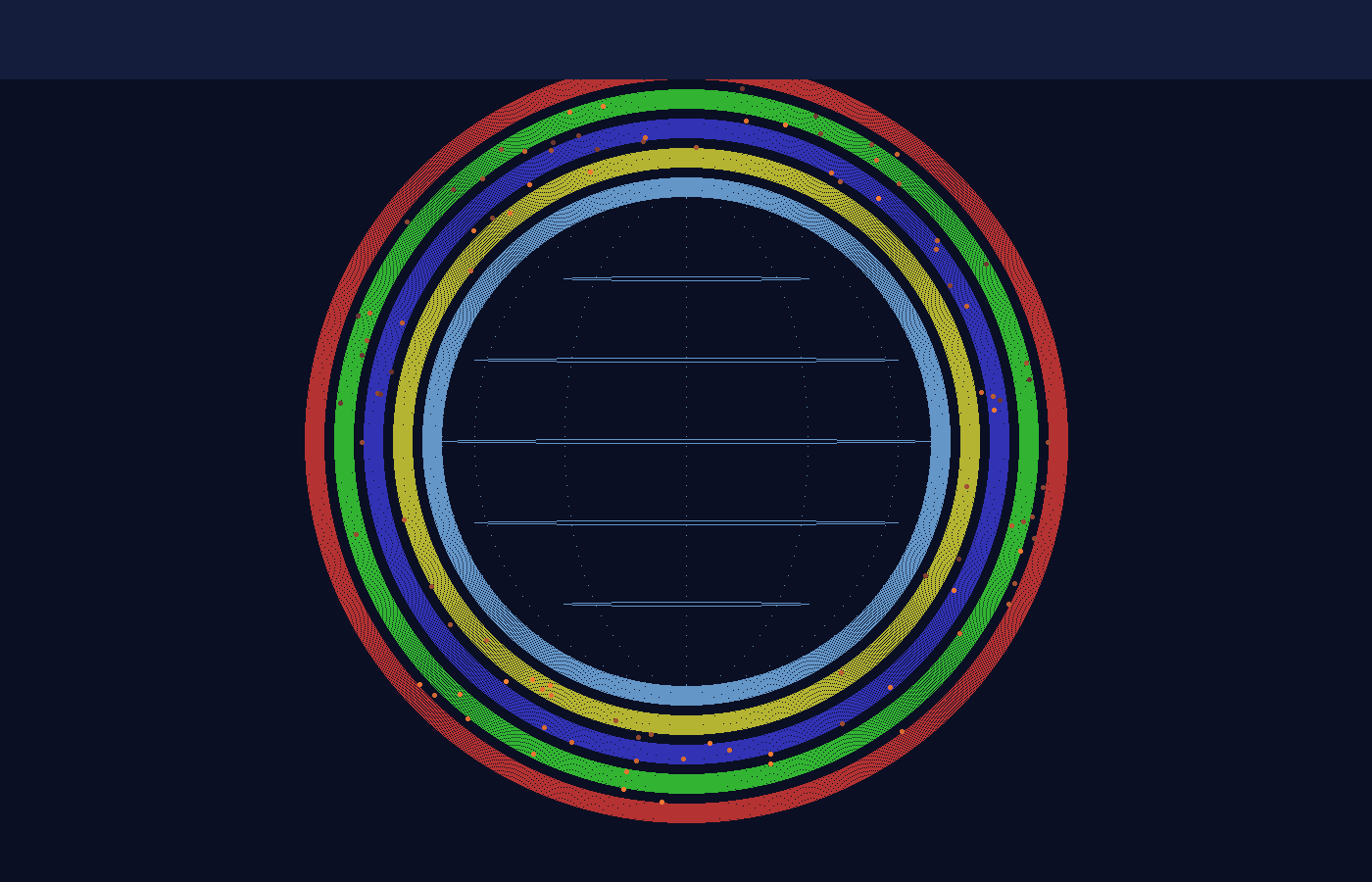
GEOS-Chem is a sophisticated global three-dimensional chemical transport model (CTM) widely used by atmospheric scientists to simulate the composition and chemistry of Earth's atmosphere. Developed and maintained by an international consortium of research groups, this open-source modeling framework has become the gold standard for studying atmospheric trace gases, aerosols, and their interactions with climate systems.
Core Architecture and Capabilities
At its foundation, GEOS-Chem operates on meteorological data from NASA's Goddard Earth Observing System (GEOS) assimilation products, providing high-resolution wind fields, temperature profiles, and precipitation patterns that drive chemical transport. The model employs a modular architecture that allows researchers to simulate over 200 chemical species and more than 700 chemical reactions spanning tropospheric and stratospheric chemistry.
The model's chemical mechanism includes detailed representations of ozone-NOx-hydrocarbon chemistry, sulfate-nitrate-ammonium aerosol thermodynamics, and secondary organic aerosol formation. This comprehensive treatment enables accurate simulation of air quality issues, greenhouse gas budgets, and atmospheric oxidation capacity across spatial scales ranging from global (4°×5° or 2°×2.5°) down to nested regional domains at 0.25°×0.3125° resolution.

Advanced Features for Environmental Research
One of GEOS-Chem's distinguishing capabilities is its flexible emission inventory system. The model integrates multiple global and regional emission databases including EDGAR, CEDS, and HEMCO (Harmonized Emissions Component), allowing users to specify anthropogenic, biogenic, biomass burning, and natural emissions with temporal and spatial variability. The HEMCO module provides a unified framework for emission processing, enabling researchers to easily swap emission scenarios or conduct sensitivity studies.
The model's adjoint capability represents a powerful tool for inverse modeling and data assimilation. By computing sensitivities of atmospheric observations to model parameters and emissions, researchers can optimize emission estimates using satellite retrievals from instruments like TROPOMI, OMI, and MOPITT. This inverse modeling approach has revolutionized top-down emission quantification for species including methane, carbon monoxide, and nitrogen oxides.
Computational Performance and Scalability
GEOS-Chem has undergone significant modernization to leverage high-performance computing resources. The GEOS-Chem High Performance (GCHP) version implements a cubed-sphere grid geometry and MPI parallelization, enabling efficient scaling across hundreds to thousands of processor cores. This architecture eliminates the polar singularity problem inherent in latitude-longitude grids and provides more uniform grid cell sizes globally.
Recent developments include GPU acceleration capabilities and integration with the Earth System Modeling Framework (ESMF), facilitating coupling with other Earth system components. The model's computational efficiency has improved dramatically, with GCHP simulations achieving throughput rates exceeding 10 simulated years per wall-clock day on modern supercomputing systems.
Applications in Climate and Air Quality Research
GEOS-Chem serves as the chemical module in several Earth system models and has been instrumental in numerous landmark studies. Researchers have used it to quantify global methane budgets, assess the impact of shipping emissions on marine air quality, and evaluate the effectiveness of emission control policies. The model's ability to simulate both short-lived pollutants and long-lived greenhouse gases makes it invaluable for integrated climate-air quality assessments.
The model's nested grid capability allows seamless two-way coupling between global and regional domains, enabling high-resolution air quality forecasting while maintaining global chemical boundary conditions. This feature has been extensively applied to study urban pollution, wildfire smoke transport, and transboundary pollution events.
Community Development and Resources
As an open-source project hosted on GitHub, GEOS-Chem benefits from active community development with regular version releases and comprehensive documentation. The GEOS-Chem Support Team maintains detailed wiki pages, tutorial materials, and user forums that facilitate model adoption by new researchers. Benchmark simulations and validation datasets ensure model reproducibility and scientific rigor across the user community.
For researchers seeking to implement atmospheric chemistry simulations, GEOS-Chem offers a mature, well-validated platform with extensive peer-reviewed literature supporting its scientific credibility. The model's flexibility, computational efficiency, and comprehensive chemical mechanisms make it an essential tool for advancing our understanding of atmospheric composition and its role in the Earth system.
Further Information
- Official GEOS-Chem Website: https://geos-chem.seas.harvard.edu/
- GitHub Repository: https://github.com/geoschem/GCClassic
- GEOS-Chem Wiki Documentation: https://geos-chem.readthedocs.io/
- HEMCO Emissions Component: https://hemco.readthedocs.io/