
GT-SUITE 2026: AI.advisor, Hydrogen Ecosystem Simulation, and GT-FEMAG Designer Headline Major Release
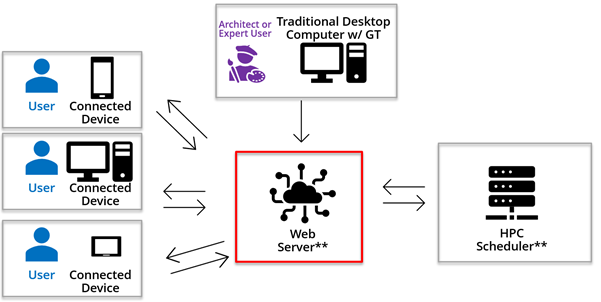
Gamma Technologies released GT-SUITE v2026 Build 1 in February 2026, delivering one of the most feature-rich updates in the platform's history. The release centers on three pillars: a generative AI assistant embedded directly in the simulation environment, expanded multi-physics support for hydrogen and sustainable energy systems, and a new standalone electric motor design tool. Together, these additions position GT-SUITE as a comprehensive virtual prototyping platform for next-generation powertrain development.
GT Intelligence Studio and AI.advisor
The headline feature of GT-SUITE 2026 is the launch of GT Intelligence Studio, a new product family that introduces AI.advisor — a generative AI assistant providing 24/7 expert guidance within the simulation environment. AI.advisor is designed to help engineers navigate complex model setups, troubleshoot convergence issues, and optimize simulation workflows without leaving the GT-SUITE interface.
Beyond conversational assistance, the 2026 release brings significant machine learning enhancements. Engineers can now run parallel metamodel training, dramatically reducing the time required to build surrogate models for design-of-experiments (DOE) studies. Trained metamodels can be exported as Functional Mock-up Units (FMUs), enabling seamless integration into other modeling frameworks and system-level co-simulation environments.

Python scripting support has also been extended: users can now create Python-enhanced compound templates that dynamically modify their internal structure at runtime, enabling highly adaptive, parameterized model architectures.
Hydrogen and Sustainable Energy Capabilities
GT-SUITE 2026 substantially expands its hydrogen simulation toolkit, covering the full spectrum from combustion engines to electrolysis infrastructure:
- Hydrogen Combustion: New sub-models for hydrogen blends and hydrogen-fueled engines support predictive combustion modeling, enabling hardware optimization for H₂ direct-injection and port-injection configurations.
- Fuel Cell Stack Simulation: Enhanced transient behavior modeling and thermal-electrical coupling allow engineers to simulate complete fuel cell stacks under dynamic load conditions.
- Electrolyzer Modeling: A new
ElectrolyzerStacktemplate supports co-electrolysis systems, simulating the conversion of H₂O and CO₂ into syngas — a key pathway for synthetic fuel production. - Carbon Capture and Marine Systems: New templates for absorption columns, membrane separators, and marine exhaust scrubbers extend GT-SUITE's reach into industrial decarbonization workflows.
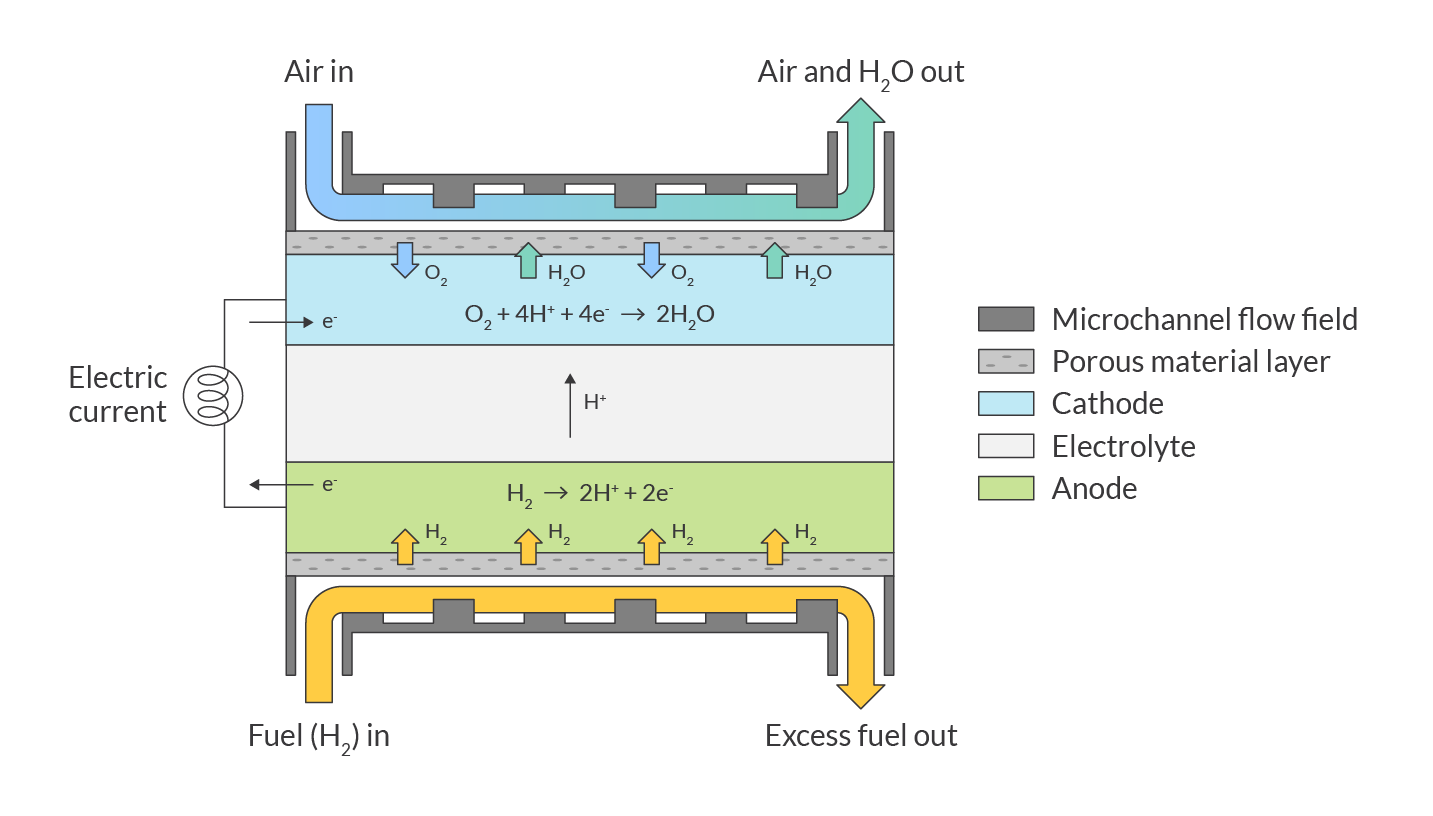
These capabilities make GT-SUITE 2026 a compelling platform for organizations developing hydrogen fuel cell electric vehicles (FCEVs), green hydrogen infrastructure, and sustainable aviation fuel (SAF) production systems.
Battery Modeling and Virtual Sensors
The 2026 release deepens GT-SUITE's battery simulation capabilities with two notable additions:
- 3D Battery Swelling Analysis: A new coupling between GT-SUITE's system-level models and GT-AutoLion-3D enables three-dimensional mechanical swelling analysis, critical for cell-level structural integrity assessment during charge/discharge cycling.
- Physics-Based Aging Mechanisms: New degradation models cover electrolyte solvent dry-out and active material isolation, providing more accurate state-of-health predictions over a battery's lifetime.
- Virtual Sensors for Fast Charging: By combining GT-AutoLion physics models with machine learning, GT-SUITE 2026 enables real-time detection of lithium plating risks. This supports condition-aware fast-charging control strategies that adapt to actual cell state rather than fixed charge curves.
GT-FEMAG Designer: Standalone E-Motor Design
A significant addition to the GT-SUITE ecosystem is GT-FEMAG Designer, a new standalone tool for electric motor topology iteration. Supporting IPM, SPM, induction, EESM, and axial flux motor configurations, GT-FEMAG Designer provides a streamlined interface for early-stage motor design. The tool includes automated structural analysis for rotor integrity — including press-fit analysis — enabling engineers to evaluate both electromagnetic performance and mechanical robustness within a single workflow.
Performance and Usability Improvements
GT-SUITE 2026 also delivers meaningful infrastructure improvements. RAM usage for large models has been reduced by 2× to 4× compared to previous versions, enabling more complex system models to run on standard workstation hardware. A unified interface, improved library management, and a "Smart Mode" in the Run Simulation Wizard further reduce setup time for new and experienced users alike.
Availability
GT-SUITE v2026 Build 1 is available now for licensed users. Build 2, focused on security updates and feature refinement, is expected in mid-2026. For full release notes and feature documentation, visit gtisoft.com/gt-suite-2026-features.