

HYSPLIT: Lagrangian Particle Dispersion Modeling for Atmospheric Transport Analysis
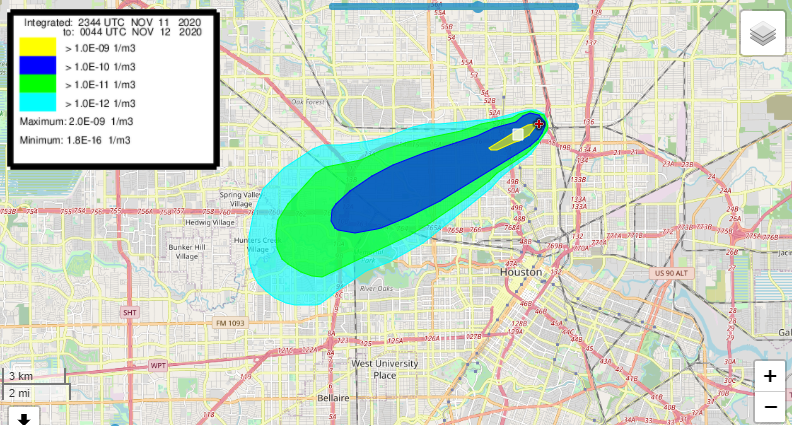
The Hybrid Single-Particle Lagrangian Integrated Trajectory (HYSPLIT) model represents a cornerstone tool in atmospheric transport and dispersion modeling, developed and maintained by NOAA's Air Resources Laboratory. Unlike Eulerian grid-based models, HYSPLIT employs a hybrid approach combining Lagrangian particle tracking with Eulerian concentration calculations, making it particularly effective for simulating the transport, dispersion, and deposition of atmospheric pollutants and tracers across multiple spatial and temporal scales.
Core Computational Framework
HYSPLIT's hybrid methodology distinguishes it from purely Eulerian models like CMAQ or purely Lagrangian approaches. The model computes air parcel trajectories using a moving frame of reference that follows the mean wind field, while simultaneously calculating pollutant dispersion using a fixed three-dimensional grid. This dual approach enables efficient computation of long-range transport phenomena while maintaining accuracy in near-source dispersion calculations.
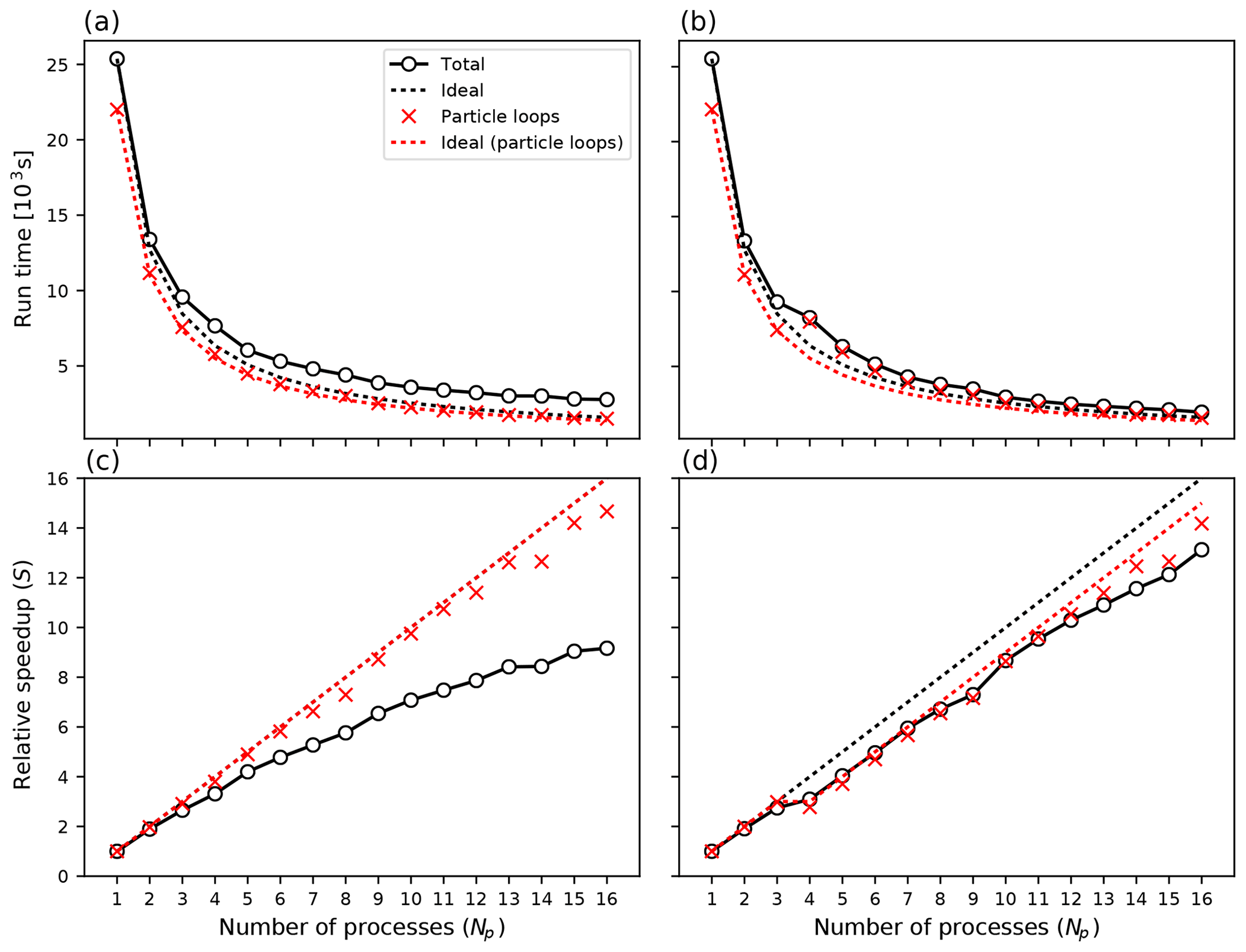

The model solves advection using meteorological input data from various sources including NCEP/NCAR Reanalysis, GFS forecasts, NAM, and WRF outputs. Trajectory calculations employ a fourth-order Runge-Kutta integration scheme with adaptive time-stepping, ensuring numerical stability across varying meteorological conditions. Turbulent dispersion is parameterized using either a Gaussian puff approach for short-range applications or a particle random-walk method for long-range simulations.
Advanced Dispersion Capabilities
HYSPLIT excels in simulating complex atmospheric phenomena including volcanic ash transport, wildfire smoke dispersion, radiological release scenarios, and chemical plume evolution. The model incorporates sophisticated physical processes such as:
Wet and Dry Deposition: HYSPLIT implements detailed scavenging algorithms for both below-cloud and in-cloud removal processes. Wet deposition calculations account for precipitation intensity, particle size distribution, and chemical solubility. Dry deposition velocities are computed using resistance models that consider surface roughness, atmospheric stability, and particle characteristics.
Vertical Mixing Parameterization: The model employs multiple turbulence schemes including the Kantha-Clayson boundary layer formulation and the Hanna stability-dependent approach. Users can select between different planetary boundary layer (PBL) parameterizations depending on the application, with options for convective scaling in unstable conditions and mechanical turbulence in neutral or stable regimes.
Chemical Transformation: For reactive species, HYSPLIT supports first-order decay processes and simple chemical transformation schemes. While not as comprehensive as full photochemical models, this capability enables realistic simulation of species like SO₂ oxidation to sulfate or radioactive decay chains.
Operational Applications and Best Practices
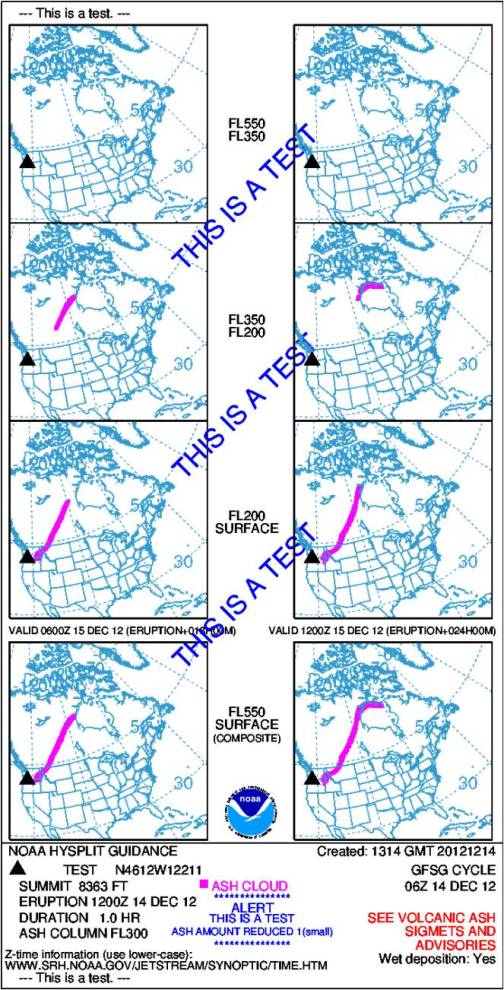
HYSPLIT serves as the operational dispersion model for numerous emergency response systems worldwide. The NOAA HYSPLIT-based Volcanic Ash Advisory system provides real-time forecasts for aviation safety, while the National Atmospheric Release Advisory Center (NARAC) employs HYSPLIT for radiological and chemical emergency response.
For optimal results, practitioners should consider several key factors:
Meteorological Data Selection: The choice of meteorological input significantly impacts trajectory accuracy. High-resolution mesoscale model outputs (1-4 km grid spacing) are essential for complex terrain applications, while global reanalysis products suffice for intercontinental transport studies. Vertical resolution in the boundary layer critically affects near-surface concentration predictions.
Ensemble Forecasting: Given inherent uncertainties in meteorological fields and model parameterizations, ensemble approaches provide probabilistic forecasts. HYSPLIT supports ensemble generation through meteorological perturbations, varying release parameters, and alternative turbulence schemes. Ensemble spread quantifies forecast uncertainty and improves decision-making in operational contexts.
Concentration Grid Configuration: The Eulerian concentration grid should be configured with sufficient resolution to capture spatial gradients while maintaining computational efficiency. For regulatory applications, grid spacing should align with receptor locations and comply with relevant air quality standards.
Integration with Modern Workflows
HYSPLIT's Python interface (PySPLIT) and R packages enable seamless integration into automated analysis pipelines. The model can be coupled with WRF for high-resolution meteorological forcing, linked to emission inventories for source attribution studies, and integrated with observational data for inverse modeling applications.
Recent developments include GPU acceleration for particle tracking, improved vertical mixing schemes for stable boundary layers, and enhanced wet deposition algorithms for aerosol particles. The model's open-source nature and extensive documentation facilitate customization for specialized applications.
For researchers and practitioners requiring robust atmospheric transport modeling capabilities, HYSPLIT offers a proven, well-validated framework supported by decades of development and operational deployment. Its hybrid methodology provides an optimal balance between computational efficiency and physical realism for a wide range of environmental and emergency response applications.