

3DEXPERIENCE SIMULIA R2026x FD03: Virtual Companions, GPU Explicit Dynamics, and Immiscible Multiphase Flow
Dassault Systèmes released the 3DEXPERIENCE SIMULIA R2026x FD03 update in July 2026, delivering a broad set of enhancements across structural, fluid, motion, and electromagnetic simulation disciplines. The release is anchored by the introduction of AI-powered Virtual Companions and two new platform roles that aim to widen simulation access while maintaining physics fidelity.
AI-Powered Virtual Companions and Generative Experiences
The most prominent addition in FD03 is LEO, a Virtual Companion embedded directly in the 3DEXPERIENCE platform. LEO accepts natural-language queries to assist engineers with simulation setup, model visualization, physics KPI generation, and result interpretation. Rather than replacing solver expertise, LEO acts as a context-aware assistant that surfaces relevant guidance at each stage of the workflow.
Alongside LEO, Dassault Systèmes introduced Generative Experiences—a framework that combines validated physics solvers with AI to automate industrial processes and enable design-space exploration. Engineers can encode approved methodologies as reusable templates, ensuring consistency across teams while reducing the barrier for less experienced users.

Two New Platform Roles
FD03 adds two roles that extend the reach of simulation within organizations:
- Virtual Twin Physics Behavior Creator — Allows engineers to train Virtual Twin Behavior Models using machine learning on high-fidelity physics data. The resulting surrogate models can deliver simulation-grade predictions at a fraction of the computational cost, enabling real-time design exploration.
- Simulation Process Experience Engineer (PXS) — Provides guided, template-based experiences for executing approved simulation methodologies. This role is specifically designed to onboard design engineers who need reliable simulation results without deep solver expertise.
Structural Simulation Enhancements
The structural solver receives several productivity and capability upgrades:
- GPU Compute for Explicit Dynamics — GPU acceleration is now available for explicit dynamic simulations, reducing solve times for crash, impact, and drop-test analyses.
- Unconstrained Mode Detection — Enabled by default, this feature automatically flags under-constrained models before the solver runs, catching setup errors early.
- Interactive Result Monitoring — Engineers can query and annotate results while the solution is still in progress, enabling faster iteration on long-running jobs.
- Advanced Frequency Response Solvers — New Lanczos and Subspace iteration solvers expand options for large-scale frequency response analyses.
Fluid Dynamics: Immiscible Multiphase and PowerFLOW Updates
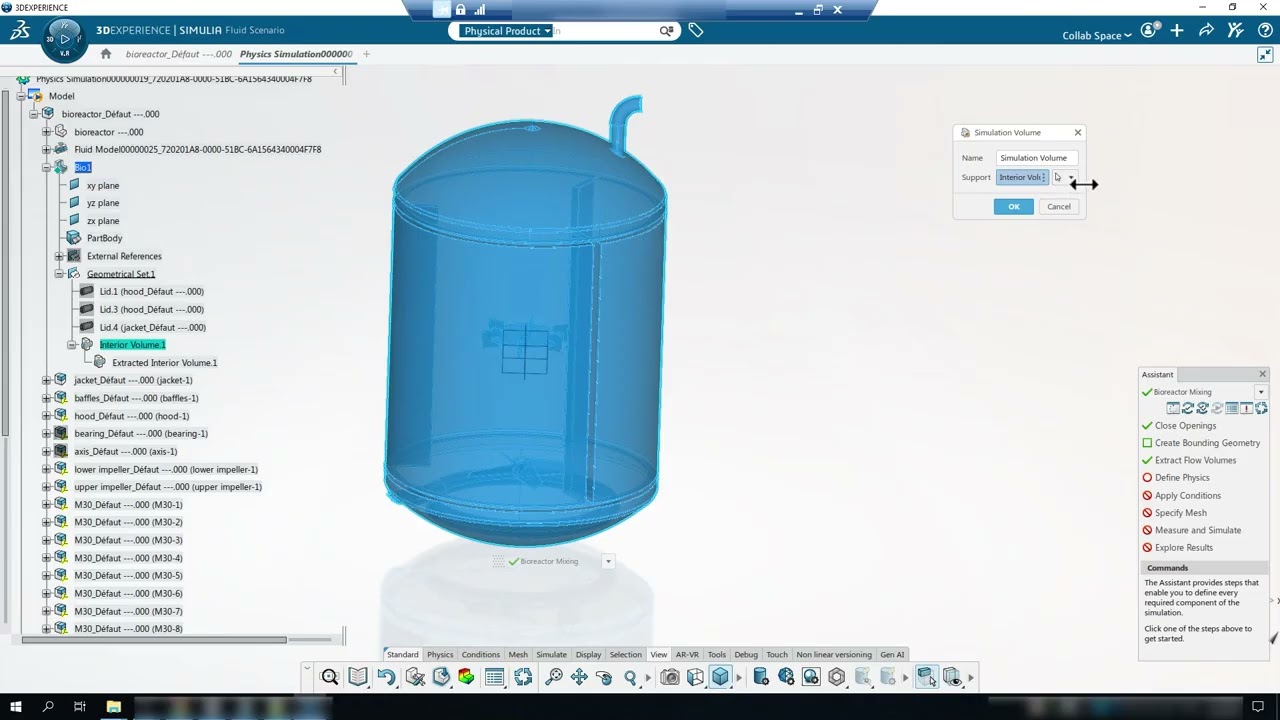
The PowerFLOW Suite 2026 R2, included in FD03, introduces an Immiscible Multiphase Phase Field Solver capable of handling high-density and high-viscosity-ratio flows with adjustable surface tension. Target applications include water wading, tank filling, and mixing-tank simulations where accurate interface tracking between immiscible fluids is critical.
Additional fluid updates include:
- Multiphase Flow Seeding — Simulations can now be initialized from a previous run, reducing transient ramp-up time for complex multiphase cases.
- GPU Scalability for Sliding Meshes — A 10–30% GPU performance improvement for rotating machinery and sliding-mesh configurations.
- Extended High-Subsonic Range — The upper Mach limit for the High Subsonic with Extended Range option has been raised from 1.2 to 1.4, benefiting engine aero-acoustics and airframe noise workflows.
Electromagnetics: CST Studio Suite Integration
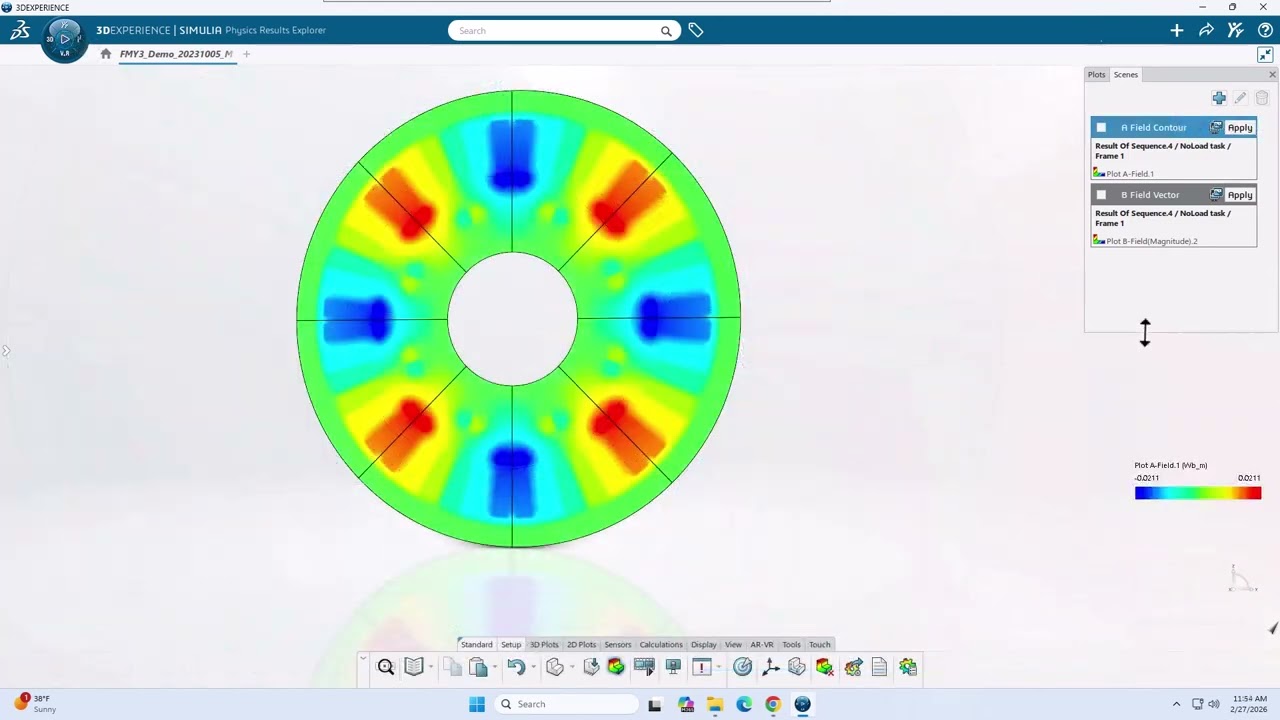
The FD03 release tightens the integration between CST Studio Suite and the 3DEXPERIENCE lifecycle management layer. Engineers can now manage electromagnetic projects—including version control and collaboration—directly through 3DEXPERIENCE applications. A new visualization capability enables cyclically swept animations of rotating electric machines, providing clearer insight into rotor field distributions.
Motion and Automation
Motion Analyst users gain the ability to save critical assembly positions as DMU slides for documentation and review, while a new Motion Probe tool allows inspection of geometric relations during animation. Flexible body stress and strain can now be visualized directly in the motion environment without exporting to a separate post-processor.
On the automation side, FD03 improves process traceability by logging all inputs and outputs for reused simulation processes, and adds branching capabilities for simulation objects to support parallel design studies.
Availability
The 3DEXPERIENCE SIMULIA R2026x FD03 update is available to customers on active maintenance. Full release notes and role-specific documentation are accessible through the Dassault Systèmes SIMULIA portal.