3DEXPERIENCE SIMULIA R2026x FD04: ML-Driven Virtual Twin Physics, 4K Cloud Visualization, and Simpack Motion Integration
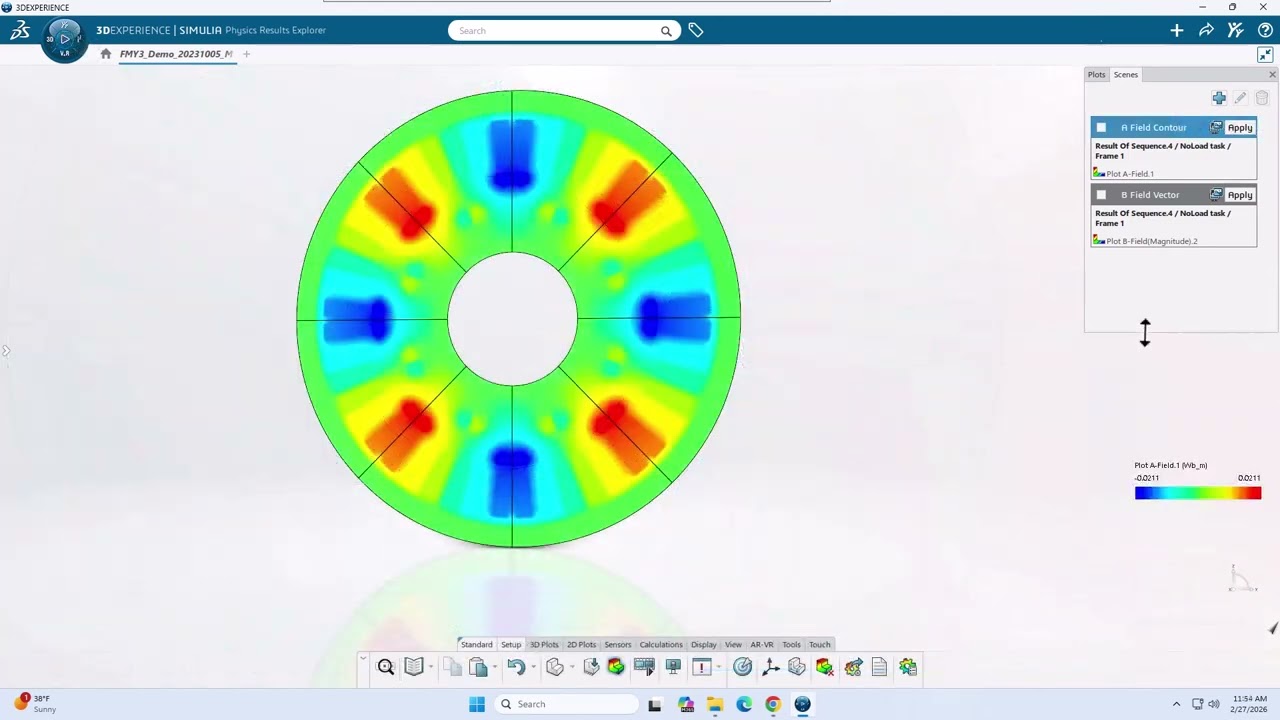
Dassault Systèmes deployed the 3DEXPERIENCE R2026x FD04 feature drop on October 10, 2026, delivering a focused set of enhancements across the SIMULIA simulation portfolio. The update centres on three strategic themes: accelerating physics-based machine learning workflows, improving cloud-native post-processing fidelity, and tightening integration between motion simulation and downstream tools.
ML-Driven Virtual Twin Physics Behavior
The headline capability in FD04 is the ability to train Virtual Twin Physics Behavior models directly from high-fidelity FEA data within the 3DEXPERIENCE platform. Engineers can now:
- Validate predictions against held-out FEA results using "Actual vs. Predicted" visual analytics, providing quantitative confidence metrics before deploying a surrogate model.
- Assess dataset coverage by analysing geometry distribution across the training space, ensuring that the ML model generalises reliably across the design envelope.
- Identify outliers through interactive visualisations of geometry and field outputs, allowing analysts to clean training data before it degrades model accuracy.
This workflow closes the loop between high-fidelity simulation and fast surrogate prediction without requiring users to leave the 3DEXPERIENCE environment or manage external ML toolchains. The result is a more trustworthy physics behaviour model that can be embedded in digital twin applications for near-real-time design exploration.

Structural and Submodeling Enhancements
FD04 extends the structural simulation workflow with two productivity-focused additions. Interactive step reordering lets analysts adjust the sequence of analysis steps on the fly, making it easier to explore different loading scenarios without rebuilding the model. External-result submodeling allows engineers to drive a detailed local model from a coarser global solution stored outside the current session, improving accuracy in critical regions without re-solving the full assembly.
Contact output has also been streamlined: mechanical contact output variables for surface pairs can now be defined and visualised more efficiently, reducing the post-processing overhead for large contact-dominated assemblies such as bolted joints and press-fit components.
4K Cloud Results Visualization and Fluid Dynamics
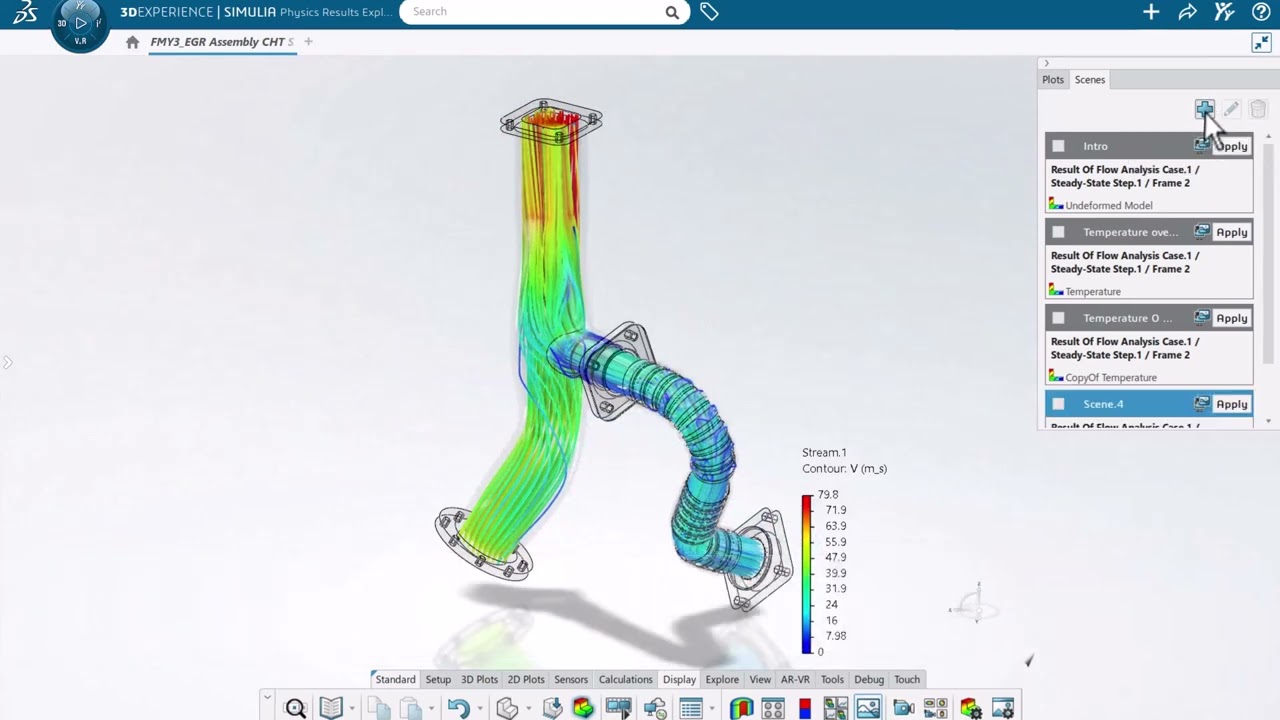
The Cloud Results Visualization (Pixel Streaming) engine now supports 4K displays, a significant upgrade for teams reviewing large CFD or structural result sets on high-resolution monitors. Enhanced rendering settings—including culling options to expose internal geometry—have been extended to additional plot types such as slices and iso-surfaces, giving fluid dynamics engineers finer control over how complex flow fields are presented.
On the PowerFLOW side, PowerACOUSTICS jobs can now be executed on the SIMULIA Cloud using Run Templates, enabling aeroacoustic assessments to be queued and managed alongside CFD runs without local HPC infrastructure.
Motion Simulation and Simpack Integration
The motion module receives two notable additions. Engineers can now switch monitored geometry per body during clash and clearance reviews, reducing the preparation time needed to isolate specific component interactions in large assemblies. A new Simpack export workflow allows motion models to be transferred seamlessly to Simpack for advanced multibody dynamics analysis, supporting teams that use both platforms in their NVH or durability workflows. A dedicated Suspension Analysis Step definition capability further accelerates scenario configuration for vehicle dynamics studies.
Automation and Test Management
FD04 introduces solve-to-insight automation: ODB results can be exported automatically during the solve process, and XY history data, plots, and images can be generated directly from existing solve data without requiring a rerun. This reduces the iteration cycle for parametric studies where post-processing is the bottleneck.
Test management gains end-to-end traceability through the ability to link System Models directly as "Item Under Test" or "Test Means," and Test Scripts now support Advanced Duplicate for faster asset reuse across test campaigns.