

COMSOL Multiphysics 2027: System-Level Modeling, Agentic AI, and Electric Motor Module
COMSOL has announced COMSOL Multiphysics® version 2027, scheduled for release in fall 2026. The update represents one of the most significant expansions to the platform in recent years, introducing system-level modeling capabilities, standardized AI agent integration, and a new module dedicated to electric machine design.
COMSOL Systems™: Bridging Component and System Simulation
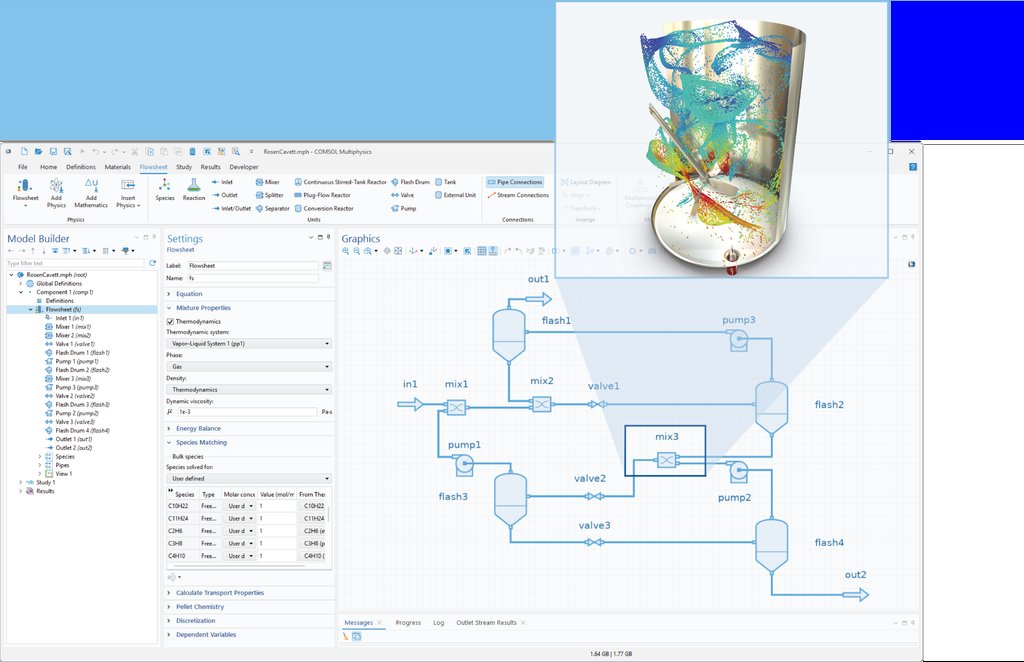
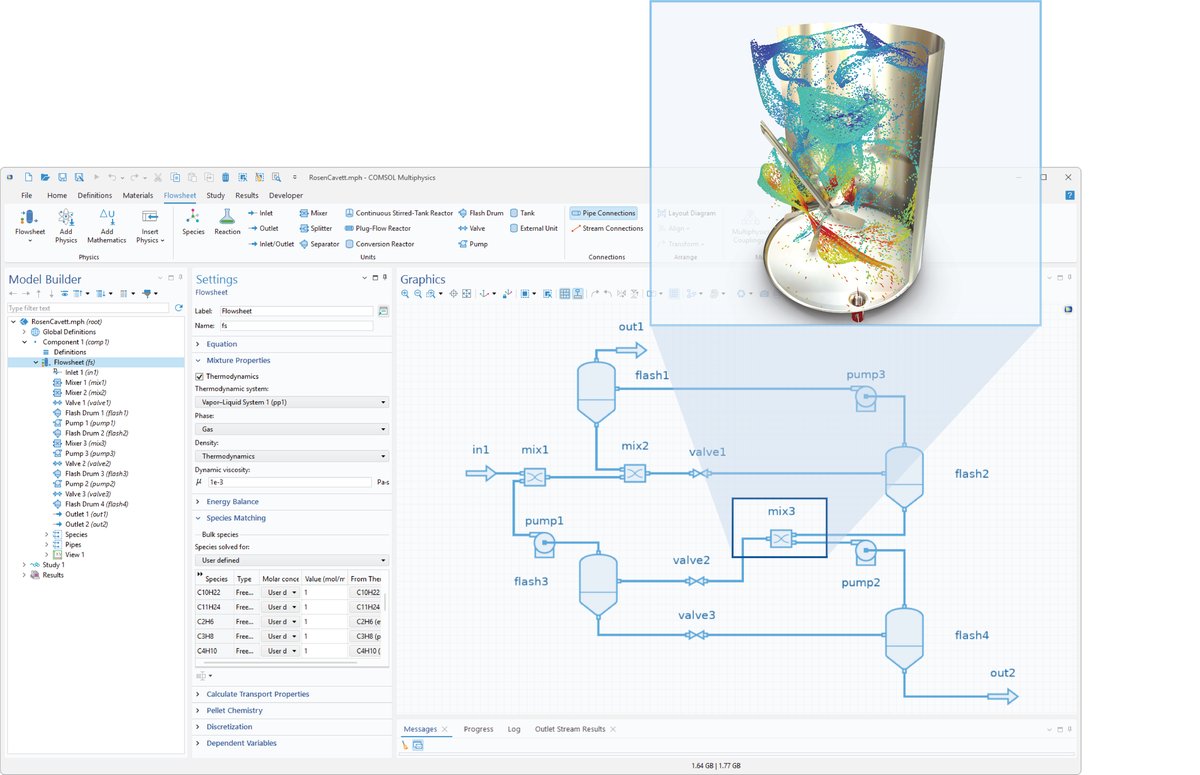
The headline feature of version 2027 is COMSOL Systems™, a new add-on product that provides a dedicated environment for building and analyzing complete system-level models. Engineers can construct electrical circuit diagrams, process flowsheets, and custom equation-based system models using a library of nearly 5,000 ready-to-use components.
What sets COMSOL Systems apart is its tight coupling with the existing multiphysics solver. Individual blocks in a system diagram can represent anything from simple electrical devices to full 3D multiphysics models. This means engineers can study how local physical effects—thermal gradients in a process unit, electromagnetic losses in a motor winding—propagate through and influence overall system behavior, all within a single integrated environment.

This approach directly addresses a longstanding challenge in simulation: the disconnect between high-fidelity component models and the broader system context in which those components operate. By enabling bidirectional coupling between system-level diagrams and detailed 1D/2D/3D models, COMSOL 2027 allows teams to answer questions that previously required multiple disconnected tools.
COMSOL MCP Server: Agentic AI Enters the Simulation Workflow
Version 2027 introduces the COMSOL MCP Server, which implements the Model Context Protocol (MCP) to provide a standardized interface for external AI agents to interact directly with the COMSOL API. This goes well beyond the chatbot assistance introduced in version 6.4.
With the MCP Server, an AI agent can autonomously build or modify simulation models, execute solver runs, inspect results, and use those results to determine subsequent actions—all through the same API that governs every physics interface and modeling stage in COMSOL. Engineers retain oversight through the COMSOL Desktop® environment, where they can review and refine the agent's work at any point.
The practical implication is that complex, iterative workflows—parametric sweeps, design optimization loops, automated validation sequences—can be orchestrated by an AI agent rather than requiring manual intervention at each step. This positions COMSOL 2027 as a platform capable of supporting goal-driven simulation pipelines where the engineer defines objectives and the agent manages execution.
Electric Motor Module: Dedicated Multiphysics for Machine Design
The new Electric Motor Module provides a streamlined environment for modeling electric motors and generators. It supports both 2D and 3D analysis and includes dedicated functionality for evaluating performance maps, operating ranges, losses, material effects, excitation circuits, and fault conditions.
Critically, the module is designed for multiphysics coupling from the ground up. Users can link electric machine models with heat transfer, structural mechanics, acoustics, fluid flow, and electrical circuits within the same simulation environment. This enables analysis of phenomena that are often studied in isolation—such as how winding losses affect thermal distribution, or how electromagnetic forces drive vibration and acoustic noise—to be addressed in a unified model.
Additional Solver and Platform Enhancements
Version 2027 also includes a time-periodic solver that accelerates simulations for applications in plasma physics, electromagnetics, and MEMS by exploiting the periodic nature of steady-state oscillating systems. Other updates include:
- Expanded defeaturing for ECAD and planar geometry models
- New interior grid meshing and enhanced swept meshing algorithms
- Fluid–structure interaction support for high Mach number flows
- Edge- and point-to-surface mechanical contact formulations
- New acoustic material library with biomedical and porous material properties
- Faster pseudo-4D battery simulations and new poroelasticity coupling for lithium-ion batteries
The Application Builder is now available on macOS and Linux®, extending the ability to create and deploy customized simulation apps to a broader range of users and platforms.
Availability
COMSOL Multiphysics version 2027 is scheduled for release in fall 2026. The new features will be showcased at the COMSOL Conference series, with events planned in the UK, U.S., Japan, China, and India. More information is available at comsol.com.