

APSIM Nitrogen Module: Precision Modeling for Sustainable Fertilizer Management
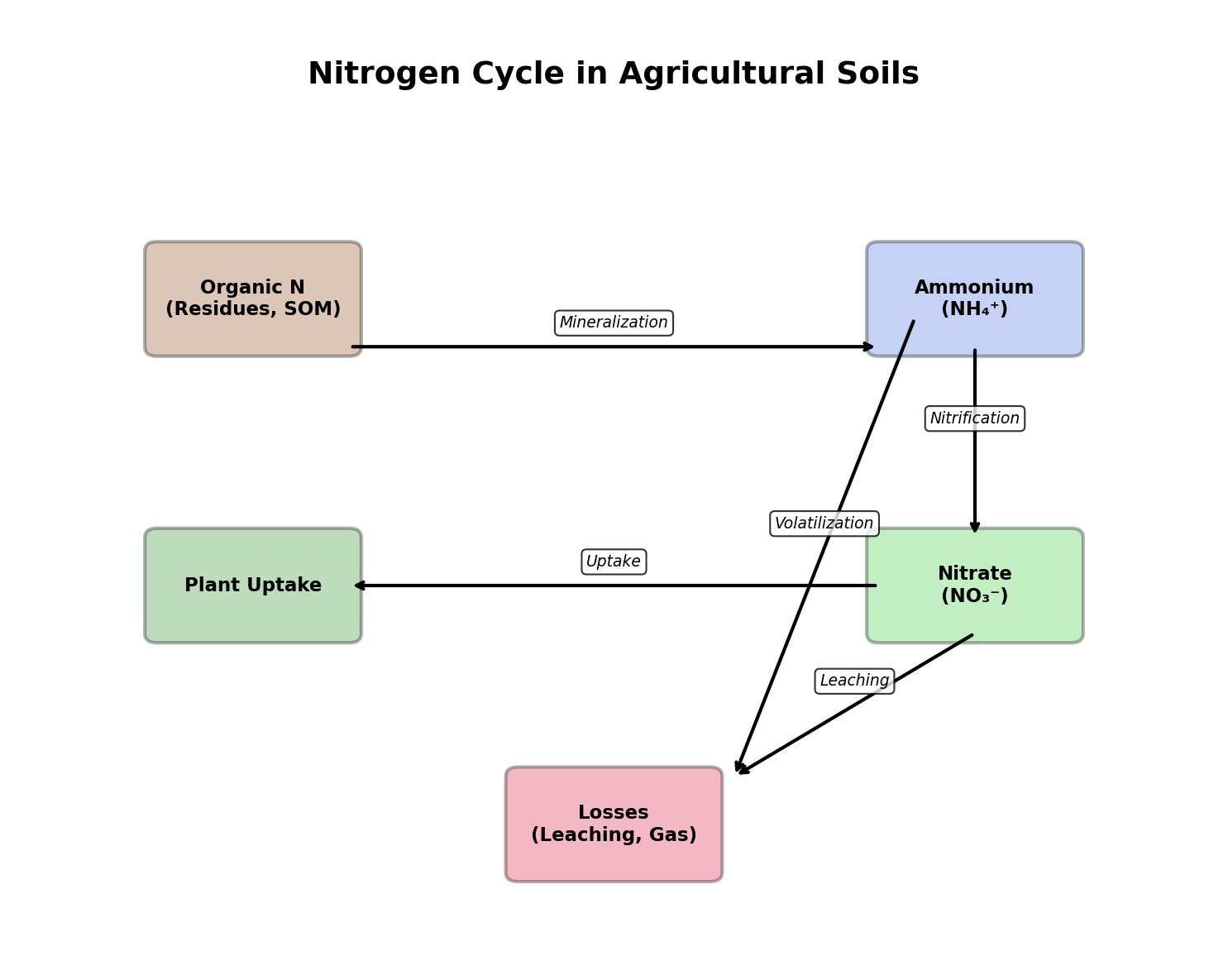
The Agricultural Production Systems sIMulator (APSIM) has emerged as a critical tool for optimizing nitrogen fertilizer applications in modern agriculture. With global concerns about fertilizer costs, environmental pollution, and greenhouse gas emissions, APSIM's nitrogen module provides farmers and agronomists with sophisticated capabilities to model soil nitrogen dynamics and predict crop responses with remarkable accuracy.
Understanding APSIM's Nitrogen Cycling Framework
APSIM's nitrogen module simulates the complete nitrogen cycle within agricultural systems, tracking transformations between organic and inorganic forms. The model accounts for mineralization, immobilization, nitrification, denitrification, ammonia volatilization, and leaching processes. Unlike simplified nitrogen models, APSIM employs a mechanistic approach that considers soil moisture, temperature, pH, and organic matter content to predict nitrogen availability throughout the growing season.
The module divides soil organic matter into three distinct pools: fresh organic matter (FOM), microbial biomass, and humus. Each pool has different decomposition rates and carbon-to-nitrogen ratios, allowing the model to capture the temporal dynamics of nitrogen release from crop residues and organic amendments. This granular approach enables users to evaluate long-term sustainability of different cropping systems and residue management practices.

Practical Applications in Fertilizer Decision Support
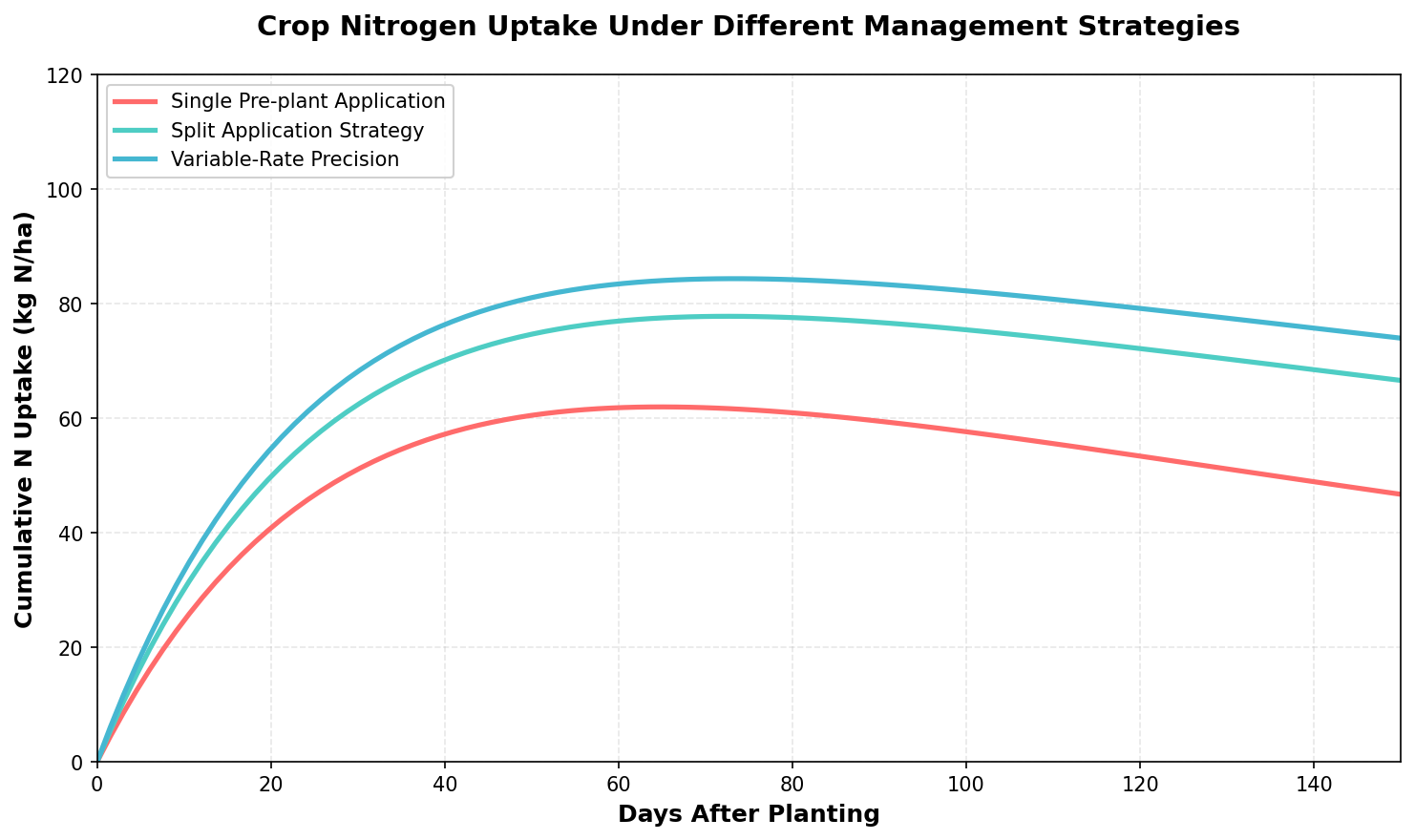
Agricultural consultants increasingly rely on APSIM to develop site-specific nitrogen recommendations that balance yield goals with environmental stewardship. The model can simulate split application strategies, comparing single pre-plant applications against multiple in-season applications timed to match crop demand. For example, wheat growers in Australia have used APSIM to demonstrate that splitting nitrogen applications can reduce leaching losses by 15-25% while maintaining or improving grain protein content.
The nitrogen module excels at predicting nitrate leaching risk under different rainfall scenarios. By running ensemble simulations with historical weather data, users can quantify the probability of leaching events and adjust fertilizer rates accordingly. This capability is particularly valuable in regions with variable precipitation patterns or where groundwater contamination is a concern. Research in the U.S. Corn Belt has shown that APSIM-guided nitrogen management can reduce fertilizer inputs by 10-20% without yield penalties in years with above-average rainfall.
Integration with Precision Agriculture Technologies
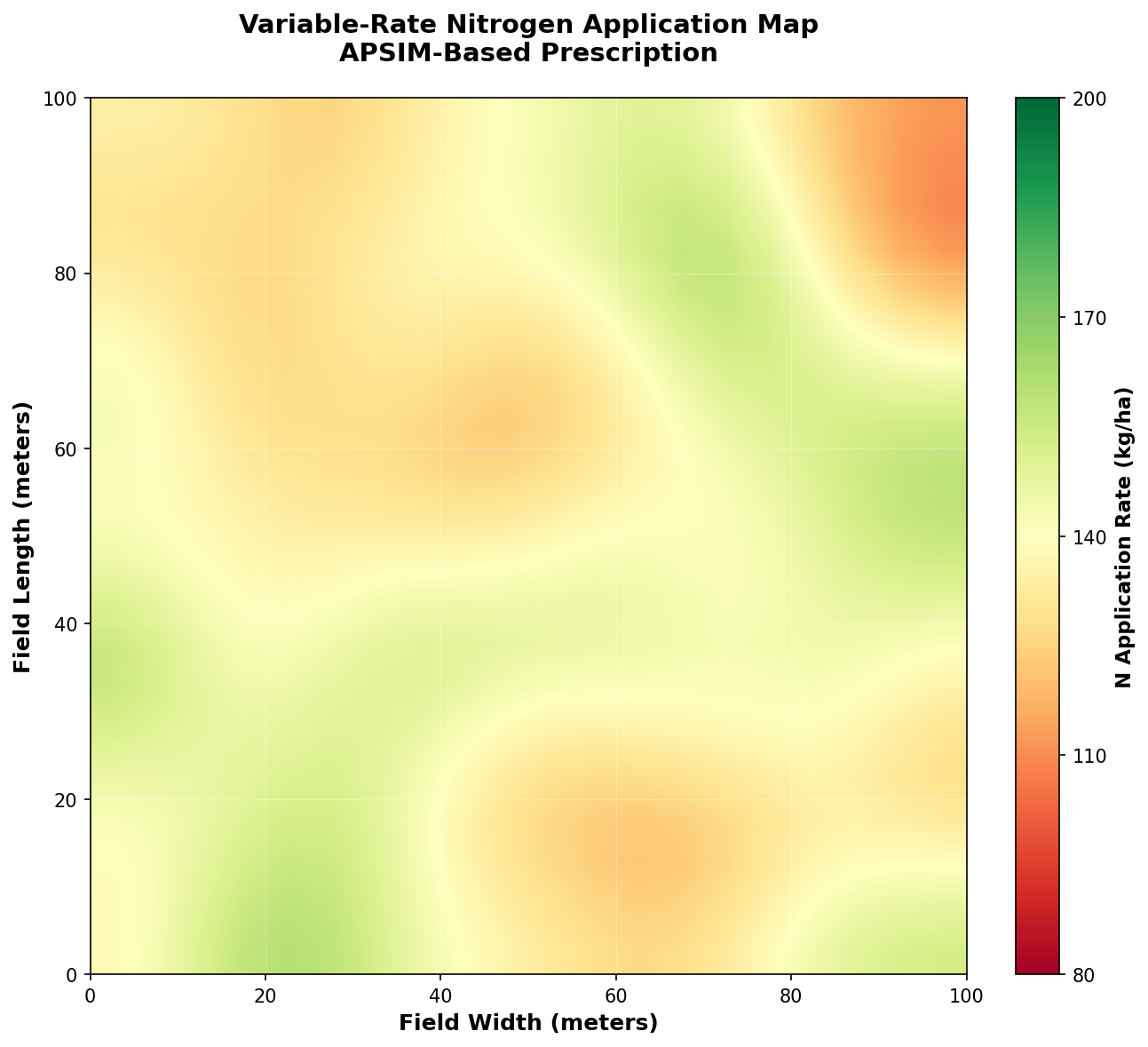
Modern implementations of APSIM increasingly interface with precision agriculture data streams. The model can ingest soil sensor data, satellite-derived vegetation indices, and yield monitor information to calibrate site-specific parameters. Some commercial decision support platforms now embed APSIM's nitrogen module to provide real-time fertilizer recommendations based on current crop status and weather forecasts.
Variable-rate nitrogen application maps generated from APSIM simulations account for within-field variability in soil organic matter, texture, and water-holding capacity. A case study from irrigated cotton systems in Australia demonstrated that APSIM-based variable-rate nitrogen management improved nitrogen use efficiency by 18% compared to uniform application rates, while reducing total fertilizer costs by $45 per hectare.
Calibration Requirements and Data Inputs
Effective use of APSIM's nitrogen module requires careful calibration to local conditions. Essential inputs include soil characterization data (texture, bulk density, organic carbon, pH), initial soil nitrogen levels (both nitrate and ammonium), and crop-specific parameters. The model's accuracy improves significantly when users provide measured data on soil organic matter fractions and mineralization rates, though default values based on soil type can provide reasonable estimates for initial assessments.
Weather data quality critically influences nitrogen predictions, particularly for processes like denitrification and volatilization that respond non-linearly to temperature and moisture. Users should employ daily weather data with accurate precipitation measurements, as rainfall timing strongly affects nitrogen transformations and leaching. Many APSIM users now incorporate seasonal climate forecasts to evaluate nitrogen management strategies under different El Niño/La Niña scenarios.
Validation and Performance Metrics
Extensive field validation studies have demonstrated APSIM's nitrogen module performs well across diverse environments. Meta-analyses of model performance show root mean square errors (RMSE) for grain nitrogen uptake typically range from 15-25 kg N/ha, with better performance in well-managed experimental sites than in commercial fields with greater management variability. The model tends to perform best for annual crops with well-characterized nitrogen response curves, such as wheat, maize, and canola.
Users should validate model predictions against local field trials before making high-stakes management decisions. Simple validation exercises comparing predicted versus observed grain nitrogen content or end-of-season soil nitrate levels can build confidence in model performance. The APSIM community maintains extensive datasets and validation protocols to support this process, with detailed documentation available through the APSIM Initiative website at www.apsim.info.
Future Developments and Research Directions
Current development efforts focus on improving APSIM's representation of nitrogen dynamics in conservation agriculture systems with high residue loads and reduced tillage. Enhanced modules for cover crop nitrogen contributions and improved algorithms for predicting nitrogen mineralization from diverse organic amendments are under active development. Integration with machine learning approaches to auto-calibrate soil parameters from readily available data represents another promising research direction.
The nitrogen module continues to evolve as researchers incorporate new understanding of soil microbial processes and plant nitrogen uptake mechanisms. Recent versions include improved representations of root nitrogen uptake kinetics and competition between crops and soil microbes for available nitrogen. These refinements enhance model accuracy for intensive cropping systems and organic production scenarios where nitrogen dynamics are particularly complex.
For technical professionals seeking to implement APSIM for nitrogen management, the APSIM Initiative provides comprehensive training materials, user forums, and peer support. The open-source nature of APSIM enables customization for specific research questions or operational requirements, making it a versatile platform for advancing sustainable nitrogen management in agriculture.