

AVL Simulation Suite 2025 R2: GPU-Accelerated Battery Safety, Hydrogen Electrolyzer Modeling, and AI-Driven Design Exploration
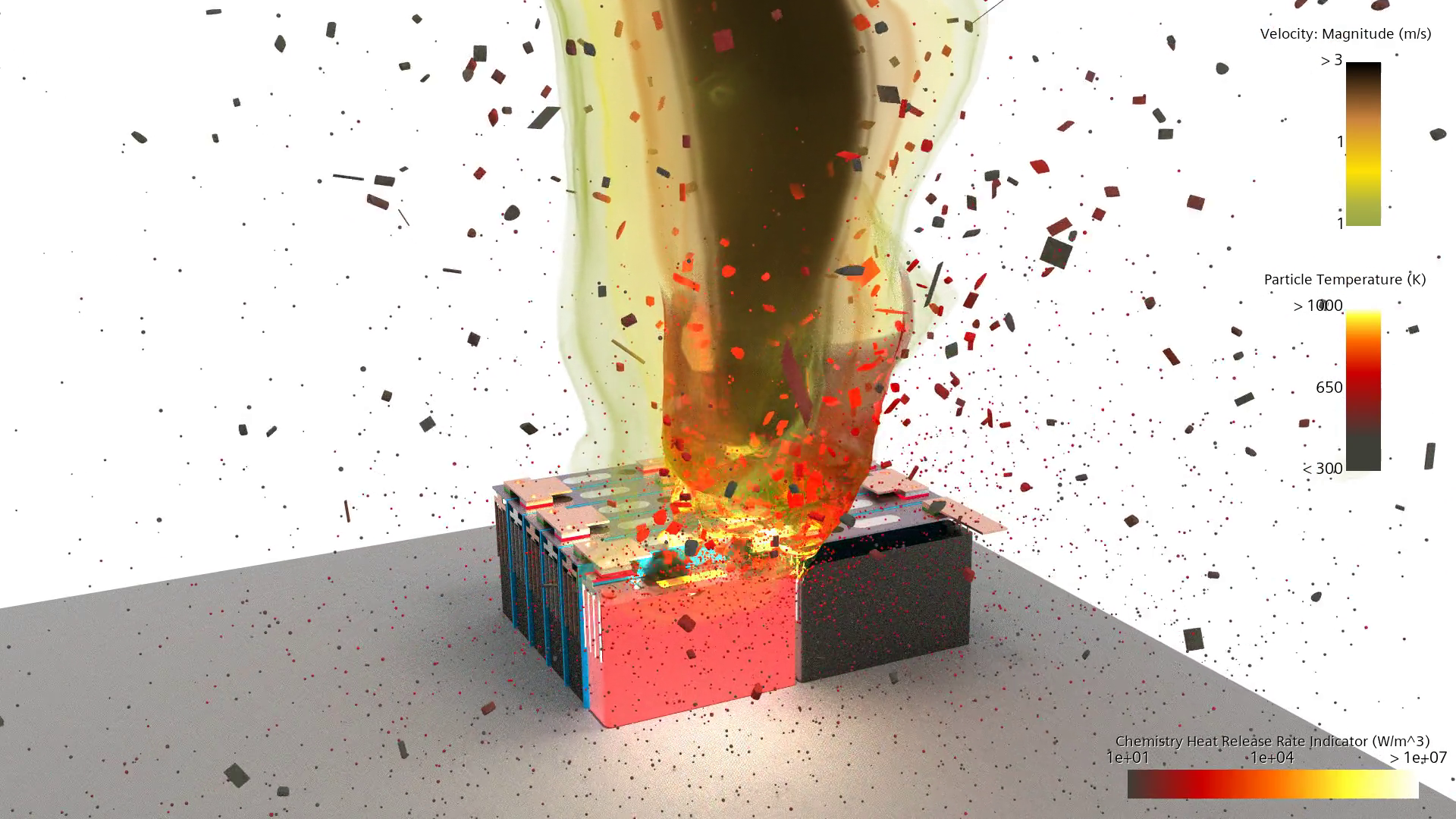
AVL has released its Simulation Suite 2025 R2, delivering a focused set of technical advancements targeting electrification, hydrogen technology, and AI-assisted engineering workflows. The update spans multiple flagship tools—AVL FIRE™ M, AVL CRUISE™ M, and AVL EXPLORE™—and addresses some of the most demanding simulation challenges in sustainable propulsion development.
GPU-Accelerated Battery Thermal Runaway Simulation
One of the headline additions in 2025 R2 is expanded GPU support within AVL FIRE™ M, the suite's high-fidelity 3D CFD solver. The new release extends GPU-accelerated flow solving to embedded body simulations for single-phase flows, including configurations with and without the energy equation, as well as simulations using embedded body interfaces such as mass sources.
This GPU acceleration is particularly significant for battery safety analysis. AVL FIRE™ M now provides a comprehensive framework for simulating thermal runaway events, including:

- Cell heat release modeling via integrated thermal-runaway chemical reaction kinetics
- Venting and particle ejection simulation using a coupled model framework
- Risk propagation analysis to evaluate ignition likelihood and thermal cascade behavior across battery packs
Engineers can use these capabilities as a virtual twin to run repeatable safety tests across a wide range of conditions—reducing reliance on costly physical testing while improving design confidence for EV battery systems.
PEM Electrolyzer Simulation in AVL CRUISE™ M
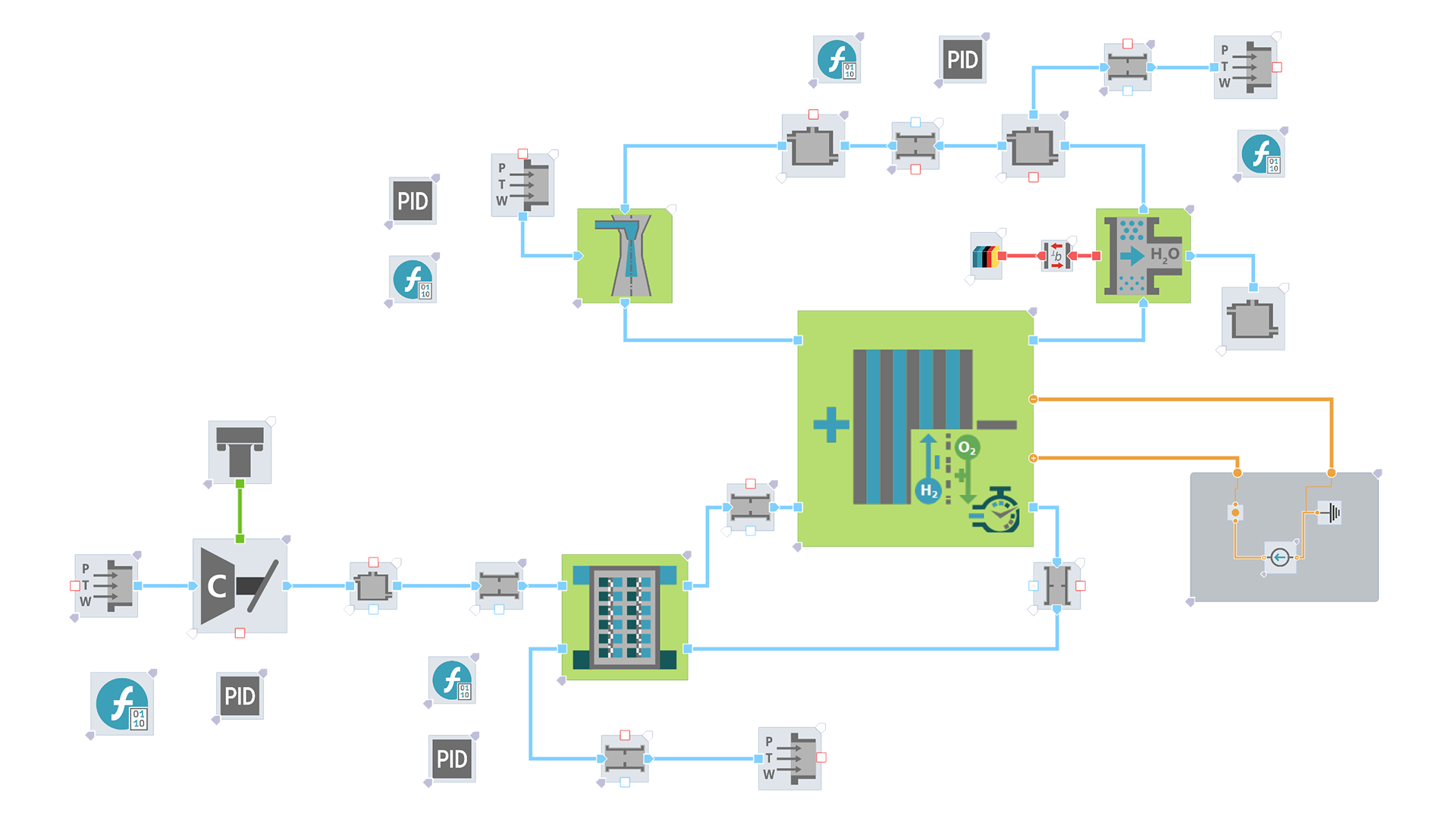
The 2025 R2 release marks a significant milestone for hydrogen technology simulation. AVL CRUISE™ M now includes a dedicated generator for setting up Proton-Exchange Membrane Electrolyzer (PEMEL) stacks and their Balance of Plant (BoP) components. This enables integrated system-level simulation of hydrogen production systems, covering:
- Electrochemical reaction processes and membrane transport dynamics
- Gas transport modeling for hydrogen and oxygen streams
- Aging mechanisms and cell supply dynamics
- Spatial non-uniformity analysis as an alternative to full 3D CFD
This addition complements existing support for Anion Exchange Membrane (AEM) electrolyzers and Solid Oxide Fuel Cell/Electrolyzer (SOxC) components, making CRUISE™ M one of the more comprehensive system-level tools for hydrogen powertrain development.
AI-Driven Design Exploration with ChatSDT and AVL EXPLORE™
The 2025 R2 suite integrates AI-driven tools to accelerate design space exploration. ChatSDT provides a conversational interface for data analysis and workflow automation, while AVL EXPLORE™ applies AI algorithms to optimization tasks—reducing the need for manual trial-and-error iteration in complex multi-parameter studies.
Additional workflow enhancements include:
- Model Flow Diagrams for visualizing power and energy fluxes on block models, with transient animations for dynamic system behavior
- Collaborative co-simulation improvements bridging system-level modeling and 3D CAE environments
- An updated Combustion Analysis Wizard with iFile import and global summary views for thermodynamic assessment of internal combustion engines
Tiered Battery Modeling Approach
AVL FIRE™ M 2025 R2 also refines its tiered battery modeling strategy, offering engineers flexibility based on development stage:
- Early-stage: Constant heat dissipation models for rapid design screening
- Mid-stage: Electrochemical models incorporating cell chemistry and aging
- High-fidelity: Detailed 3D models with layered, heterogeneous cell architectures using Discretized Solid Cylinder (DSC) representations
This tiered approach allows teams to match simulation fidelity to project phase, optimizing computational resources without sacrificing accuracy when it matters most.
Availability and Further Information
AVL Simulation Suite 2025 R2 is available to existing customers through AVL's standard release channels. Full release notes and technical documentation are available at AVL's official simulation software releases page. Webinars covering battery thermal runaway simulation and hydrogen system modeling are also available through the AVL Experience platform.