

ETAP: Comprehensive Electrical Power System Analysis and Simulation
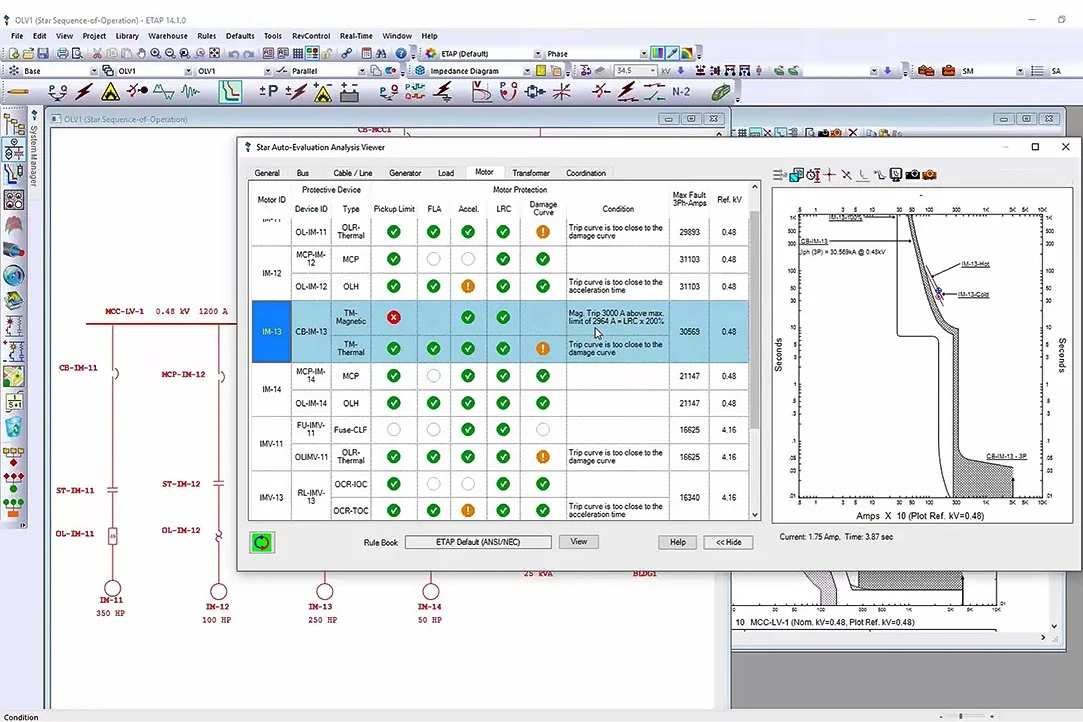
ETAP, an acronym for Electrical Transient Analyzer Program, stands as a preeminent and highly sophisticated software suite specifically engineered for the comprehensive analysis, simulation, monitoring, control, optimization, and automation of electrical power systems. Developed by Operation Technology Inc. (OTI), ETAP offers an unparalleled, integrated enterprise solution that spans the entire lifecycle of a power system, from initial modeling and design through to real-time operation and maintenance.
This versatile platform serves a wide spectrum of industries, including Oil & Gas, Energy, Utilities, Industrial, Transportation, Data Centers, Commercial Buildings, Mining, and Government & Defense, underscoring its critical role in ensuring the reliability, safety, efficiency, and sustainability of electrical networks.
The software is lauded for its user-friendly graphical user interface (GUI), which simplifies complex power system analysis, making it accessible for engineers to carry out detailed studies. Its robust capabilities are backed by technically correct models, a common database, and built-in error trapping mechanisms, ensuring accuracy and reliability in results.

Core Features and Capabilities
ETAP is designed as a comprehensive platform, integrating various functionalities to provide a holistic view and control over electrical power systems.
Unified Digital Twin
At its heart, ETAP creates an "active blueprint" or digital twin of the electrical power system. This digital representation enables real-time analysis and optimization under various operating conditions, data revisions, and time scales, providing a dynamic and accurate reflection of the physical system.
Intelligent Network Editor
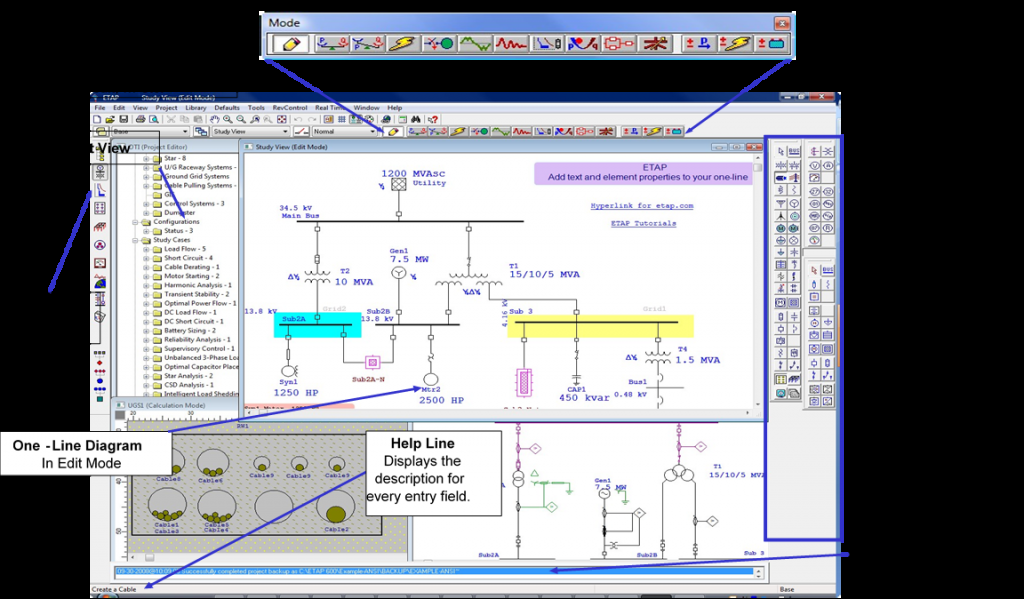
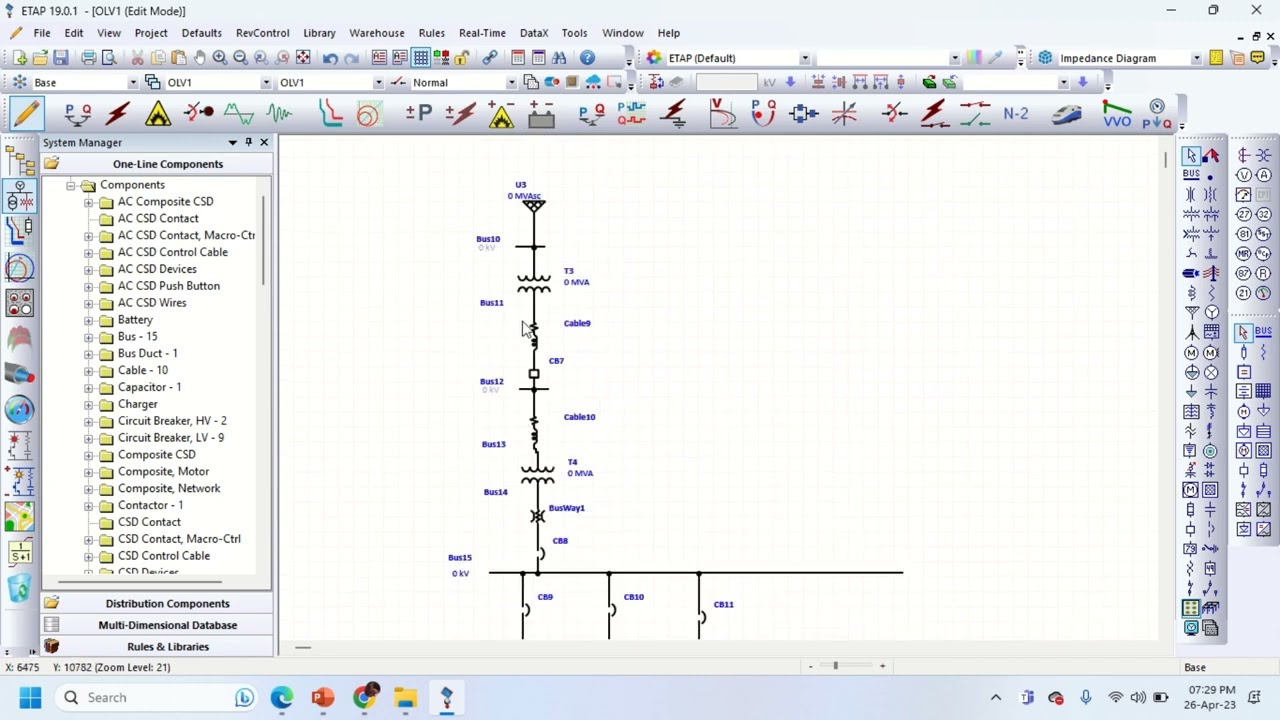
ETAP's advanced single-line diagramming capabilities include features like auto-build, ruleboxes, templates, data blocks, calculators, graphical and numerical processing, and document tagging. This allows for efficient and accurate creation of power system models.
Comprehensive Library Content
ETAP boasts a comprehensive engineering library containing over 140,000 verified and validated equipment and protective device models. Users have access to regular updates and expanded content, ensuring that simulations are based on accurate and up-to-date component data.
Real-time Monitoring and Control
ETAP provides real-time insights into power system performance, allowing engineers to quickly identify potential problems and take corrective actions to ensure system reliability and safety. This includes graphical monitoring via one-line diagrams, alarm notifications, equipment breach warnings, and surveillance of both electrical and non-electrical operating characteristics.
Detailed Analysis Modules and Applications
ETAP offers a vast array of analysis capabilities, categorized into various study modes, each serving a specific purpose in power system design, analysis, and operation.
Load Flow (Power Flow) Analysis
Purpose: Determines the steady-state voltage magnitudes and angles, current flows, and power flows (active and reactive) throughout the system under normal operating conditions.
Applications: Essential for system design and optimization, identifying voltage drops and power losses, assessing power factor correction requirements, and evaluating transformer and transmission line loading.
Methodology: ETAP utilizes iterative methods like the Newton-Raphson method for load flow analysis, which refines an initial guess until an optimal solution for voltage and current at each bus is found.
Short Circuit Analysis (Fault Analysis)
Purpose: Calculates fault currents during various types of short circuits (three-phase, line-to-ground, line-to-line, double line-to-ground faults) at different points in the system. It can perform ANSI and IEC standard short circuit calculations.
Applications: Used to specify protective device ratings (circuit breakers, fuses, relays), ensure proper coordination of protection schemes, and assess the impact of faults on power system stability.
Importance: This is a fundamental calculation for electrical design engineers, crucial for ensuring system safety and protection.
Arc Flash Analysis
Purpose: Evaluates the potential hazards associated with arc flash incidents, determining incident energy levels and arc flash boundaries.
Applications: Helps engineers establish appropriate Personal Protective Equipment (PPE) requirements, ensures compliance with safety standards like IEEE 1584 and NFPA 70E, and identifies areas requiring mitigation strategies.
Features: Includes arc flash auto-evaluation and ArcFault™ capabilities for comprehensive safety analysis.
Motor Starting Analysis
Purpose: Assesses the impact of large motor starting on the power system, particularly evaluating voltage dips and inrush currents during startup.
Applications: Determines appropriate starting methods (direct-on-line, star-delta, soft starter, VFDs) to ensure stable voltage levels and system stability during high inrush currents. It also includes motor parameter estimation and tuning.
Harmonic Analysis
Purpose: Assesses the effects of non-linear loads (variable frequency drives, rectifiers) on power quality, identifying harmonic distortion issues.
Applications: Recommends mitigation strategies (filters, tuned reactors) and ensures compliance with power quality standards like IEEE 519. It also covers interharmonics analysis and flicker compliance evaluation.
Relay Coordination & Protection
Purpose: Designs and simulates relay settings to ensure optimal protection of electrical systems, ensuring selective fault clearing and preventing nuisance tripping.
Applications: Coordinates circuit breakers and protective relays, optimizes settings to improve system reliability and safety. This is a critical skill for electrical design engineers.
Advanced Features: Includes StarZ™ - Distance Protection, Comtrade Processor & Viewer for comprehensive protection analysis.
Transient Stability Analysis
Purpose: Evaluates power system behavior following disturbances such as faults, sudden load changes, or generator trips, focusing on the system's ability to maintain synchronism.
Applications: Helps in preventing cascading failures and blackouts, designing proper system controls and stabilization techniques, and assessing critical clearing times for protection systems. It also covers load shedding, microgrid islanding, transformer inrush, and emtCoSim.
Reliability Analysis
Purpose: Assesses system reliability using key indices like SAIFI (System Average Interruption Frequency Index) and SAIDI (System Average Interruption Duration Index).
Applications: Crucial for identifying weak points in the electrical system, planning maintenance strategies, and improving power system dependability. It involves defining reliability parameters (failure rates, repair times, unavailability) for each component.
Specialized Add-ons and Advanced Capabilities
Cable System & Grounding
Includes modules for Ground Grid analysis, Cable Underground Thermal analysis, Cable Pulling, Cable EMF, and Lightning Risk Assessment. It ensures cable sizing compliance with thermal limits and voltage drop requirements, preventing overheating and inefficiencies. Grounding system analysis helps design systems meeting IEEE 80 and IEC standards.
Sustainability Analysis
Features Carbon Footprint Analysis, Time Domain Load Flow, Reliability Assessment, and Techno-Economic Analysis, supporting greener energy initiatives and environmental compliance.
Microgrid Analysis
Covers Frequency Ride Through, Voltage Ride Through, Power Plant Controller Digital Twin, and Microgrid Controller Digital Twin, essential for modern distributed energy systems. ETAP supports modeling and integration of renewable energy sources like solar and wind power.
Advanced Control Systems
Provides tools for both DC and AC Control Systems design and analysis, enabling sophisticated power system control strategies.
Best Practices for Effective ETAP Modeling
Organize the One-Line Diagram
A well-organized and clear one-line diagram is the foundation of any ETAP model. Use logical layouts, proper labeling, and consistent symbology to represent the electrical system accurately. This improves readability and reduces errors during analysis.
Use Templates and Standardization
ETAP allows users to create and utilize templates for common equipment configurations or system sections. This saves time, ensures consistency, and reduces the likelihood of data entry errors across multiple projects.
Regular Data Updates
The accuracy of simulation results heavily depends on the input data. Regularly update equipment parameters, ratings, and protective device settings to reflect the actual system conditions. This is especially important for existing systems where modifications or aging components can alter performance.
Utilize the Comprehensive Library
Leverage ETAP's extensive library of verified and validated equipment models. Using library components ensures that the models are based on manufacturer data and industry standards, leading to more accurate simulations.
Define Study Cases and Configurations
ETAP allows for the creation of multiple study cases and configurations. This enables engineers to analyze the system under various operating scenarios (normal operation, maintenance conditions, different load profiles, fault conditions) without altering the base model.
Perform Data Validation
Pay attention to warnings and alerts generated by the software. ETAP has built-in error trapping mechanisms that often indicate potential issues with data input or system design that need to be addressed before running analyses.
Continuous Learning and Training
Given the depth and breadth of ETAP's features, continuous learning through online training, workshops, and user groups is highly recommended to stay updated with new functionalities and best practices.
Integration and Interoperability
ETAP promotes accelerated collaboration and data exchange through built-in industry converters and data export options. It offers essential data interoperability with major software platforms such as AVEVA, Autodesk™ (AutoCAD, Revit), and Microsoft Excel, streamlining workflows and data management.
Management Efficiency
The software provides time-saving collaboration tools, standardized editing and reporting, robust management tools, and quick, reliable license management, complemented by regular cybersecurity updates.
Verification & Validation
ETAP is developed and rigorously tested under an audited ISO 9001 Quality Assurance Program, ensuring the accuracy, reliability, and trustworthiness of its results.
Industry Applications and Use Cases
Power Generation
ETAP is extensively used in power generation facilities for analyzing generator performance, protection coordination, and grid interconnection studies. It helps optimize power plant operations and ensure compliance with grid codes.
Industrial Facilities
Manufacturing plants, petrochemical facilities, and other industrial installations use ETAP for electrical system design, safety analysis, and operational optimization. The software helps ensure reliable power supply for critical industrial processes.
Transmission and Distribution
Utility companies rely on ETAP for transmission and distribution system analysis, including load flow studies, fault analysis, and system planning. It supports both traditional and smart grid applications.
Renewable Energy Integration
With the growing emphasis on renewable energy, ETAP provides specialized tools for integrating solar, wind, and other renewable sources into existing power systems, including grid interconnection studies and microgrid analysis.
Conclusion
ETAP stands as an indispensable tool for electrical engineers, offering a comprehensive, integrated, and user-friendly platform for the design, analysis, operation, and automation of electrical power systems. Its extensive features, ranging from fundamental load flow to advanced transient stability and reliability analysis, coupled with adherence to best practices, empower engineers to ensure the safety, reliability, and efficiency of power networks across various industries globally.
The software's continuous evolution, comprehensive library, and robust analytical capabilities make it a cornerstone technology for modern electrical power system engineering. As power systems become increasingly complex with the integration of renewable energy sources, smart grid technologies, and distributed generation, ETAP's advanced features and analytical capabilities position it as an essential tool for addressing the challenges of modern electrical infrastructure.
References
- ETAP Official Website (https://etap.com/)
- ETAP Power Simulator (https://etap.com/power-simulator)
- IEEE Standards for Power System Analysis (https://www.ieee.org/)
- IEC International Electrotechnical Commission (https://www.iec.ch/)
- NFPA 70E Electrical Safety Standards (https://www.nfpa.org/codes-and-standards/all-codes-and-standards/list-of-codes-and-standards/detail?code=70E)