
NAADSM: Advanced Spatial Modeling for Livestock Disease Control
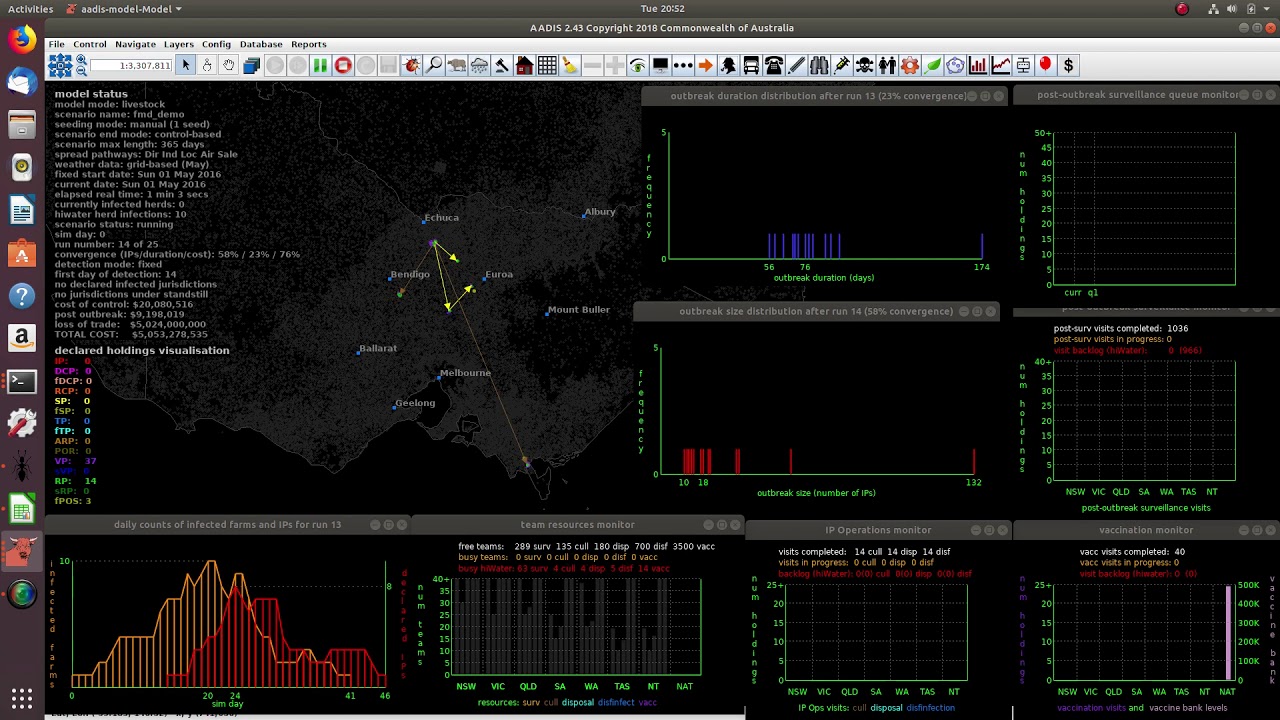
The North American Animal Disease Spread Model (NAADSM) represents a critical advancement in veterinary epidemiology, providing decision-makers with sophisticated tools to simulate and control disease outbreaks in livestock populations. Originally developed by the USDA and Colorado State University, NAADSM has become an essential platform for evaluating disease control strategies before implementing costly real-world interventions.
Core Simulation Capabilities
NAADSM employs a stochastic, spatial, state-transition modeling framework that tracks individual production units (farms, feedlots, or herds) through disease states including susceptible, latent, infectious subclinical, infectious clinical, naturally immune, vaccine immune, and destroyed. The model's spatial component incorporates realistic disease transmission mechanisms including direct contact, indirect contact through fomites, and airborne spread with distance-dependent probability functions.
The simulation engine processes daily time steps, evaluating transmission probabilities based on production type, herd size, spatial proximity, and current disease states. This granular approach enables practitioners to model complex scenarios such as foot-and-mouth disease (FMD), classical swine fever, or highly pathogenic avian influenza with production-specific parameters derived from empirical research.

Detection and Control Strategy Evaluation
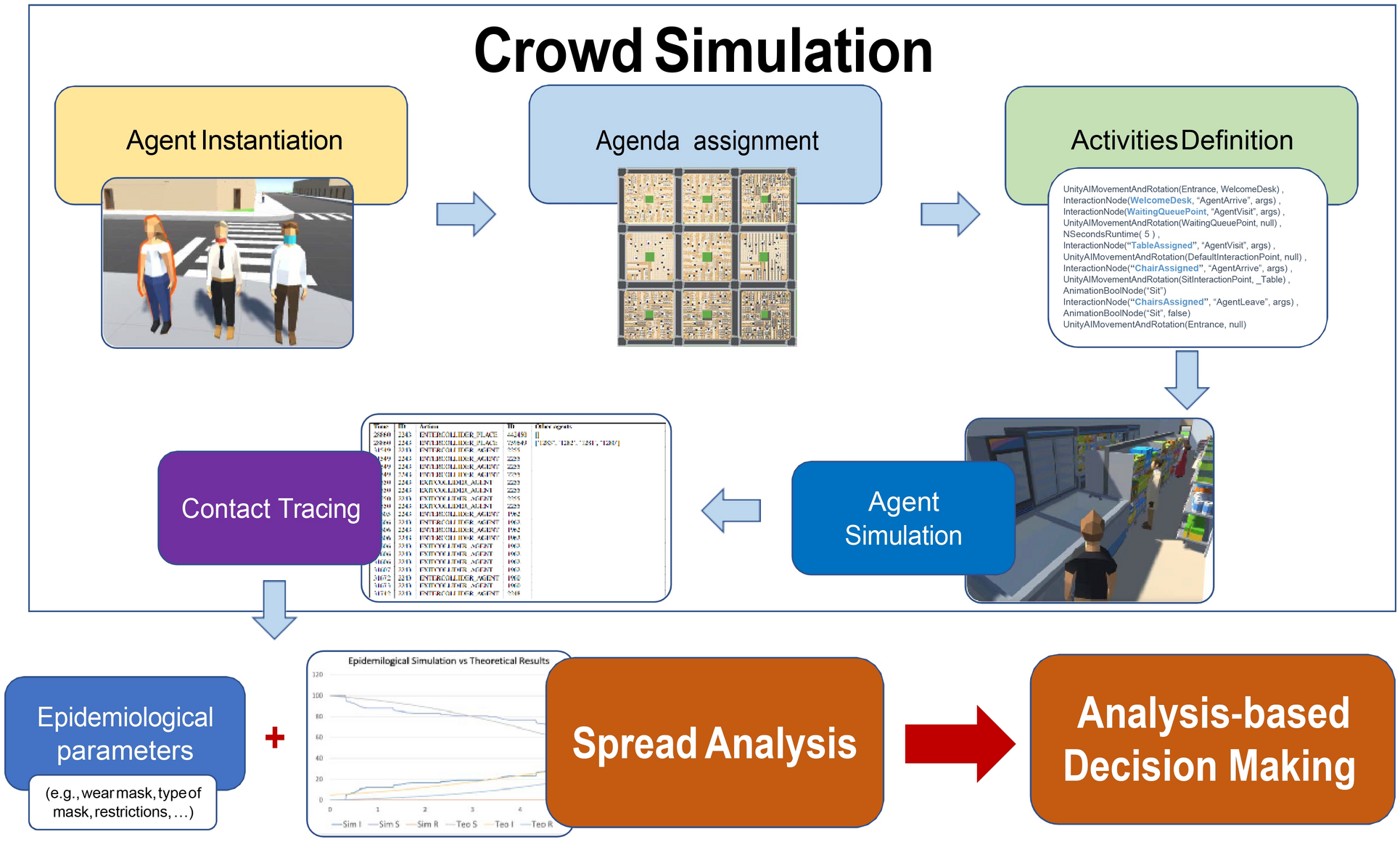
One of NAADSM's most valuable features is its comprehensive detection modeling. The system simulates both passive surveillance (clinical observation by producers) and active surveillance programs, accounting for realistic detection delays and imperfect sensitivity. Users can specify detection parameters including the probability of observing clinical signs, reporting delays, and laboratory confirmation timelines.
Control strategies in NAADSM encompass multiple intervention types that can be combined and prioritized. Ring vaccination allows users to define vaccination zones around detected premises with customizable radii and capacity constraints. Depopulation strategies can be configured with priority schemes based on production type, disease state, or spatial proximity to infected units. Movement restrictions and contact tracing are modeled with realistic implementation delays and compliance rates.
Practical Applications in Policy Development
Agricultural agencies worldwide have deployed NAADSM to inform emergency preparedness plans and resource allocation decisions. The model's ability to run thousands of Monte Carlo iterations enables robust statistical analysis of outbreak trajectories under different control scenarios. Decision-makers can quantify expected outbreak duration, total animals affected, economic costs, and resource requirements (vaccine doses, personnel, disposal capacity) with confidence intervals.
For example, NAADSM analyses have demonstrated that pre-emptive vaccination strategies for FMD can reduce outbreak duration by 40-60% compared to stamping-out alone, but require maintaining substantial vaccine banks and trained response teams. Such quantitative insights directly inform national preparedness investments and bilateral trade agreements that specify acceptable disease control protocols.
Integration with Geographic Information Systems
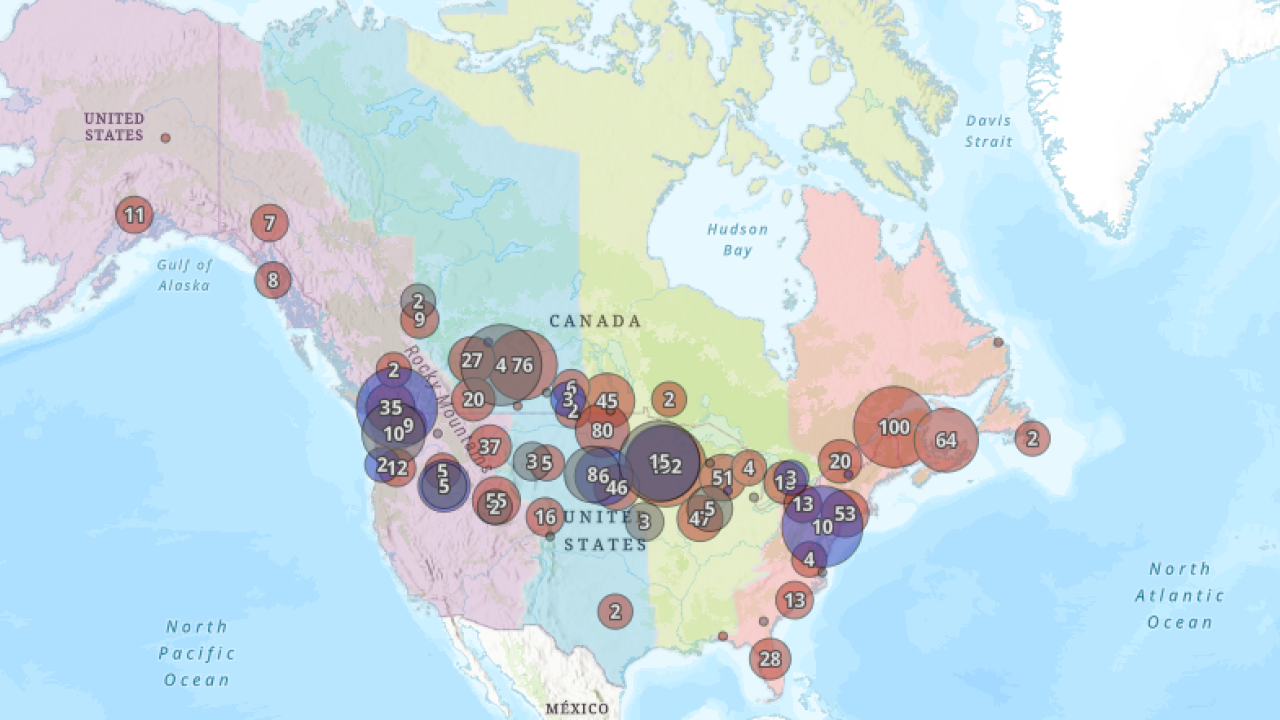
NAADSM's spatial modeling capabilities are enhanced through integration with standard GIS data formats. Users can import actual farm locations, production types, and herd sizes from agricultural census databases or create synthetic populations that preserve statistical properties of real regions. The model outputs spatial visualizations of disease spread over time, enabling stakeholders to identify high-risk zones and optimize surveillance network placement.
Advanced users can incorporate landscape features such as rivers, roads, and urban areas that affect transmission patterns or response logistics. This spatial fidelity is particularly important for airborne diseases where topography and prevailing winds significantly influence spread dynamics.
Technical Implementation and Extensibility
Built on a modular architecture, NAADSM provides both a graphical user interface for scenario development and XML-based parameter files that support scripting and batch processing. The underlying simulation engine is implemented in C for computational efficiency, while the interface layer uses cross-platform technologies ensuring compatibility with Windows, macOS, and Linux environments.
Researchers can extend NAADSM's capabilities through custom production type definitions, novel transmission functions, or specialized control strategies. The model's open documentation and active user community facilitate knowledge sharing and validation studies that continuously improve parameter estimates and modeling approaches.
Conclusion
NAADSM exemplifies how sophisticated simulation tools can bridge the gap between theoretical epidemiology and practical disease control policy. By providing a rigorous framework for evaluating intervention strategies before outbreaks occur, the model enables evidence-based preparedness planning that protects both animal health and agricultural economies. As livestock production intensifies globally and disease threats evolve, tools like NAADSM will remain essential for maintaining biosecurity and food supply resilience.
For more information, visit the NAADSM project website or explore the technical documentation on GitHub.