

NVIDIA Launches Apollo: Open AI Physics Models Transform Industrial Simulation
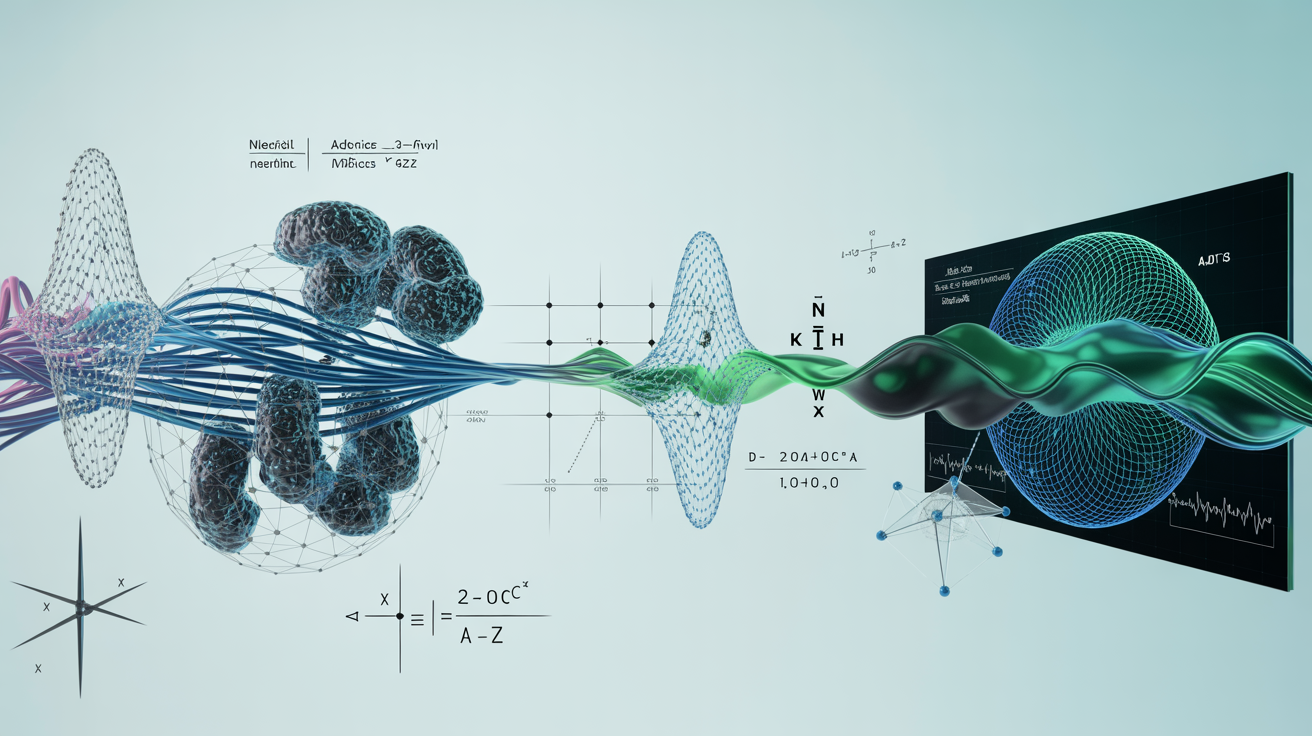
On November 17, 2025, at the SC25 conference in St. Louis, NVIDIA unveiled Apollo—a groundbreaking family of open AI physics models designed to revolutionize industrial and computational engineering simulation. This announcement marks a significant milestone in the convergence of artificial intelligence and physics-based simulation, promising to deliver real-time capabilities across multiple engineering disciplines.
Comprehensive Coverage Across Engineering Domains
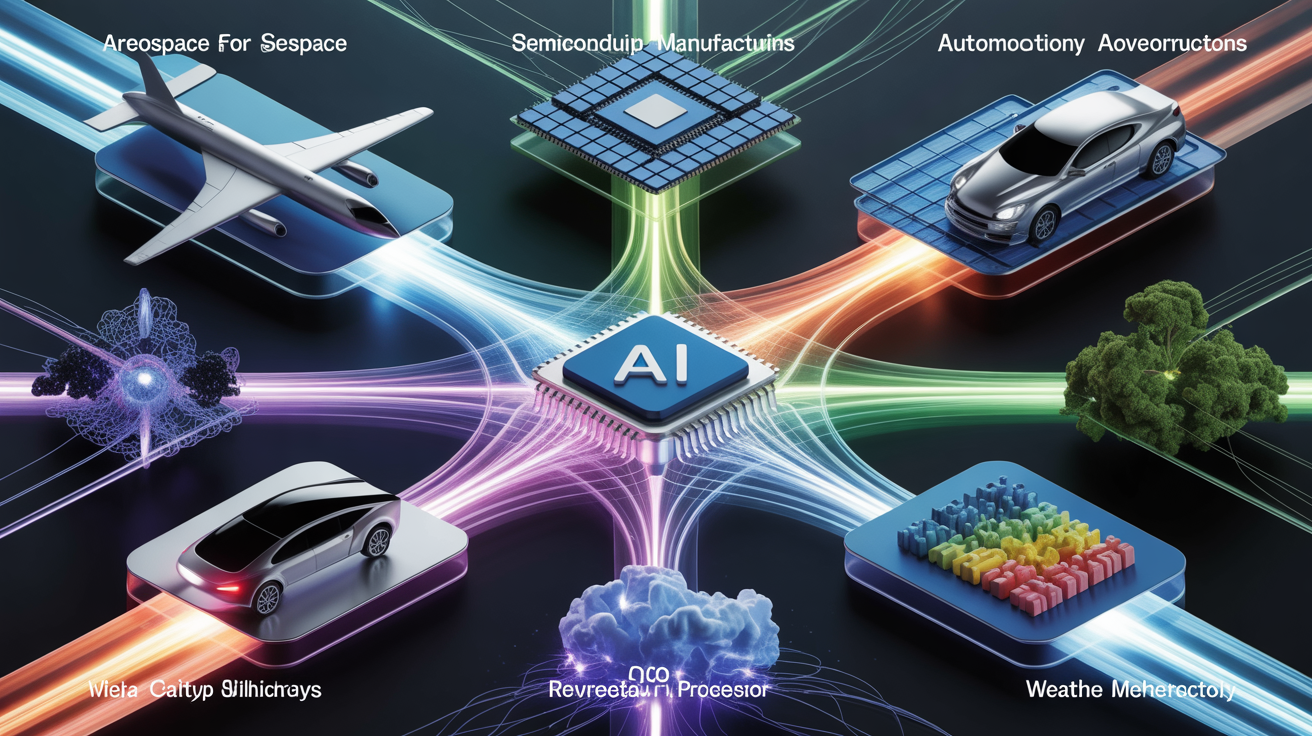
The Apollo family encompasses specialized models optimized for diverse engineering applications. In the semiconductor and electronics sector, Apollo addresses critical challenges in defect detection, computational lithography, and electrothermal design. For structural mechanics applications spanning automotive, aerospace, and consumer electronics, the models enable accelerated structural analysis workflows.
Weather and climate scientists gain access to models supporting global and regional forecasting, downscaling, and data assimilation. The computational fluid dynamics (CFD) models target manufacturing, automotive, aerospace, and energy applications, while electromagnetics models focus on wireless communication, radar sensing, and high-speed optical data transmission. Additionally, multiphysics capabilities address complex scenarios including nuclear fusion, plasma simulations, and fluid-structure interaction.

Technical Architecture and Accessibility
Apollo leverages state-of-the-art machine learning architectures, incorporating neural operators, transformers, and diffusion methods combined with domain-specific physics knowledge. NVIDIA will provide pretrained checkpoints and reference workflows for training, inference, and benchmarking, enabling developers to customize models for specific applications. The models will be available through build.nvidia.com, HuggingFace, and as NVIDIA NIM microservices.
Industry Adoption and Performance Gains
Leading technology companies are already integrating Apollo into their workflows with remarkable results. Applied Materials has achieved up to 35x acceleration in modules of its ACE+ multi-physics software using NVIDIA GPUs and the CUDA framework, directly addressing semiconductor manufacturing capacity limitations.
Cadence demonstrated the technology's potential by creating a real-time digital twin of a full aircraft using its Fidelity Charles Solver accelerated by the NVIDIA-powered Millennium M2000 Supercomputer. LAM Research is collaborating with NVIDIA to accelerate plasma reactor simulation—critical for etching and deposition processes in semiconductor manufacturing.
Synopsys reports achieving up to 500x speedups in computational engineering by initializing simulations with AI physics surrogates. Siemens is integrating Apollo into its Simcenter STAR-CCM+ tools, enabling designers to explore design options orders of magnitude faster than traditional methods.
Implications for the Simulation Industry
The Apollo launch represents a paradigm shift in how simulation software will be developed and deployed. By providing open access to pretrained AI physics models, NVIDIA is democratizing advanced simulation capabilities that were previously accessible only to organizations with substantial computational resources and AI expertise.
The real-time inference capabilities enabled by Apollo could fundamentally change engineering workflows, allowing for interactive design exploration and optimization that was previously impractical. This acceleration is particularly significant for industries like aerospace and semiconductor manufacturing, where simulation runtime has traditionally been a major bottleneck in the development cycle.
Looking Forward
As Apollo models become available through multiple distribution channels, the simulation tools industry can expect widespread adoption and integration into existing software platforms. The collaboration between NVIDIA and industry leaders like Siemens, Cadence, Synopsys, and others suggests that AI-accelerated physics simulation will rapidly become the standard approach for computationally intensive engineering applications.
Organizations interested in early access can sign up for notifications at build.nvidia.com. The open nature of these models, combined with NVIDIA's extensive AI infrastructure ecosystem, positions Apollo to become a foundational technology for the next generation of simulation tools.
Further Reading: