

Scia Engineer 2026: Mobile Loads, 7-DOF Warping Beams, and Eurocode 2nd Generation Support
SCIA, part of the Nemetschek Group, has released Scia Engineer 2026, a significant update to its structural analysis and design platform. The release targets structural engineers working on bridges, industrial buildings, and complex steel or concrete structures, introducing capabilities that address long-standing workflow bottlenecks in moving load analysis, torsional behavior, and code compliance.
Automated Mobile Load Systems
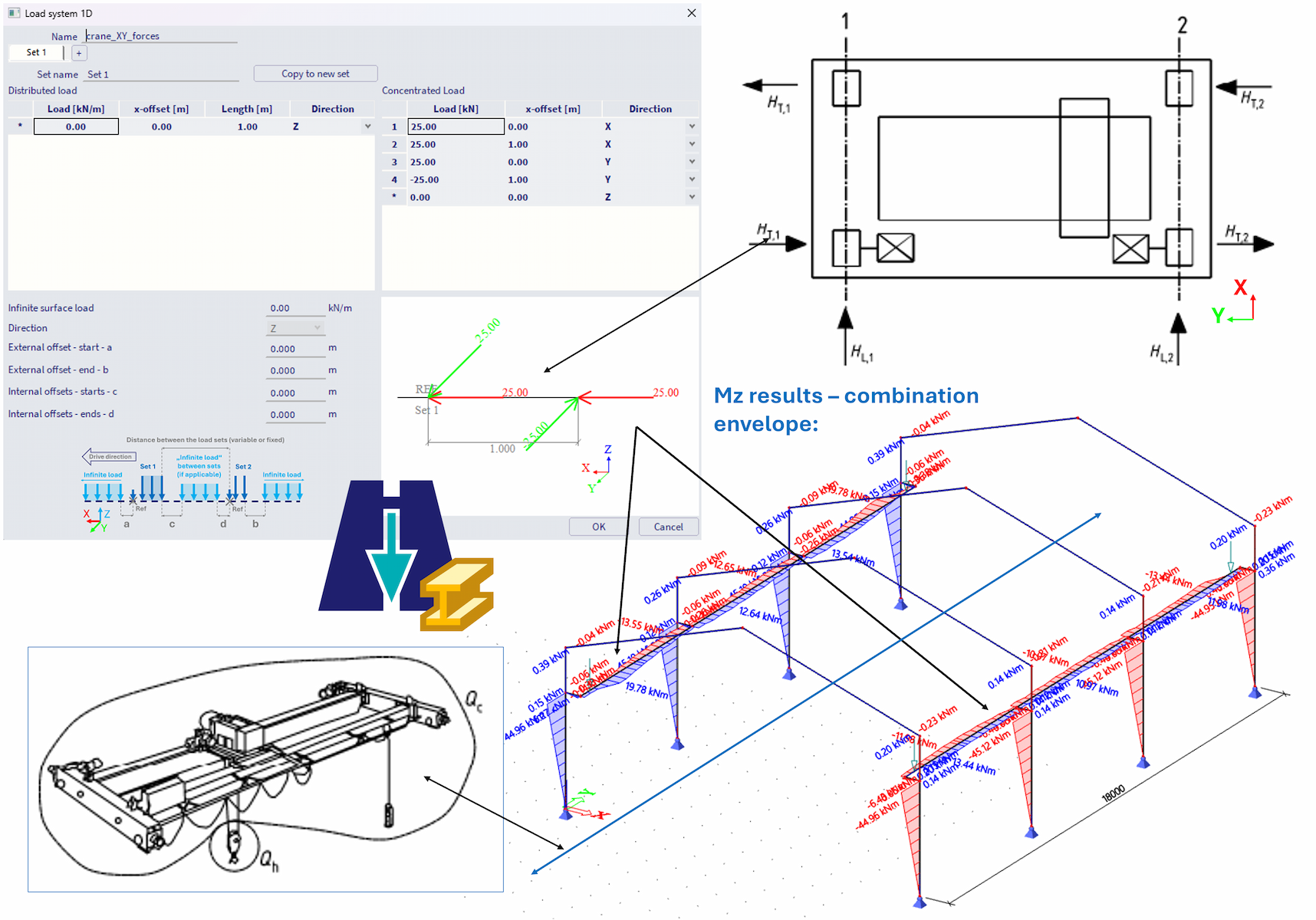
One of the headline features is a fully automated mobile load system built on influence line and influence surface theory. Rather than requiring engineers to manually enumerate every possible load position for moving traffic, crane loads, or pedestrian crowds, the solver pre-screens positions using influence surfaces to identify worst-case scenarios before running the full calculation. This dramatically reduces the number of load combinations that need to be evaluated and post-processed, cutting both computation time and the risk of missing a critical load case.
The system supports 1D load trains (for beams and frames) and 2D surface loads (for slabs and plates), with configurable drive directions, offsets, and load set spacing.

7th Degree of Freedom: Warping in Beam Elements
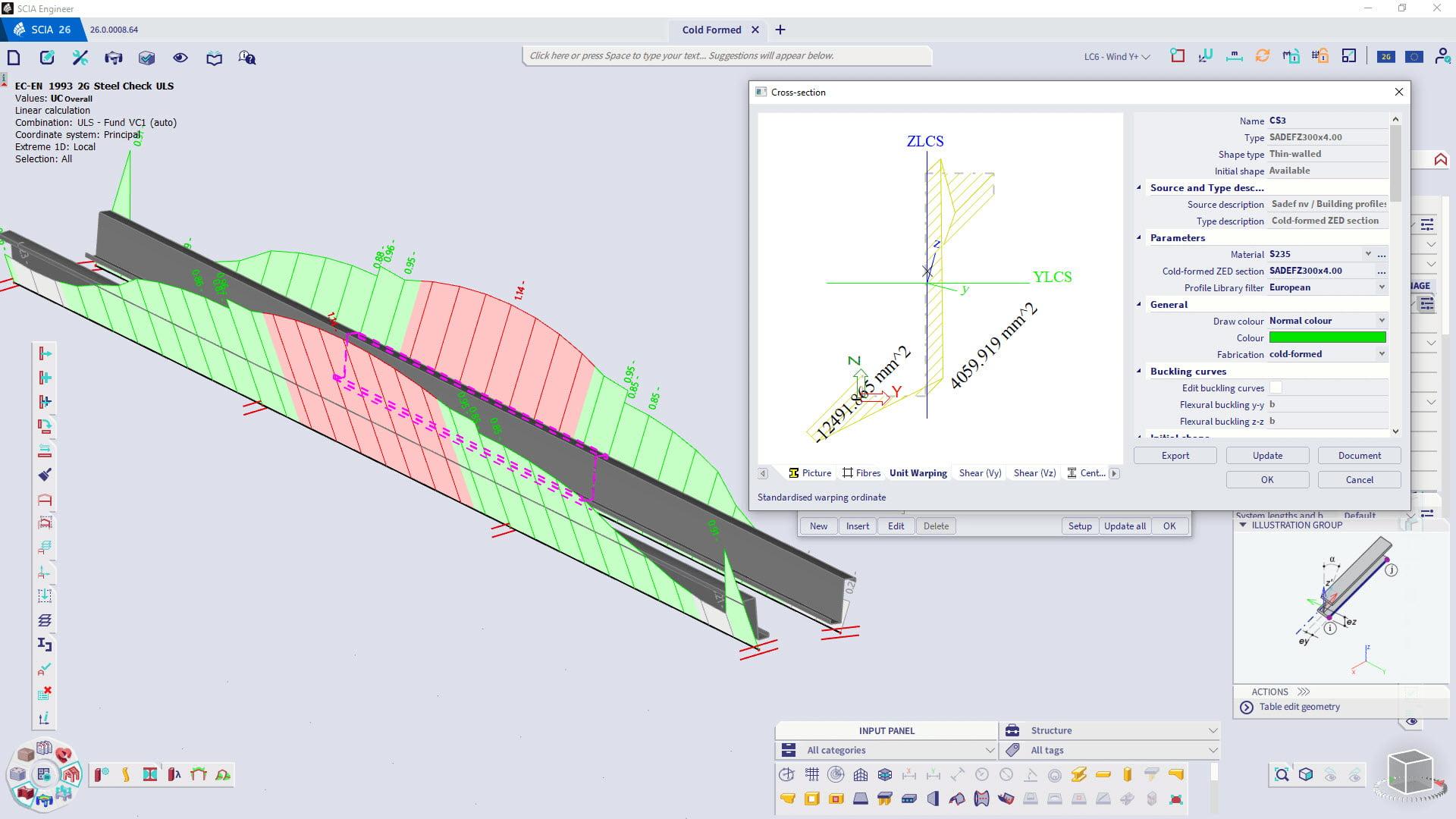
Standard 6-DOF beam elements cannot accurately capture the warping behavior of thin-walled or open-section members under torsion. Scia Engineer 2026 introduces a 7-DOF beam element that adds warping as an independent degree of freedom, enabling precise stress and deformation predictions for I-sections, C-sections, Z-sections, and other open profiles.
This is particularly relevant for steel bridge girders, crane runway beams, and cold-formed purlins where torsional warping stresses can be significant. The new element integrates directly with the existing cross-section library and design checks, so warping results feed automatically into code verification workflows.
Footfall and Vibration Analysis
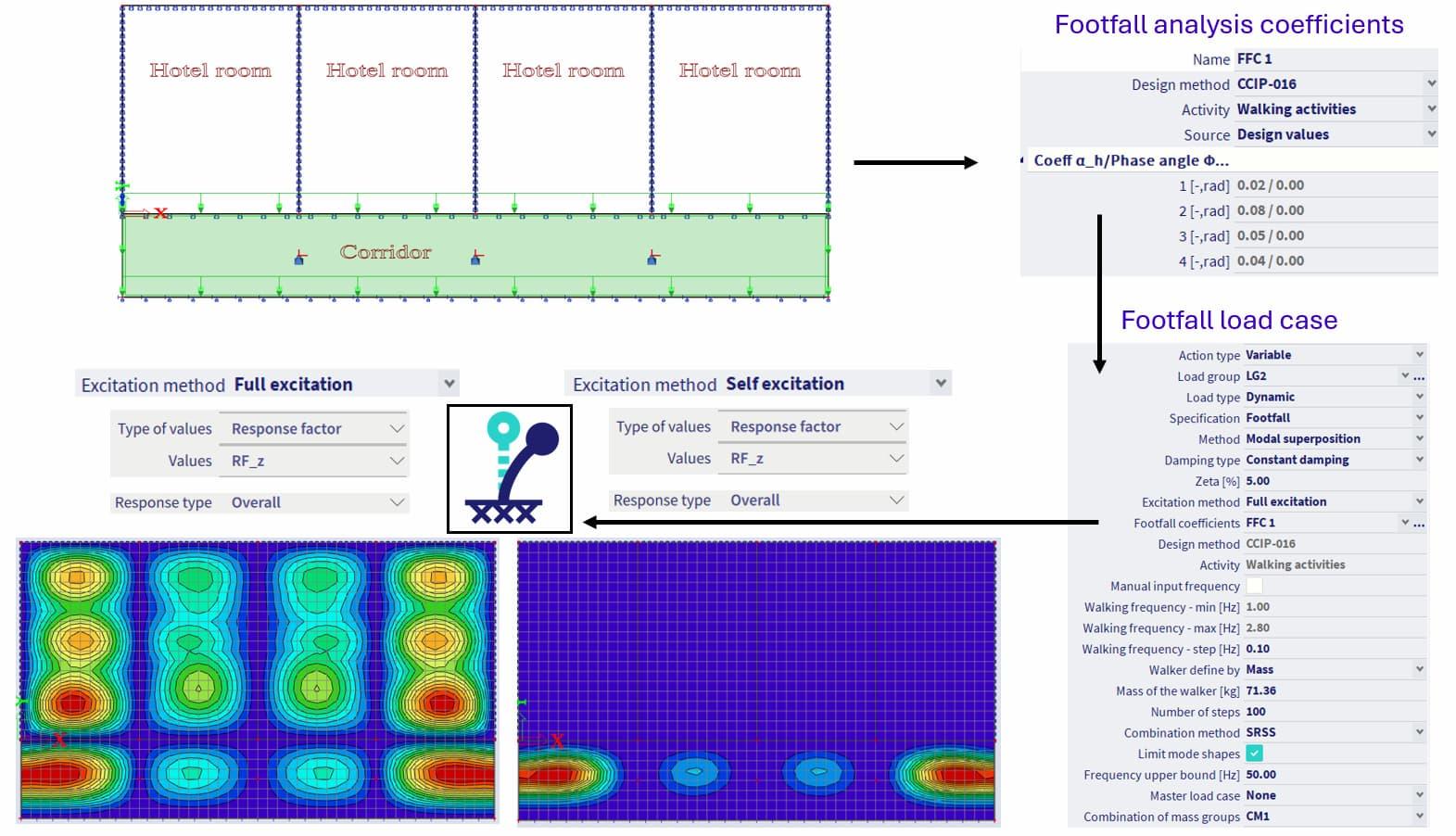
A new footfall analysis module evaluates structural response to human-induced vibrations — walking, running, or rhythmic activities — using modal superposition. Engineers can define footfall load cases with configurable walking frequencies (1.0–2.8 Hz by default), walker mass, number of steps, and damping ratios. The solver computes response factors and acceleration levels at any point in the structure, comparing them against comfort criteria from standards such as CCIP-016.
This capability is aimed at long-span floors, footbridges, hospital operating theaters, and any structure where vibration serviceability governs design. Running the check early in the design phase avoids costly post-construction remediation.
Eurocode 2nd Generation and ASCE 7-22
Scia Engineer 2026 provides full compliance with the 2nd generation of Eurocodes, including EN 1993-1-1 and EN 1993-1-3 for steel structures. The workflow mirrors the current Eurocode approach, allowing engineers to switch between code generations within the same model and compare results side by side — a critical feature for practices transitioning ahead of national adoption deadlines.
On the US side, a new 3D wind load engine automates wind load application in accordance with ASCE 7-22, replacing manual load derivation with a geometry-driven process that accounts for building shape, exposure category, and directionality.
Additional Enhancements
- Punching shear checks now support any slab-column interface geometry, including walls, corners, and non-rectangular columns, with manual control perimeter definition where needed.
- External tendon modeling for post-tensioned concrete allows 3D tendon path definition (manual or via DWG/DXF import) and staged construction analysis covering installation, tensioning, and grouting.
- Bimplus integration enables model-based data sharing across disciplines and project phases within the Nemetschek ecosystem.
Availability
Scia Engineer 2026 is available now through SCIA's standard licensing channels. Full feature documentation and migration guides are available at scia.net/en/scia-engineer/scia2026.