

SUMO: Advanced Traffic Simulation for Urban Mobility Planning
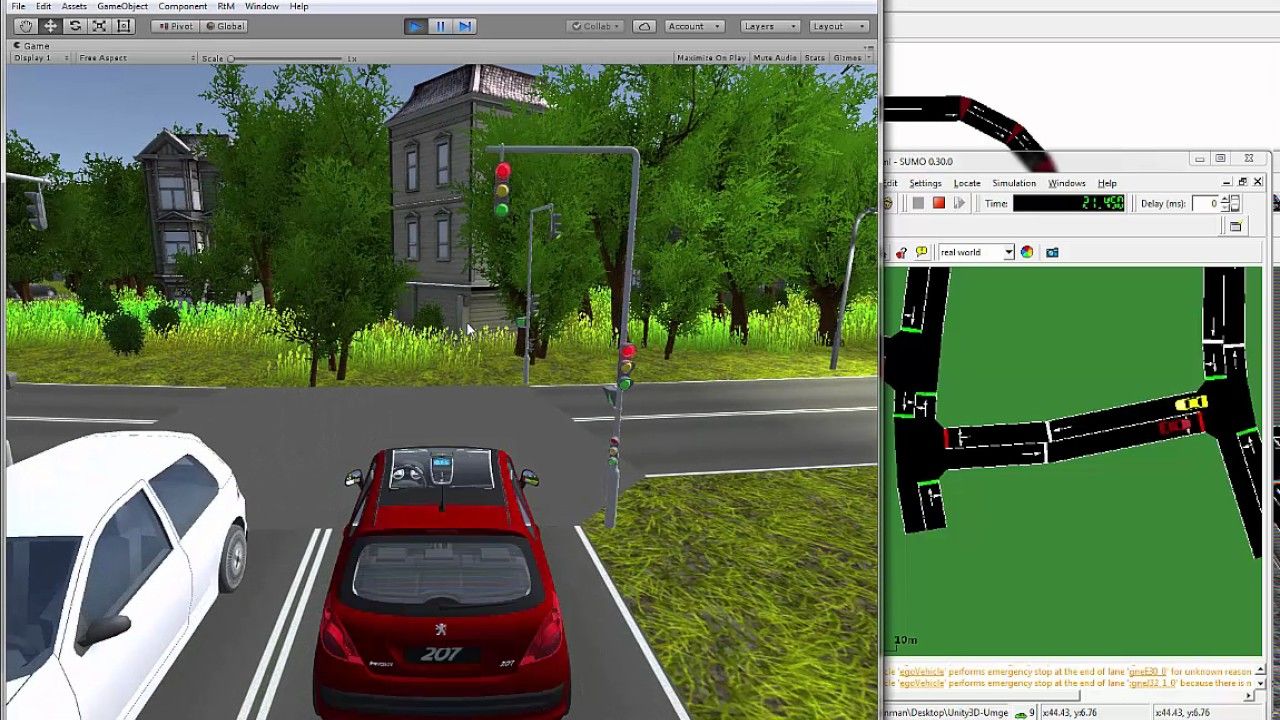
The Simulation of Urban Mobility, widely known as SUMO, is a highly sophisticated, open-source, microscopic, and multi-modal traffic simulation package. Developed by the German Aerospace Center (DLR) and supported by a global community, SUMO has been freely available since 2001 and became an Eclipse Foundation project in 2017.
Overview and Philosophy
SUMO is designed to model and analyze the intricate behavior and performance of traffic systems, offering a powerful tool for researchers, engineers, and urban planners to understand traffic patterns, identify congestion points, and evaluate proposed changes to transportation infrastructure and policies.
SUMO distinguishes itself as a space-continuous and time-discrete simulation, meaning it models the movement of individual objects (vehicles, pedestrians, public transport) explicitly through a continuous space, with updates occurring at discrete time steps. This microscopic approach allows for the capture of detailed movements and interactions, accounting for factors such as driver characteristics, vehicle types, traffic rules, and road conditions.

Key Characteristics
The software is highly portable, implemented in C++ and Python, and utilizes portable libraries, ensuring its availability across various platforms including Windows, Linux, and macOS. Its open-source nature, licensed under Eclipse Public License v2.0 and GNU General Public License v2.0, fosters community contributions and allows users to modify the source code to experiment with new algorithms and approaches.
Core Features and Capabilities
SUMO is not merely a simulation engine; it is a comprehensive suite that includes a wealth of supporting tools to automate core tasks for the creation, execution, and evaluation of traffic simulations.
Microscopic Simulation
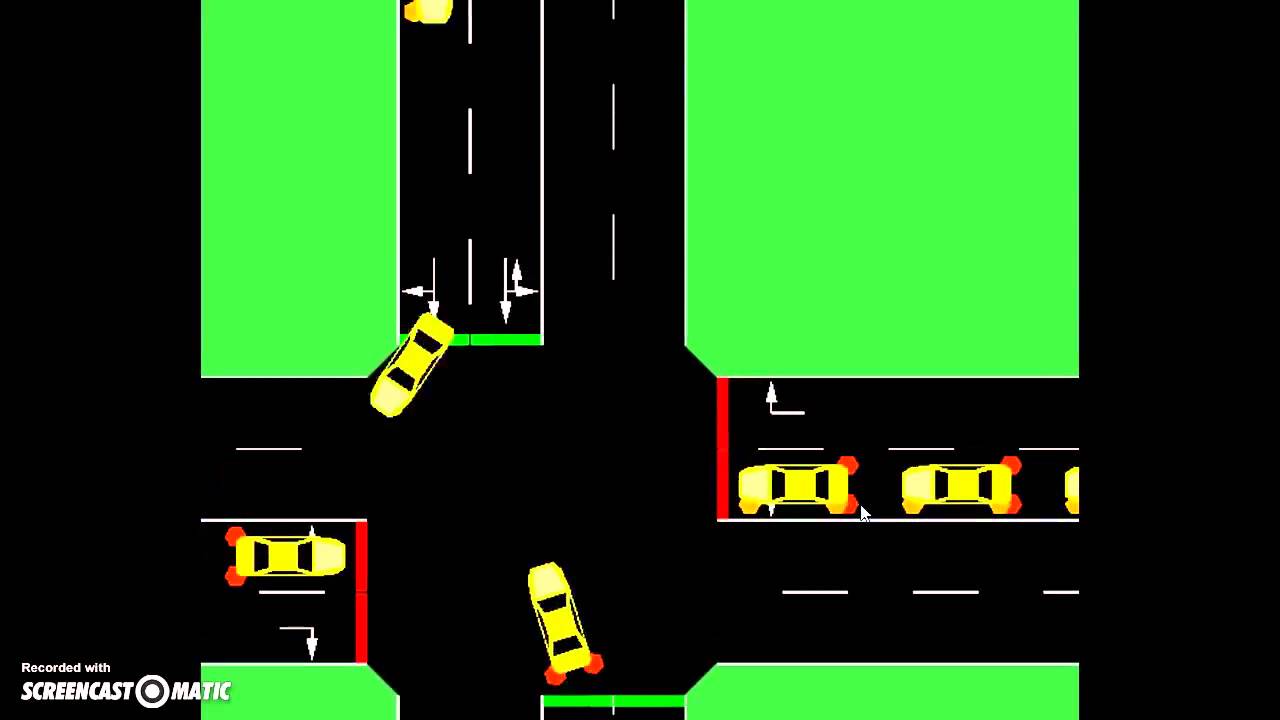
At its core, SUMO is a microscopic simulator that models every single vehicle, pedestrian, and public transport unit as an individual agent with its own route and behavior. This level of detail allows for the simulation of complex interactions, such as lane changing, different right-of-way rules, and the impact of traffic lights.
Multi-modal Traffic Simulation
SUMO supports the modeling of intermodal traffic systems, encompassing a wide range of transportation modes:
- Traditional road vehicles (cars, trucks)
- Public transport (buses, trams, trains)
- Bicycles and pedestrians
- Mixed-mode interactions
This multi-modal capability is crucial for comprehensive urban mobility studies, allowing for the analysis of interactions between different user groups and the evaluation of integrated transportation strategies.
Network Import and Generation
SUMO offers robust capabilities for importing and generating road networks from various sources:
OpenStreetMap (OSM): A popular open-source mapping project, allowing users to easily create scenarios from real-world locations. The osmWebWizard.py tool simplifies this process, enabling users to set up a scenario with just a few clicks.
Commercial Software Formats: VISUM, Vissim, NavTeq compatibility for professional integration.
Other Formats: Shapefiles, RoboCup, MATsim, OpenDRIVE, and generic XML-Descriptions.
Demand Generation
Generating realistic traffic demand is critical for accurate simulation. SUMO supports various methods:
- Traffic Counts: Utilizing real-world traffic counts on streets and junctions.
- Origin-Destination (O/D) Matrices: Decomposing O/D matrices into single vehicle trips using tools like od2trips.
- Virtual Population Models: Generating demand based on mobility wishes of a modeled population using activitygen.
- Random Demand Generation: The OSM Web Wizard can generate random demand for various modes based on probability distributions.
Advanced Features
Traffic Control and Management
Traffic Lights and Right-of-Way Rules: SUMO allows for detailed modeling and control of traffic lights. Users can modify traffic light schedules visually with netedit, import schedules from external data sources, or generate schedules automatically.
Dynamic Traffic Management: The software facilitates the modeling of various traffic management strategies, including video detectors and induction loops for interactive traffic management.
Online Interaction (TraCI)
One of SUMO's most powerful features is its Traffic Control Interface (TraCI). This socket-based interface allows external applications to interact with a running SUMO simulation online. Through TraCI, users can:
- Retrieve values and states of simulation objects
- Dynamically change behavior during simulation
- Implement adaptive traffic control systems
- Test intelligent transportation system (ITS) applications
Automated Driving and Vehicle Communication
SUMO is increasingly used for research into future mobility concepts:
Automated Driving: Integration of automated vehicles into traffic simulations, including transition of control (ToC) devices.
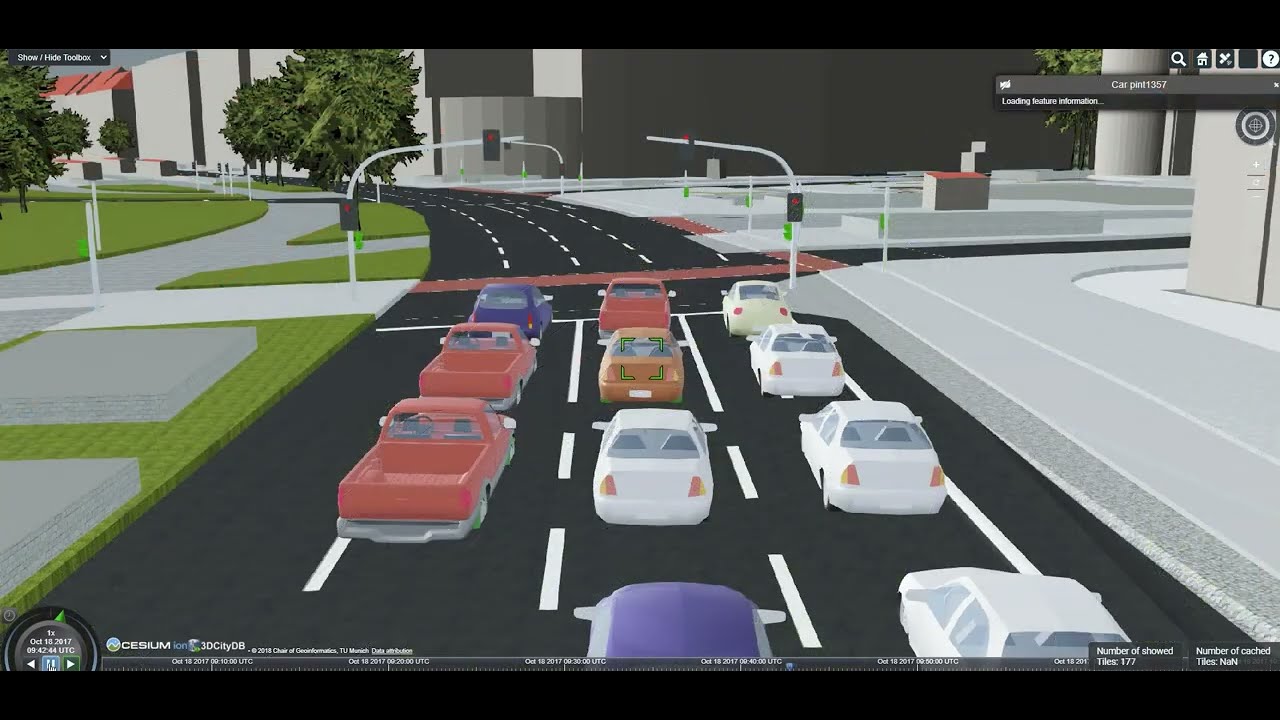
Vehicle Communication (C2X): SUMO can be coupled with communication network simulators like OMNET++ or ns-3 to implement and evaluate C2X communication technologies.
Performance and Scalability
SUMO is designed to handle large road networks, managing networks with several tens of thousands of edges (streets). It boasts fast execution speeds, capable of up to 100,000 vehicle updates per second on a 1GHz machine, with "unlimited" network size and simulation time capabilities.
Applications Across Domains
Transportation Planning and Management
Traffic simulation with SUMO is a powerful tool for improving transportation planning:
- Improved Decision-Making: Evaluating the impact of different alternatives to choose the best option for specific goals.
- Reduced Traffic Congestion: Identifying and addressing bottlenecks, optimizing traffic signal timing, and implementing new traffic management strategies.
- Increased Safety: Identifying dangerous driving behaviors, testing traffic calming measures, and evaluating enforcement impacts.
- Environmental Performance: Identifying ways to reduce emissions and fuel consumption, testing alternative fuel vehicles.
Traffic Lights Evaluation and Optimization
SUMO is extensively used for evaluating and optimizing traffic light systems. Researchers can test different signal timings, adaptive control algorithms, and their impact on traffic flow, congestion, and emissions. The TraCI interface is particularly useful for implementing and testing dynamic traffic light control strategies.
Smart Cities and Connected Vehicles
For smart city applications, SUMO can simulate the impact of various technologies such as connected vehicles, autonomous vehicles, smart parking, smart signals, and smart mobility services. It supports multi-agent and agent-based modeling techniques for exploring smart city solutions.
Public Transport Planning
SUMO's multi-modal capabilities extend to detailed public transport simulation. It can model public transport scenarios from scratch, import schedules using the General Transit Feed Specification (GTFS), and simulate bus, tram, and train movements.
Best Practices for Effective SUMO Usage
Understanding the Basics
For new users, it is crucial to start with the beginner tutorials provided in the SUMO documentation:
- Hello World: Creating a simple network and demand scenario with netedit and visualizing it using sumo-gui.
- OSMWebWizard: Setting up a scenario quickly by importing a network from OpenStreetMap.
- Quick Start: A more complex introduction to netedit and initial steps in SUMO.
Leveraging the OSM Web Wizard
For quick scenario generation from real-world locations, the osmWebWizard.py tool is highly recommended. Users can select an area on OpenStreetMap, and the wizard automatically generates the network and basic demand with options to:
- Include/exclude polygons (non-road objects)
- Specify traffic rules and network types
- Import public transport routes
- Generate demand for multiple transportation modes
Utilizing TraCI for Dynamic Control
For advanced applications, mastering TraCI (Traffic Control Interface) is essential. TraCI allows for real-time interaction with the simulation, enabling:
- Adaptive traffic light control
- Dynamic routing based on real-time conditions
- Co-simulation with other tools
- Implementation of intelligent transportation systems
Data Collection and Calibration
Effective SUMO usage requires substantial data for accurate modeling:
- Calibration: Adjusting simulation parameters to match observed real-world traffic behavior.
- Validation: Comparing simulation outputs against independent real-world data to ensure model accuracy.
Performance Optimization
- Computational Requirements: Understanding that large-scale simulations can be computationally intensive and optimizing scenarios accordingly.
- Network Simplification: Using options like "Car-only Network" to reduce complexity when appropriate.
Community and Support
SUMO benefits from an active community and comprehensive documentation:
- SUMO User Conference: An annual event in Berlin gathering international participants from industry, research, and public institutions.
- Documentation: The official SUMO documentation provides detailed explanations of features, tools, and advanced concepts.
- Support Channels: Mailing lists, Matrix room, and issue tracking are available for support and collaboration.
Conclusion
SUMO stands as a comprehensive and powerful open-source traffic simulation platform that has revolutionized the way transportation professionals approach urban mobility challenges. Its microscopic simulation capabilities, multi-modal support, and extensive toolset make it an invaluable resource for transportation planning, traffic optimization, and smart city development.
The platform's open-source nature, combined with its robust feature set and active community, ensures continued innovation and adaptation to emerging transportation technologies. From traditional traffic management to cutting-edge connected and autonomous vehicle research, SUMO provides the foundation for understanding and optimizing the complex dynamics of urban mobility systems.
By following best practices in scenario development, calibration, and validation, transportation professionals can leverage SUMO's full potential to create more efficient, sustainable, and intelligent transportation networks that serve the evolving needs of urban populations worldwide.
References
- Eclipse SUMO Official Website (https://eclipse.dev/sumo/)
- SUMO Documentation (https://sumo.dlr.de/docs/)
- SUMO User Conference (https://www.eclipse.org/sumo/conference/)
- TraCI Documentation (https://sumo.dlr.de/docs/TraCI.html)
- OpenStreetMap (https://www.openstreetmap.org/)