

Advanced Workflow Automation for Finance & Economics Simulations
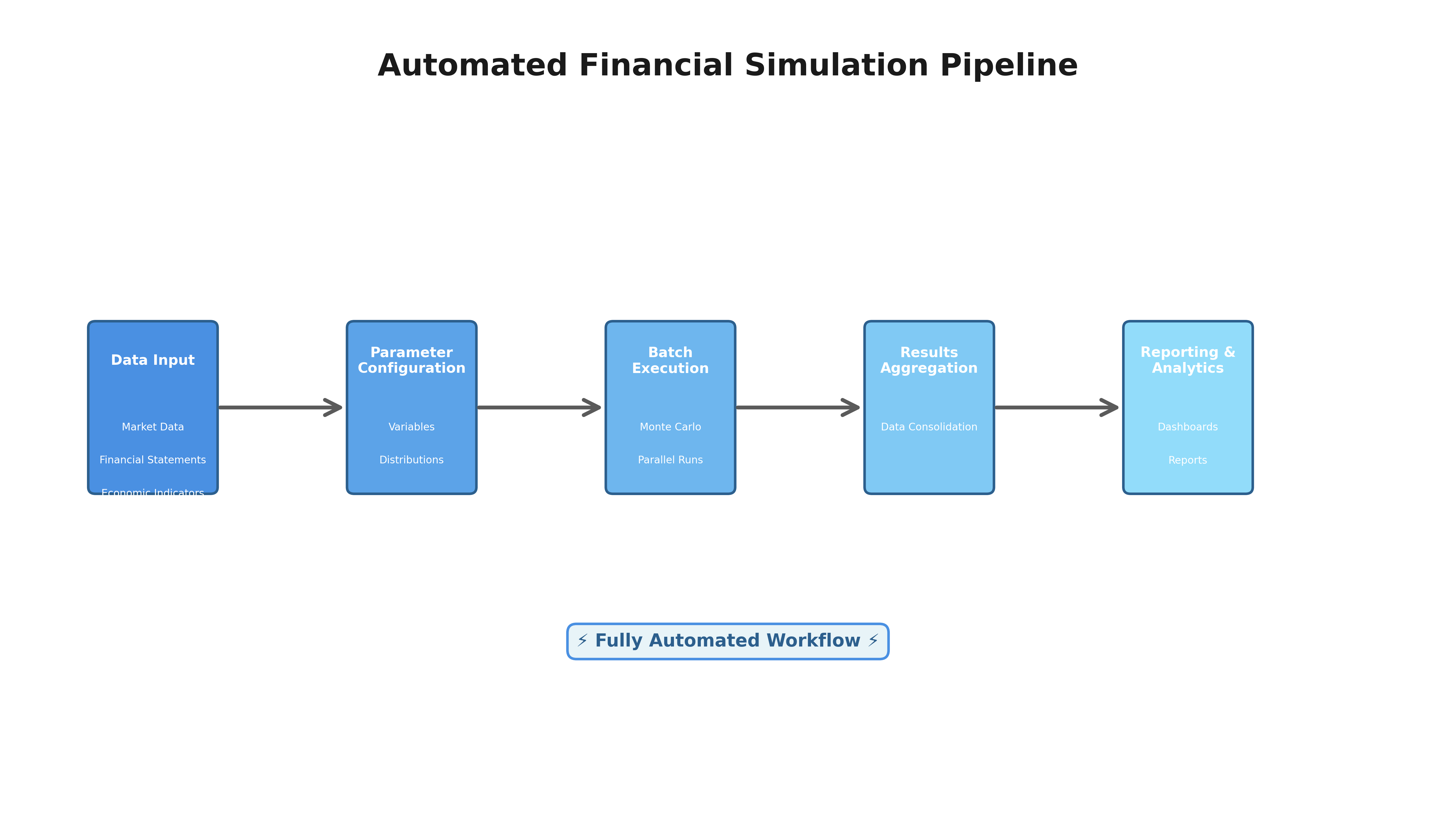
Financial institutions face mounting pressure to analyze complex scenarios faster and with greater accuracy. Traditional manual workflows—characterized by spreadsheet maintenance, manual data entry, and repetitive calculations—can no longer keep pace with modern market demands. Advanced workflow automation has emerged as the essential solution, transforming how finance and economics professionals build, execute, and analyze simulations.
The Evolution Beyond Spreadsheets
While Excel remains ubiquitous in finance, the industry is experiencing a fundamental shift toward automated, integrated simulation environments. Modern automation doesn't simply replace spreadsheets—it augments them with intelligent capabilities that eliminate bottlenecks and systemic risks.
Tools like Palisade's @RISK integrate directly into Excel to enable Monte Carlo simulations with probability distributions, transforming static models into dynamic risk assessment frameworks. Meanwhile, data integration plugins from Bloomberg, S&P Capital IQ, and FactSet automate the critical first mile of simulation: data acquisition. These connections eliminate manual data entry while ensuring models operate on real-time, validated market information.

For organizations requiring enterprise-scale capabilities, standalone platforms like Anaplan and Synario offer multi-dimensional modeling architectures designed for complex scenario planning. These systems separate model logic from data structures, enabling teams to maintain sophisticated simulations that would become unwieldy in traditional spreadsheet environments.
Integration Architecture: The Foundation of Automation
The technical backbone of modern financial automation is a robust integration layer that connects disparate systems through APIs. This architecture enables real-time data flow between market data providers, core banking systems, risk management platforms, and simulation engines.
Financial APIs provide programmatic access to diverse datasets essential for comprehensive modeling: historical market data, fundamental company financials, macroeconomic indicators, and increasingly, ESG metrics. Leading providers offer developer-friendly features including well-documented RESTful endpoints, WebSocket streaming for real-time data, and sandbox environments for testing integration logic before production deployment.
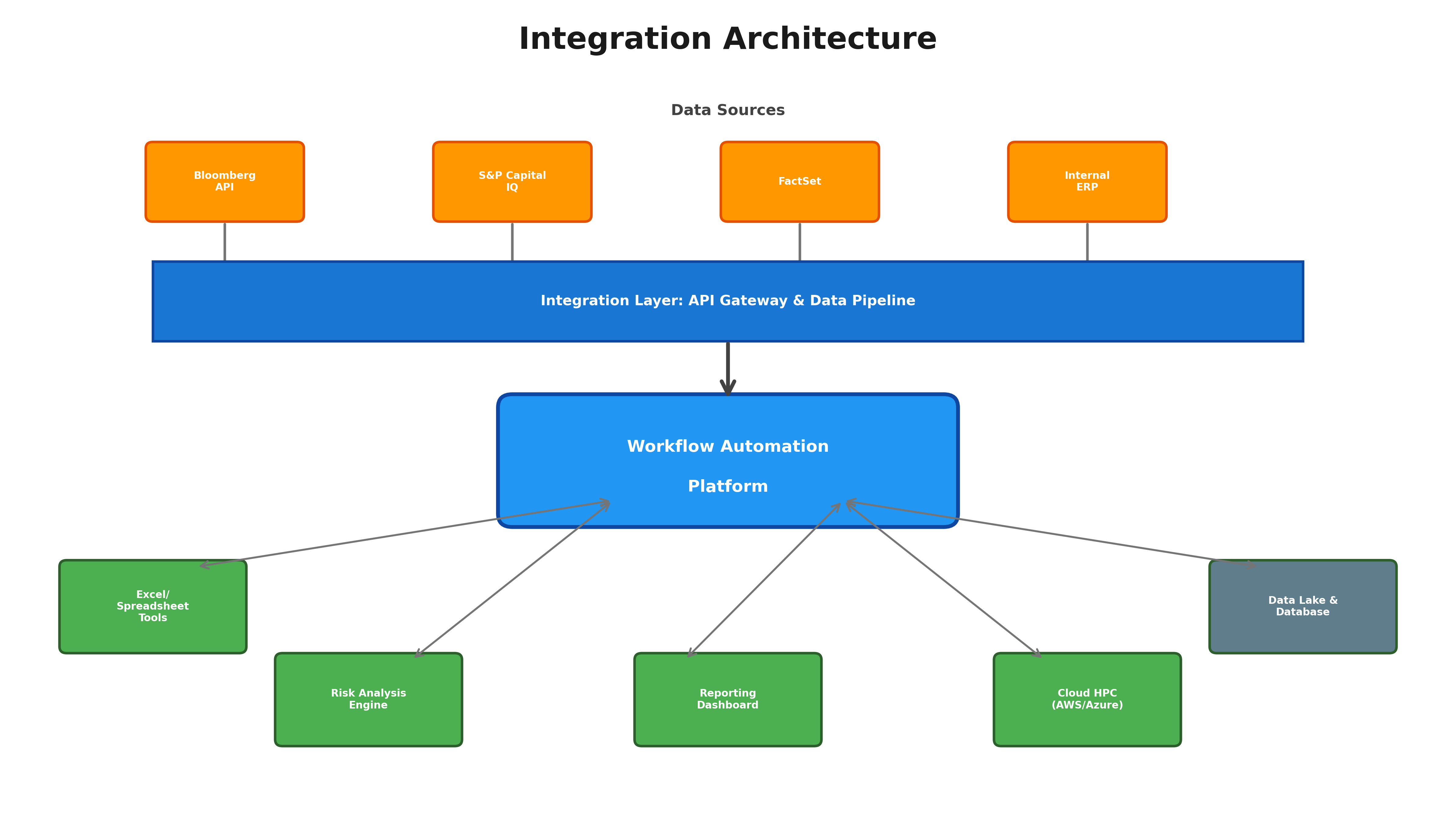
Unified API solutions like Merge abstract the complexity of connecting to multiple accounting systems, offering a single integration point that supports QuickBooks, Xero, NetSuite, and dozens of other platforms. This approach dramatically reduces development overhead while improving maintainability. For AI-powered workflows, platforms like Anthropic's Claude for Financial Services provide APIs that integrate with major data providers to power custom risk modeling and compliance applications.
Batch Processing and High-Performance Computing
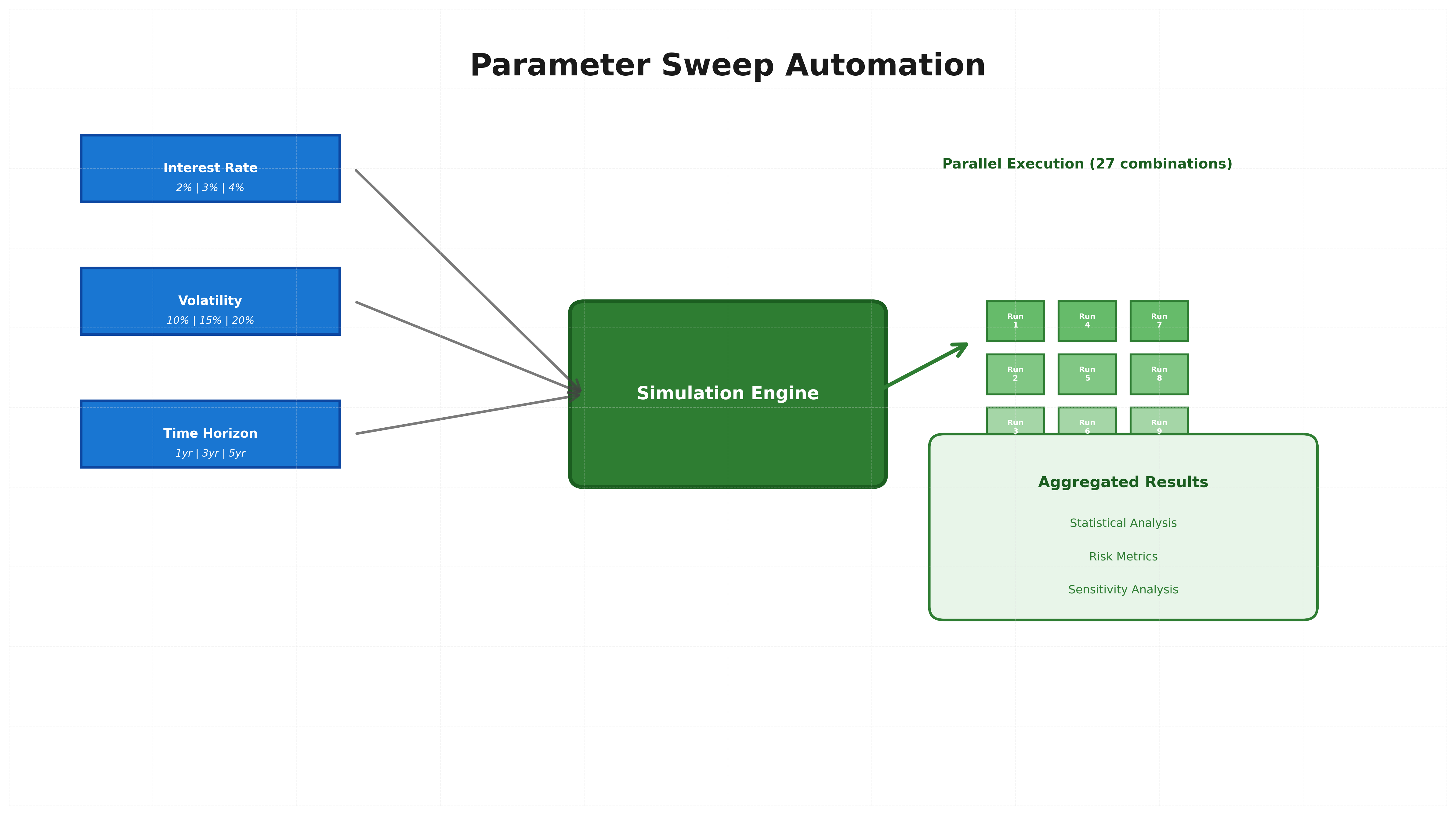
While real-time processing handles immediate needs, batch processing remains critical for computationally intensive simulations. Complex Monte Carlo risk models, portfolio optimization algorithms, and stress testing scenarios often require analyzing millions of scenarios across distributed compute resources.
Cloud-based solutions like AWS Batch and Azure Batch provide managed infrastructure that automatically provisions and scales compute resources based on workload demands. These services enable finance teams to execute large-scale simulations without maintaining on-premises HPC clusters. The Databricks Lakehouse architecture offers a complementary approach, providing a unified analytics platform with automated data pipeline management through Delta Live Tables and built-in data quality controls.
The modern data pipeline follows a medallion architecture: bronze layers ingest raw data, silver layers apply transformations and quality checks, and gold layers provide curated datasets optimized for simulation consumption. This progressive refinement ensures that models operate on clean, versioned data with full lineage tracking for compliance requirements.
Implementation Best Practices
Successful automation implementation requires strategic planning beyond tool selection. Organizations should begin by thoroughly documenting existing workflows to identify high-value automation targets—typically repetitive, rule-based processes prone to human error.
Starting with controlled pilots allows teams to validate technical approaches, gather user feedback, and demonstrate ROI before broader rollouts. Prioritizing tools with strong integration capabilities ensures that automation creates a cohesive ecosystem rather than introducing new data silos.
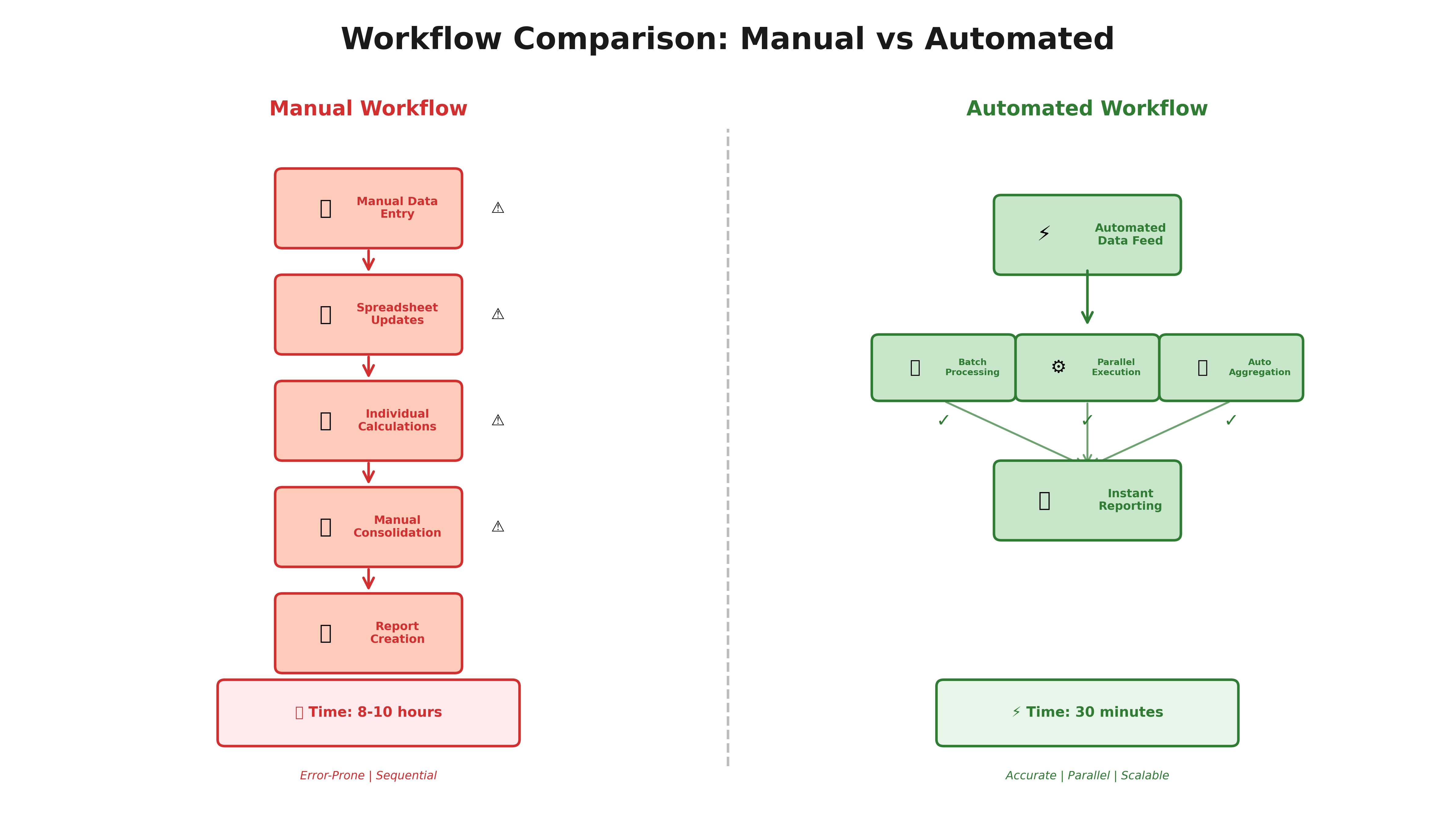
Human oversight remains essential even in highly automated environments. Automation should handle routine calculations and data processing, but human expertise is indispensable for interpreting results, making strategic decisions, and managing edge cases that fall outside predefined rules.
Security and compliance must be architected from the beginning. Automated workflows should implement role-based access controls, comprehensive audit logging, and encryption for data at rest and in transit. These capabilities support regulatory requirements like SOX, GDPR, and IFRS by creating transparent, time-stamped records of all modeling activities.
Real-World Applications in Risk Analysis
Workflow automation delivers particularly high impact in financial risk analysis. Automated credit risk management workflows can capture application data, pull credit reports, calculate scores, route approvals, and monitor external risk signals—all without manual intervention. When exceptions occur, such as orders exceeding credit limits, automated workflows instantly notify the appropriate teams and track resolution.
Third-party risk management benefits from automation's ability to continuously monitor vendor ecosystems for compliance breaches, financial instability, and cybersecurity vulnerabilities. This "digital watchdog" approach provides earlier warning of potential issues compared to periodic manual reviews.
The Path Forward
Advanced workflow automation represents a fundamental shift in how financial simulations are built and executed. By combining specialized tools, API-driven integration, and cloud-based computing infrastructure, organizations can move beyond the limitations of manual processes. The result is faster, more accurate simulations that enable technical professionals to focus on high-value strategic analysis rather than routine data processing.
For teams beginning their automation journey, the key is starting strategically: identify high-impact processes, select integration-capable tools, pilot thoroughly, and maintain appropriate human oversight. This approach enables organizations to realize the efficiency and accuracy benefits of automation while building the technical foundation for increasingly sophisticated simulation capabilities.