

AI Revolution in Simulation Software: January 2025 Marks a Watershed Moment for the Industry
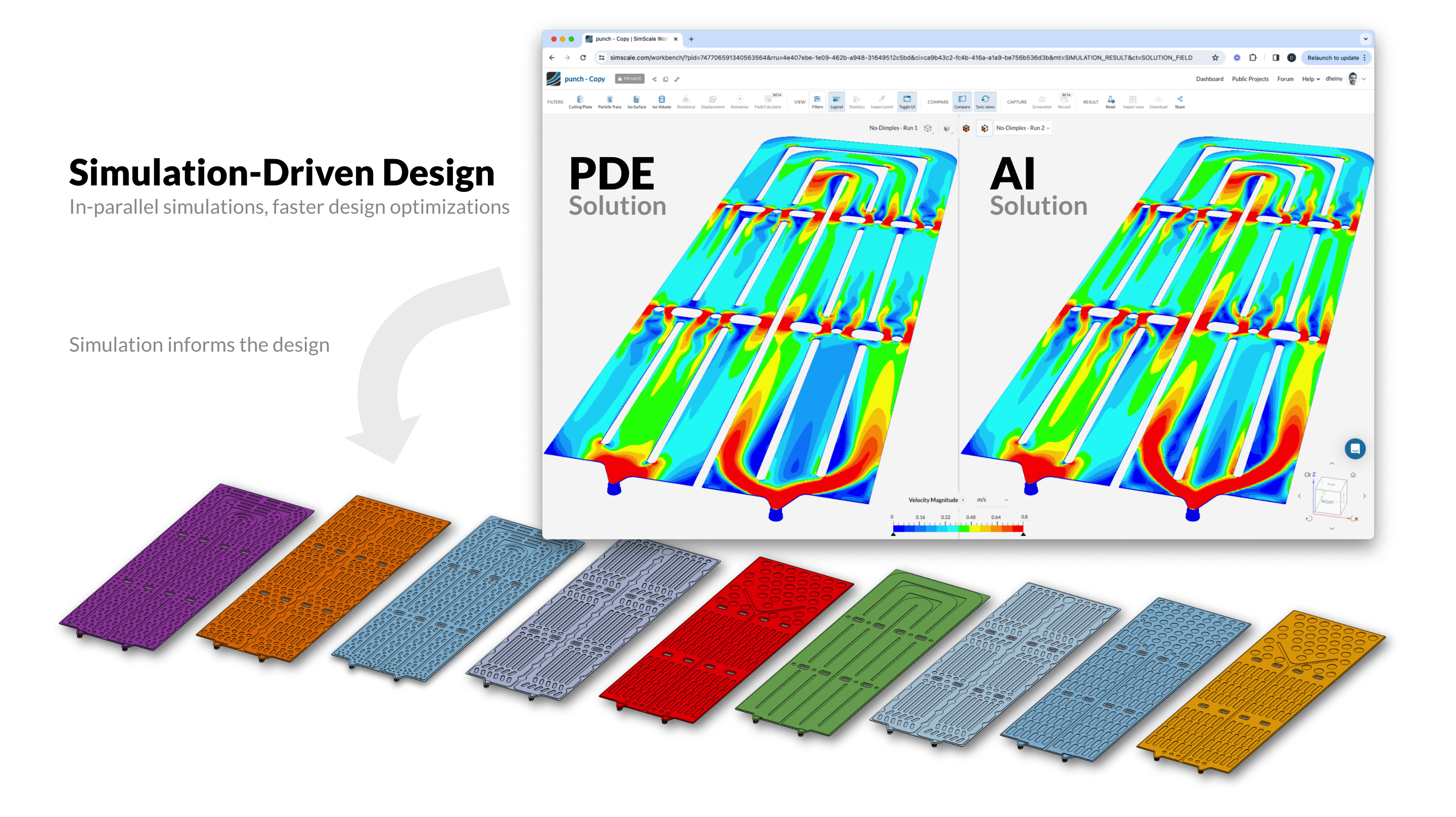
The simulation software industry has entered a transformative era, with January 2025 marking a pivotal moment as artificial intelligence integration becomes the dominant force reshaping how engineers, researchers, and businesses approach complex modeling challenges. This paradigm shift, highlighted by major software releases and groundbreaking AI-powered platforms, signals a fundamental evolution from traditional simulation methodologies to intelligent, autonomous systems capable of unprecedented accuracy and speed.
The AI Integration Catalyst
The convergence of artificial intelligence and simulation technology has reached a tipping point, driven by the industry's need for faster, more accurate, and cost-effective modeling solutions. With the global simulation software market projected to expand from USD 23.56 billion in 2024 to USD 51.11 billion by 2030—representing a robust 14.0% compound annual growth rate—AI integration has emerged as the primary catalyst for this exponential growth.
This transformation addresses critical industry challenges: traditional simulation workflows often require extensive manual setup, consume significant computational resources, and demand specialized expertise. AI-powered simulation tools are eliminating these barriers by automating complex processes, optimizing resource utilization, and democratizing access to advanced modeling capabilities.

Ansys 2025 R2: Setting the Industry Standard
The January 2025 release of Ansys 2025 R2 represents perhaps the most significant advancement in simulation software AI integration to date. The platform's centerpiece, Ansys Engineering Copilot, introduces a revolutionary AI virtual assistant that leverages decades of simulation expertise through Microsoft Azure AI Foundry and Azure OpenAI technology.
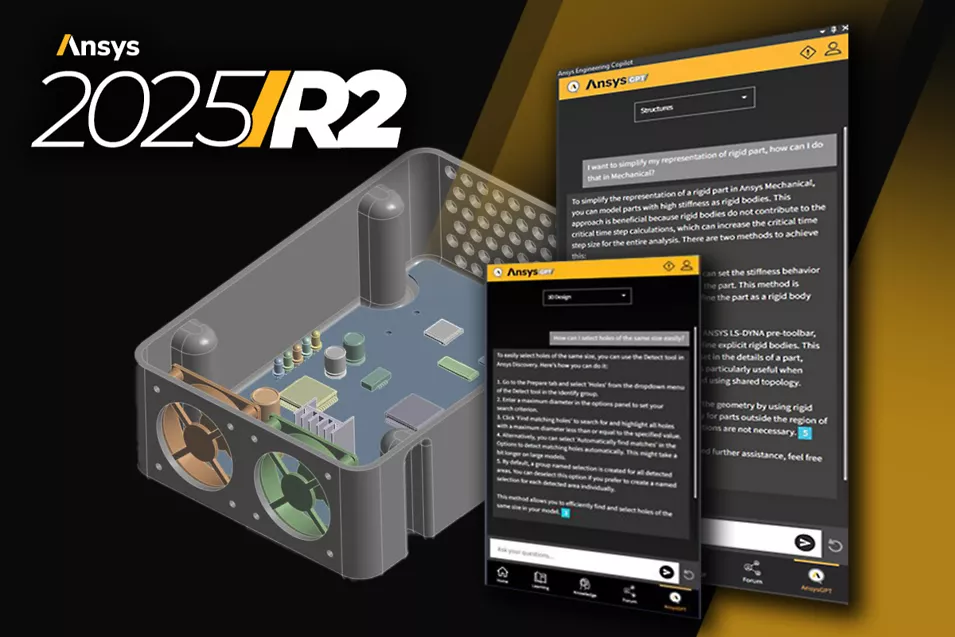
The Engineering Copilot provides real-time, in-product support across multiple Ansys applications including Mechanical, Fluent, HFSS, and Maxwell. Users gain one-click access to over 800 innovation courses, technical articles, and global user forums, dramatically reducing the learning curve for complex simulation tasks while minimizing human error through automated guidance.
More impressive is the platform's AI+ functionality, which delivers automatic creation, validation, and optimization of high-fidelity simulations. In electromagnetic applications, AI+ achieves up to 17x faster results for radiation pattern calculations—a breakthrough particularly valuable for 5G/6G, radar sensor, and satellite communication applications. This represents a quantum leap in computational efficiency that directly translates to reduced development cycles and accelerated innovation.
Specialized AI-Powered Platforms Emerge
Beyond established players, innovative companies are launching specialized AI-driven simulation platforms. digiM's dissoLab, launched January 27, 2025, exemplifies this trend with its cloud-based predictive modeling platform for particle engineering and dissolution simulation.
DissoLab leverages microscopic image analysis and computational physics to predict dissolution profiles based on particle size, morphology, and microstructure. The platform's four simulation benches support development stages from early exploratory analysis without physical samples to advanced regulatory filings using 3D imaging data. This capability is particularly transformative for pharmaceutical development, where accurate dissolution modeling can significantly reduce time-to-market for new formulations.
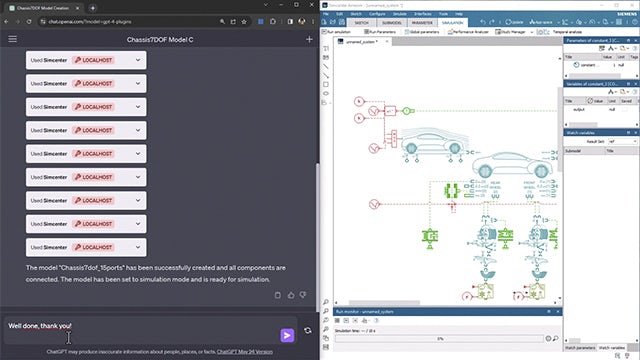
Industry-Wide Transformation Trends
The AI integration movement extends across the entire simulation ecosystem, driven by several key technological advances:
Cloud-Based Intelligence
Cloud deployment has become the preferred architecture for AI-enhanced simulation, with the cloud segment expected to grow at a 15.4% CAGR. Cloud platforms eliminate hardware constraints, enable real-time collaboration, and provide scalable computing resources essential for AI model training and deployment. This shift allows organizations to access enterprise-grade simulation capabilities without substantial upfront infrastructure investments.
Digital Twin Revolution
AI-powered digital twins are revolutionizing predictive maintenance and system optimization. These virtual replicas continuously integrate real-world data through IoT protocols like MQTT, enabling instantaneous responses to changing conditions. Industries from manufacturing to healthcare are deploying digital twins to simulate scenarios, predict failures, and optimize performance before physical implementation.
Multimethod Simulation Enhancement
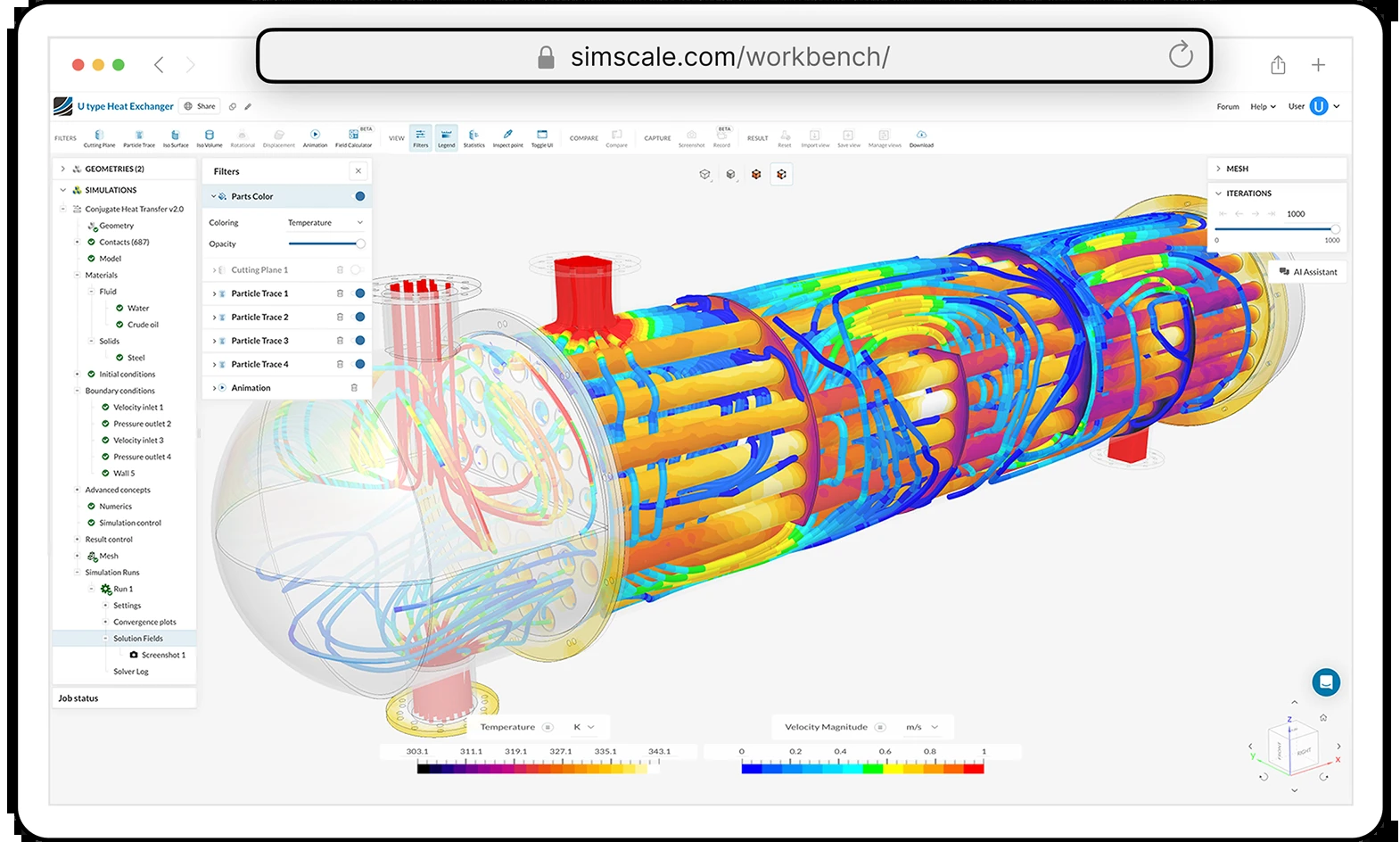
AI is enabling sophisticated multimethod approaches that combine discrete-event, agent-based, and system dynamics modeling. Academic research shows over 56% of multimethod modeling papers focus on real-world applications, with AI enhancing scalability and accuracy across domains including healthcare workflow optimization and supply chain resilience.
Market Impact and Future Outlook
The economic implications of AI-integrated simulation are profound. Organizations report development cycle reductions of up to 50% through automated testing and intelligent optimization. In automotive applications, AI-enhanced simulation is accelerating electric vehicle development by optimizing battery performance and autonomous system validation. Aerospace companies are achieving 20% faster certification processes through automated diagram generation and load analysis.
Regional growth patterns reflect this transformation: North America maintains market leadership with 36.5% share, driven by early AI adoption and substantial R&D investments. However, Asia-Pacific is emerging as the fastest-growing region with a 16.1% CAGR, fueled by manufacturing expansion in China and India.
Challenges and Strategic Considerations
Despite remarkable advances, organizations face implementation challenges including high initial costs, data security concerns, and workforce adaptation requirements. Successful AI simulation deployment requires careful attention to data quality, model validation, and ethical AI frameworks. Companies are addressing these challenges through staged implementations, starting with proof-of-concept projects to validate AI's impact before full-scale deployment.
Conclusion
The simulation software industry's AI revolution represents more than technological advancement—it signifies a fundamental shift toward intelligent, autonomous engineering processes. As these tools mature and become more accessible, organizations that embrace AI-integrated simulation will gain significant competitive advantages in product development, risk reduction, and operational efficiency.
The January 2025 releases from Ansys, digiM, and other innovators mark just the beginning of this transformation. As AI capabilities continue advancing and integration barriers lower, simulation software will evolve from sophisticated modeling tools into intelligent partners capable of revolutionizing how we design, test, and optimize the technologies that shape our world.