
Altair HyperWorks 2026 Delivers AI-Powered Simulation at Enterprise Scale
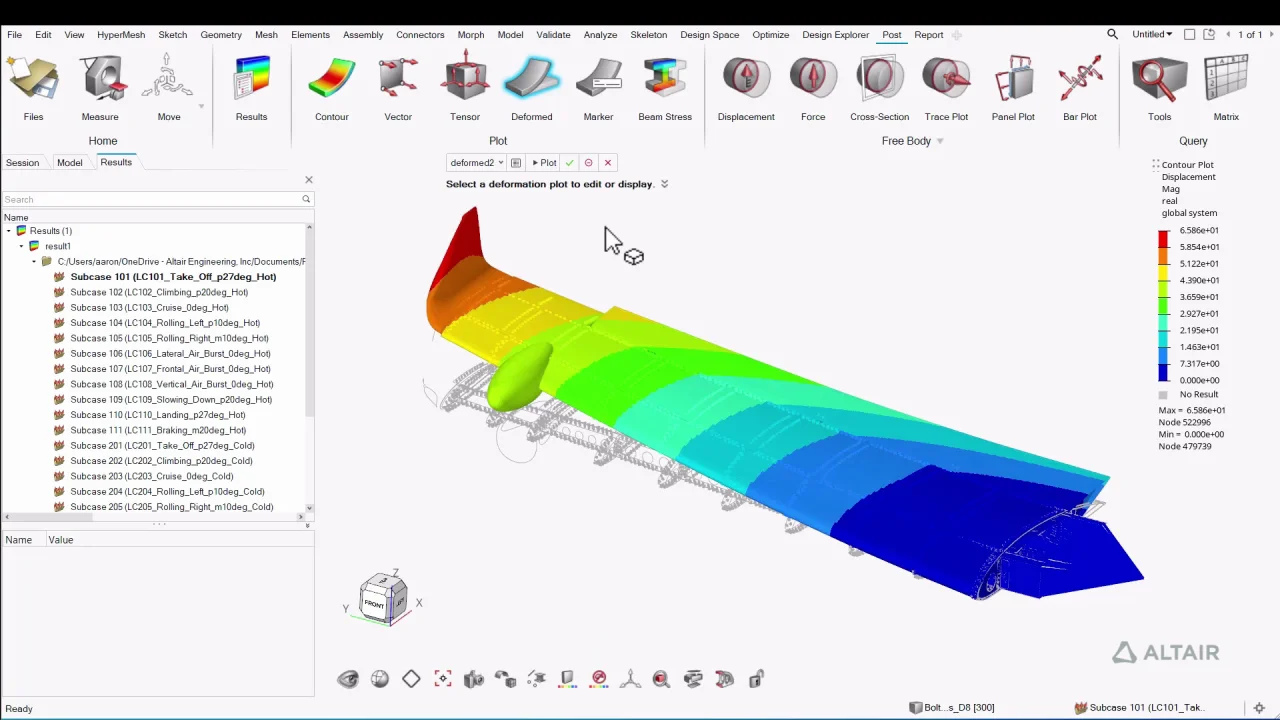
AI-Driven Design at Enterprise Scale
Altair, now part of Siemens, released HyperWorks 2026 in December 2025, marking a significant advancement in simulation software capabilities. The release emphasizes three core pillars: artificial intelligence integration, high-performance computing optimization, and comprehensive multiphysics analysis—all designed to accelerate product development cycles across automotive, aerospace, and manufacturing industries.
Geometric Deep Learning and GPU-Accelerated ROM
At the heart of HyperWorks 2026 lies a sophisticated AI framework that combines geometric deep learning with generative algorithms. The platform introduces GPU-accelerated reduced order modeling (ROM) that delivers near-real-time predictions, enabling engineers to validate designs up to 1,000 times faster than traditional solver-based simulations.
These physics-based AI models operate in secure, browser-based environments, democratizing access to high-fidelity simulation without requiring specialized hardware infrastructure. The technology represents a fundamental shift from compute-intensive traditional methods to AI-augmented workflows that maintain accuracy while dramatically reducing time-to-insight.

Enterprise-Scale Pre-Processing Capabilities
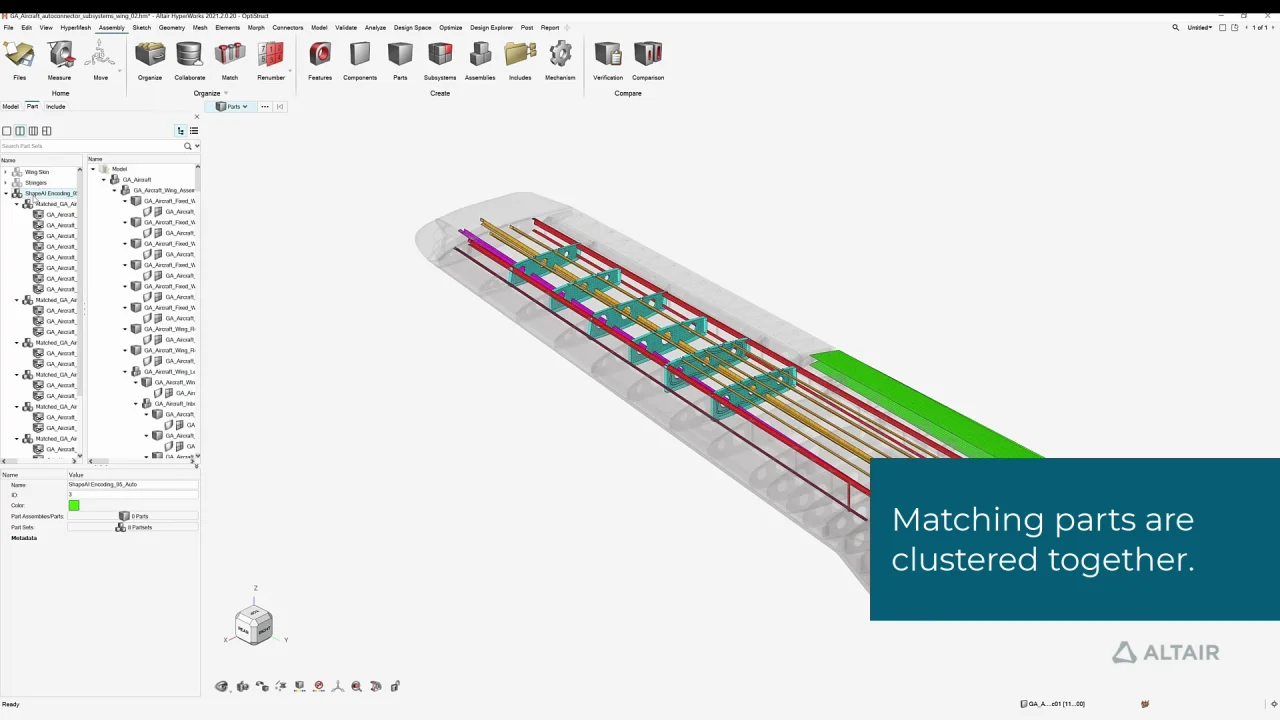
HyperWorks 2026 addresses one of the industry's persistent challenges: managing and simulating large, complex assemblies. The release introduces enhanced pre-processing capabilities that streamline the preparation of enterprise-scale models through improved navigation tools, batch meshing operations, and intelligent connector management.
These improvements enable simulation teams to handle assemblies with millions of elements more efficiently, reducing setup time from days to hours. The enhanced workflow particularly benefits automotive and aerospace applications where vehicle-level or aircraft-level simulations involve intricate component interactions.
Unified Multiphysics Simulation Environment
The platform's integrated multiphysics capabilities allow engineers to analyze complex interactions within a single environment. Unified solvers support thermal-fluid coupling, electromagnetic-structural analysis, and other multi-domain scenarios that previously required separate software packages and manual data transfer.
Specific applications include e-motor optimization workflows, battery safety studies incorporating thermal runaway scenarios, and high-temperature material analysis. Electromagnetic simulations in HyperWorks 2026 demonstrate up to 40% performance improvements over previous versions, significantly accelerating design iterations for electric vehicle components and power electronics.
Automation and Digital Continuity
Recognizing the industry's push toward automated workflows and collaborative engineering, HyperWorks 2026 expands Python and API support while introducing no-code workflow tools. These features enable organizations to build custom automation scripts, integrate simulation into continuous integration/continuous deployment (CI/CD) pipelines, and maintain digital continuity across the product lifecycle.
Cloud integration capabilities facilitate distributed teams working on shared models, with enhanced visualization tools supporting remote collaboration. The platform's architecture supports both on-premises and cloud deployments, providing flexibility for organizations with varying IT infrastructure requirements.
Real-World Implementation
Aviation startup JetZero has adopted HyperWorks 2026 for developing its blended wing aircraft design. The company leverages the platform's AI-driven capabilities to rapidly generate engineering insights during the conceptual design phase, where traditional simulation approaches would be prohibitively time-consuming.
The release positions Altair's simulation portfolio as a cornerstone of Siemens' broader Xcelerator platform strategy, which aims to provide end-to-end digital twin capabilities spanning design, simulation, manufacturing, and operations.
Industry Implications
HyperWorks 2026 reflects broader industry trends toward AI-native simulation tools that balance computational efficiency with physical accuracy. As organizations face pressure to reduce development cycles while managing increasingly complex products, platforms that integrate AI, HPC, and multiphysics capabilities become strategic differentiators.
The release is available now through Altair's standard licensing channels and Siemens Xcelerator portfolio. Organizations can access the software through perpetual licenses, subscription models, or Altair Units—a flexible consumption-based licensing system.
For more information, visit the official Altair HyperWorks 2026 announcement.