

Inside AFSIM's RIPR: How the DoD Simulates Autonomous Combat Intelligence

Modern warfare increasingly demands autonomous systems capable of making split-second tactical decisions across air, space, ground, and cyber domains. But before these systems can be deployed, they must be rigorously tested and validated—not just for their physical capabilities, but for their decision-making intelligence. This is where the Advanced Framework for Simulation, Integration, and Modeling (AFSIM) becomes critical, particularly its Reactive Integrated Planning Architecture (RIPR), a sophisticated framework designed to simulate how intelligent agents perceive, plan, and act in complex combat scenarios.
Beyond Physics: Simulating Intelligence
Traditional military simulations have excelled at modeling the physics of warfare—ballistics, aerodynamics, sensor ranges. However, as the Department of Defense moves toward greater autonomy and AI-driven systems, simulation must evolve to model not just how systems operate, but why they make specific tactical decisions. AFSIM, a government-owned C++ framework maintained by the Air Force Research Laboratory, addresses this challenge head-on through RIPR.
RIPR enables simulated entities (agents) to act autonomously based on their own perception of the environment, creating dynamic "fog of war" scenarios where each agent operates with imperfect, delayed, or incomplete information—just like real-world combat. This capability is essential for evaluating new weapon concepts, refining tactics, and informing acquisition decisions across multi-domain operations.

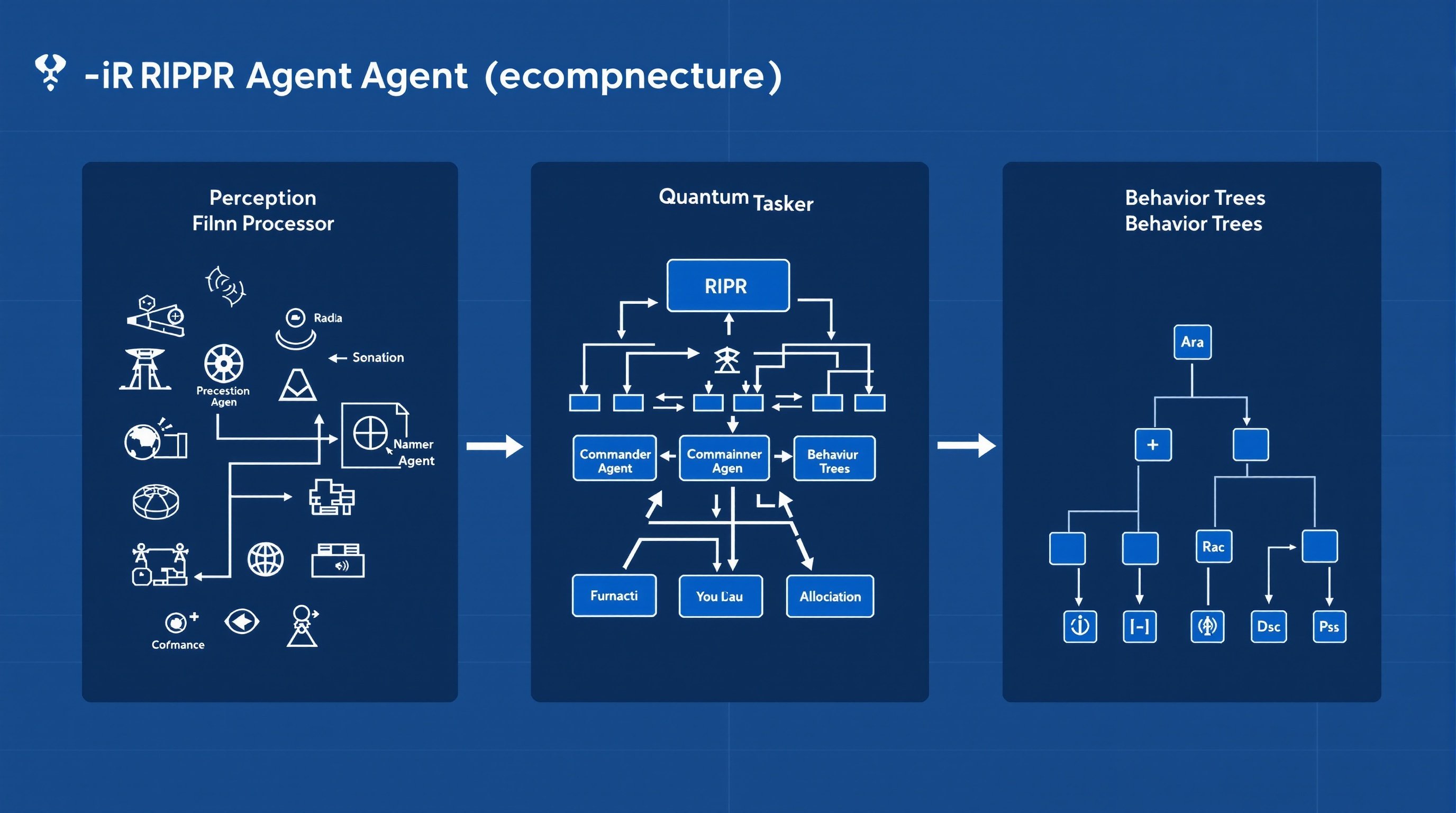
The Three Pillars of RIPR
RIPR's architecture rests on three interconnected components that work together to create realistic autonomous behavior:
1. Perception Processor: Building Situational Awareness
The Perception Processor governs how an agent "senses" its environment. Rather than granting omniscient knowledge of the battlespace, this component queries the agent's platform sensors to build a cognitive model of threats, friendly assets, and mission objectives. Critically, perception can be intentionally limited, delayed, or erroneous to simulate varying levels of training, sensor quality, and situational awareness.
This allows analysts to model the difference between a novice pilot with limited sensor fusion capabilities and an expert operator with advanced threat recognition systems. The perception layer creates the foundation for all subsequent decision-making, making it a crucial element for realistic simulation.
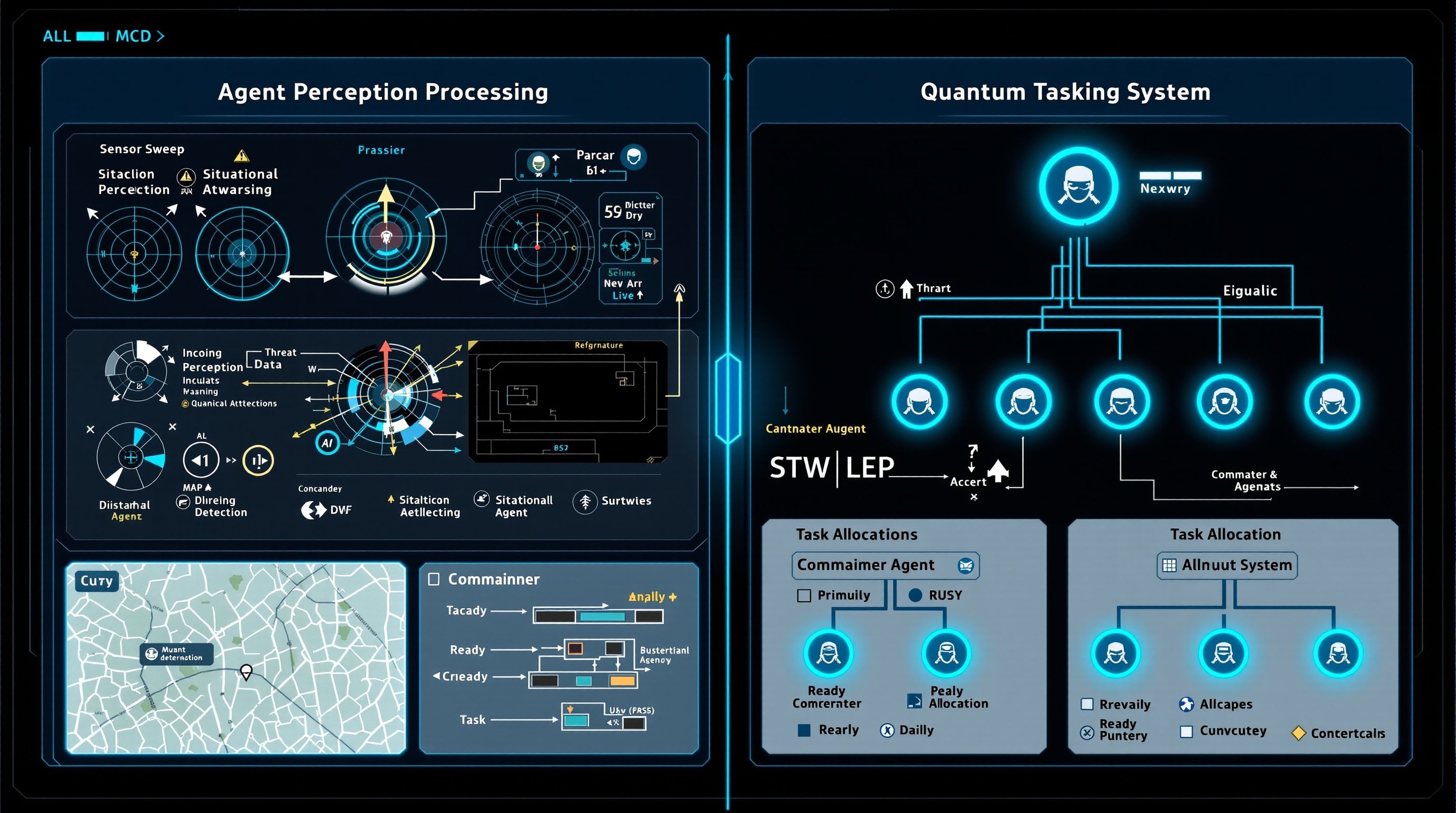
2. Quantum Tasker: Coordinating the Mission
In modern military operations, individual platforms rarely act in isolation. The Quantum Tasker handles commander-subordinate interactions and task de-confliction across multiple agents. A commander agent can generate mission tasks, evaluate which subordinate assets are best suited for each task based on capability and availability, and allocate those tasks according to a defined strategy.
This processor is essential for modeling coordinated group tactics, from fighter formations conducting defensive counter-air operations to distributed sensor networks conducting intelligence, surveillance, and reconnaissance (ISR) missions. It enables the simulation of complex command relationships and resource management that characterize real-world military operations.
3. Behavior Trees: The Decision Engine
At the heart of RIPR lies its behavior tree system—a hierarchical model that connects modular, reusable scripts (behaviors) in logical flows. Unlike hard-coded decision logic that requires extensive C++ programming, behavior trees allow analysts to construct complex tactical responses using visual, tree-based structures.
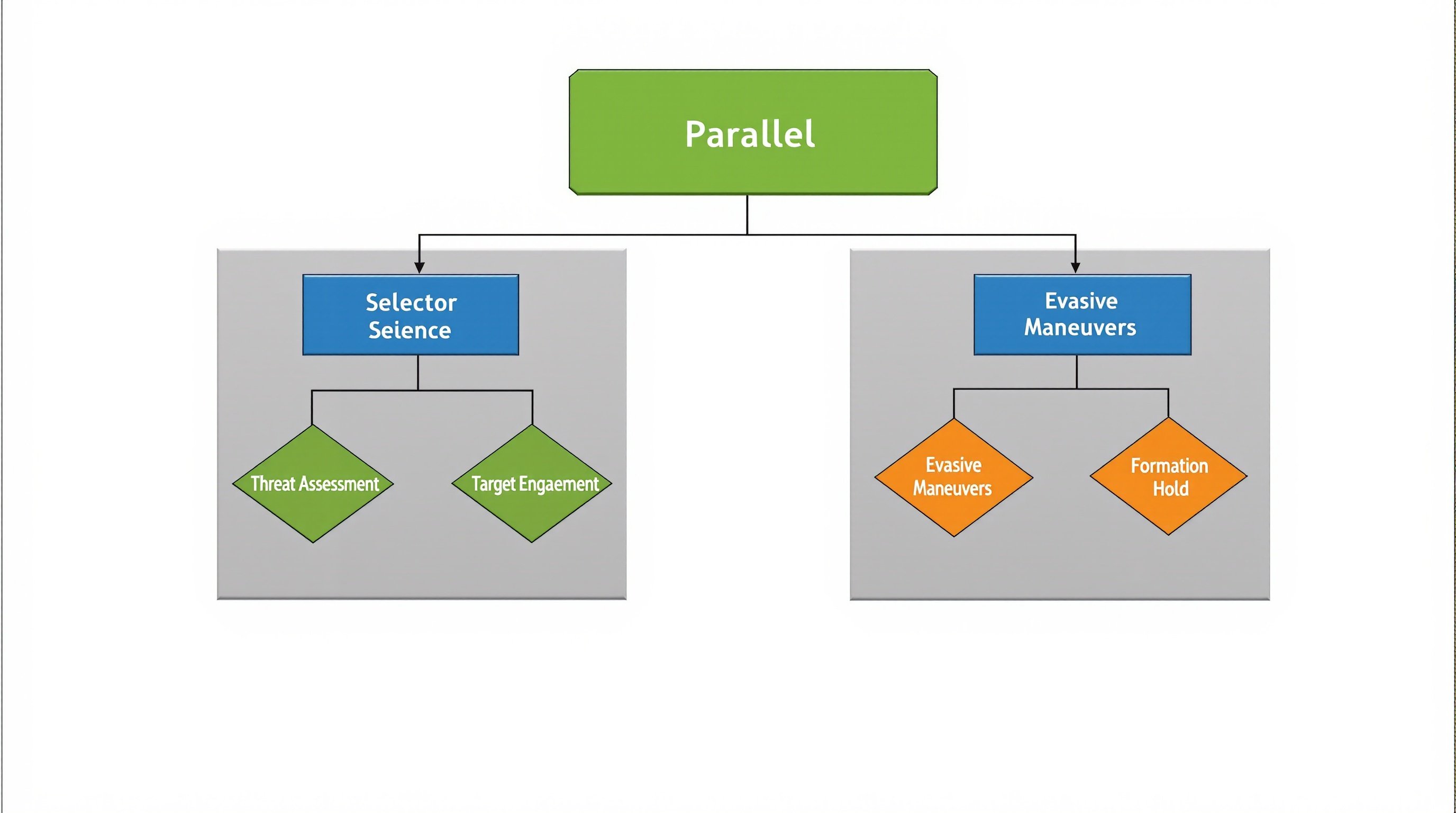
Behavior trees use connector nodes to create sophisticated logic:
- Selector nodes execute the first valid action from a set of options (e.g., "engage nearest threat, or if no threats, continue patrol")
- Sequence nodes execute actions in order (e.g., "detect threat, classify, select weapon, engage")
- Parallel nodes execute all valid actions simultaneously (e.g., "maintain formation while scanning for threats")
This modular approach enables rapid prototyping of tactical behaviors without deep software engineering expertise, making it accessible to subject matter experts who understand doctrine and tactics but may not be programmers.
From Simulation to Strategy
AFSIM's RIPR architecture represents a fundamental shift in defense modeling and simulation. By moving beyond physics-based modeling to incorporate intelligent, autonomous decision-making, it enables the DoD to explore critical questions: How will autonomous systems perform in contested environments? What tactics are most effective when both sides employ AI-driven platforms? How should human operators interact with increasingly autonomous systems?
As the defense industry continues to integrate artificial intelligence and autonomous capabilities into operational systems, tools like AFSIM with RIPR become not just useful, but essential. They provide the testing ground where tactics, technologies, and concepts can be validated before lives and resources are committed to the battlefield.
For organizations developing autonomous defense systems or evaluating multi-domain warfare concepts, understanding frameworks like RIPR offers insight into the cutting edge of military simulation—where modeling intelligence is becoming as critical as modeling physics.
Learn More
To explore AFSIM and RIPR further, the Defense Systems Information Analysis Center (DSIAC) hosts regular AFSIM User Group meetings and provides access to technical documentation. Additional research on RIPR's agent modeling capabilities can be found through the Defense Technical Information Center (DTIC).