

MSC Nastran 2026.1: HPC Scaling, SOL 200 NEO Topology Optimization, and Nonlinear Contact Improvements
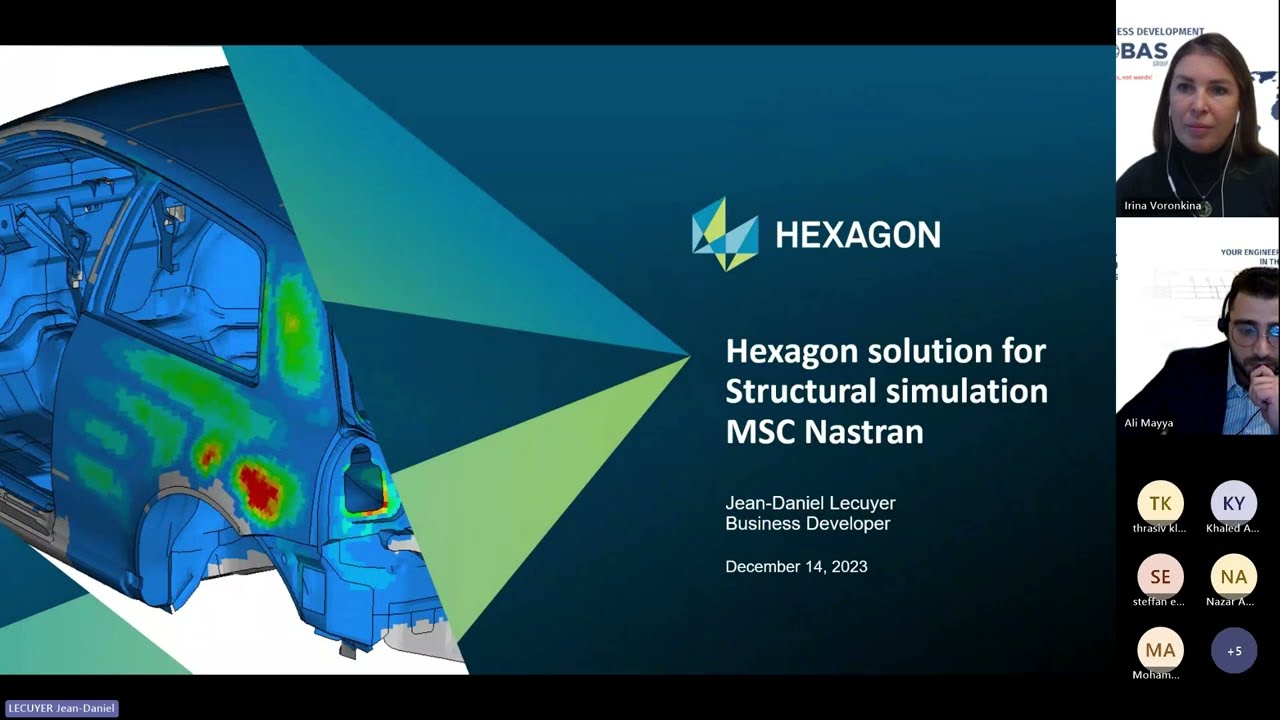
MSC Nastran 2026.1, released by Hexagon on June 12, 2026, delivers targeted enhancements across three core areas of structural finite element analysis (FEA): high-performance computing (HPC), automated structural optimization, and nonlinear contact modeling. The release continues Hexagon's strategy of refining its flagship solver for the aerospace, automotive, and heavy-industry sectors where validated, certified-grade simulation is non-negotiable.
HPC Enhancements: Scaling to Larger Models
The 2026.1 release extends MSC Nastran's Distributed Memory Parallel (DMP) architecture, enabling engineers to decompose large finite element models across multi-node compute clusters more efficiently. GPU-accelerated Automated Component Mode Synthesis (ACMS) has been refined to accelerate modal extraction for complex assemblies, reducing wall-clock time on large-scale dynamic analyses. These improvements are particularly relevant for aerospace structural certification programs, where models routinely exceed tens of millions of degrees of freedom.
The Pre/Post web application was updated by June 15, 2026, to fully support all new keywords and bulk data entries introduced in 2026.1, ensuring that pre-processing and post-processing workflows remain synchronized with solver capabilities.

SOL 200 NEO: Manufacturing-Ready Topology Optimization
A standout capability in the 2026.1 cycle is the continued evolution of SOL 200 NEO, which leverages the Emendate algorithm to produce manufacturing-ready geometry directly from topology optimization runs. Unlike traditional density-based methods that yield "grey" intermediate-density elements requiring manual interpretation, SOL 200 NEO outputs clean, high-resolution geometry with homogeneous stress distribution.
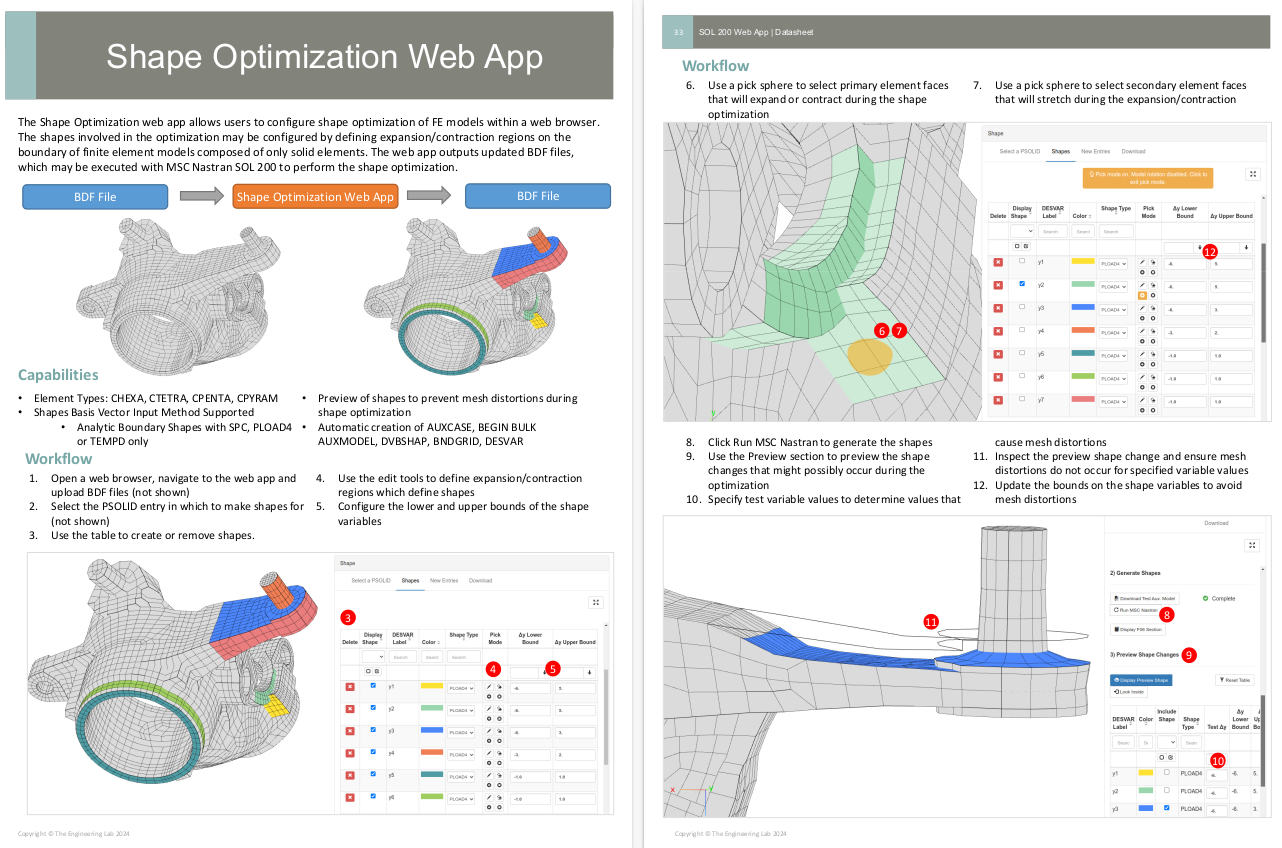
Key workflow advantages include:
- Assembly-context optimization: Parts can be optimized within a full assembly, ensuring that derived loads and boundary conditions accurately reflect the operational environment.
- Nonlinear application support: SOL 200 NEO handles large-deformation and nonlinear scenarios, extending topology optimization beyond the linear-static regime.
- CAD interoperability: Automated re-transition to NURBS-based CAD data, with integration pathways to MSC Apex, shortens the path from optimized mesh to production-ready geometry.
Nonlinear Contact: Greater Modeling Confidence
The 2026.1 release introduces improvements to nonlinear contact analysis, targeting scenarios involving large deformations, complex structural interactions, and multi-body assemblies. Enhanced robustness in contact detection and convergence behavior reduces the need for manual solver tuning, allowing engineers to model bolted joints, interference fits, and impact events with greater confidence.
These improvements align with broader industry demand for simulation tools that can handle the full nonlinear behavior of modern lightweight structures — particularly in electric vehicle battery enclosures, composite airframe components, and precision mechanical assemblies.
Accessing the Release
MSC Nastran 2026.1 is available through the Hexagon Nexus portal. Detailed release notes, parameter documentation, and how-to guides are accessible via the Nexus Documentation Center. Training resources and self-paced courses are available through Nexus Academy, and the SimCompanion community portal provides peer support for implementation questions.
For engineering teams running large-scale structural programs, the 2026.1 update offers meaningful gains in solver throughput, optimization fidelity, and contact robustness — incremental but impactful improvements for production FEA workflows.
Further reading: MSC Nastran product page | What's New in MSC Nastran 2026.1