

Neuromorphic Computing Breakthrough: Brain-Inspired Chips Solve Complex Physics Equations with Unprecedented Energy Efficiency
Breakthrough Algorithm Enables Energy-Efficient PDE Solving
Researchers at Sandia National Laboratories have achieved a significant breakthrough in computational physics, demonstrating that neuromorphic computers—hardware designed to mimic the human brain—can efficiently solve partial differential equations (PDEs) with a fraction of the energy required by traditional supercomputers. This development, published in Nature Machine Intelligence in early 2026, could revolutionize high-performance computing for applications ranging from climate modeling to national security simulations.
The NeuroFEM Algorithm
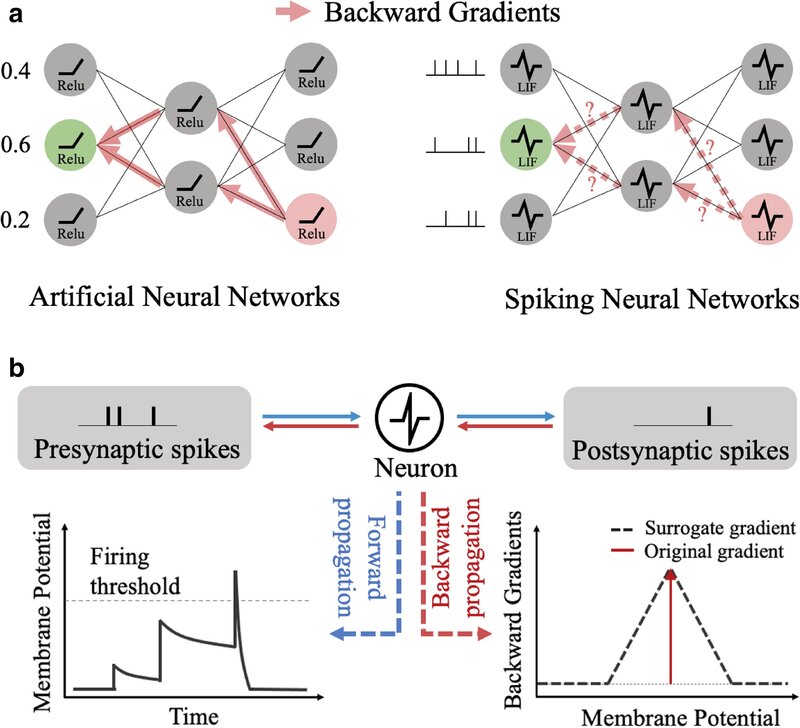
Computational neuroscientists Brad Theilman and Brad Aimone developed a novel algorithm called NeuroFEM that translates the finite element method (FEM)—a widely used technique for solving PDEs—into a spiking neural network (SNN). Unlike conventional computers that process floating-point numbers sequentially, neuromorphic systems communicate through binary "spikes" in a parallel, event-driven manner that closely mimics biological neural activity.
The algorithm leverages a "microscopic tug-of-war" of neuronal activity, where the network naturally converges on the solution to complex equations. This approach closely mirrors the structure and behavior of cortical networks in the brain, suggesting a fundamental link between neural computation and applied mathematics.

Unprecedented Energy Efficiency
The implications for energy consumption are substantial. Traditional supercomputers used by the National Nuclear Security Administration (NNSA) for nuclear system simulations consume electricity equivalent to small cities. In contrast, the human brain performs complex computations using approximately 10 watts of power.
When implemented on Intel's Loihi 2 neuromorphic chip, the NeuroFEM algorithm demonstrated efficient scaling—doubling the number of cores nearly halved the solution time while maintaining significantly lower energy costs compared to standard CPUs. Intel's Loihi 2 systems achieve approximately 15 TOPS per watt efficiency, roughly 2.5 times that of modern GPUs, with newer systems like SpiNNaker2 claiming even higher performance per watt.
Applications Across Multiple Domains
PDEs are fundamental to modeling real-world phenomena including:
- Fluid dynamics and computational fluid dynamics (CFD)
- Electromagnetic fields and wave propagation
- Structural mechanics and material stress analysis
- Heat transfer and thermal management
- Weather forecasting and climate modeling
- Nuclear physics simulations
The ability to solve these equations efficiently opens new possibilities for continuous real-time simulation. One promising application is the "neuromorphic twin" concept, where low-power neuromorphic chips could be embedded into physical structures like bridges or turbines to run continuous simulations, predicting structural failure based on sensor data.
Bridging Neuroscience and Mathematics
Beyond computational efficiency, this research offers insights into how the brain processes information. The algorithm's structure retains strong similarities to cortical networks, suggesting that the brain may naturally perform computations analogous to solving differential equations.
Brad Aimone notes that "diseases of the brain could be diseases of computation," implying that neuromorphic models could simulate pathological states to test therapies for neurological disorders like Alzheimer's and Parkinson's disease.
Challenges and Future Directions
While neuromorphic computing shows tremendous promise, the technology remains in its early stages. Current challenges include:
- Hardware scalability: Existing prototypes have limited neuron counts compared to the billions in the human brain
- Programming paradigms: Traditional programming languages are not suited for neural architectures, requiring specialized development tools
- Integration: Incorporating neuromorphic systems into existing computational infrastructure requires new approaches
The Sandia team hopes their findings will encourage collaboration among applied mathematicians, neuroscientists, and engineers to expand the capabilities of this technology. The research has received funding from the Department of Energy's Office of Science and the National Nuclear Security Administration's Advanced Simulation and Computing program.
Industry Impact
This breakthrough arrives as the simulation software market experiences rapid growth, projected to reach USD 28.59 billion by 2031. The integration of energy-efficient neuromorphic computing could address one of the industry's major challenges: the high total cost of ownership for HPC infrastructure.
For organizations running continuous simulations—from climate research institutions to aerospace companies—neuromorphic PDE solvers could dramatically reduce operational costs while maintaining or exceeding current computational accuracy.
Further Reading
- Original research: Nature Machine Intelligence (2026)
- Sandia National Laboratories Neuroscience Department: neuroscience.sandia.gov
- Intel Loihi 2 neuromorphic research chip documentation