

OpenFOAM snappyHexMesh: Automated Mesh Generation for Complex Geometries
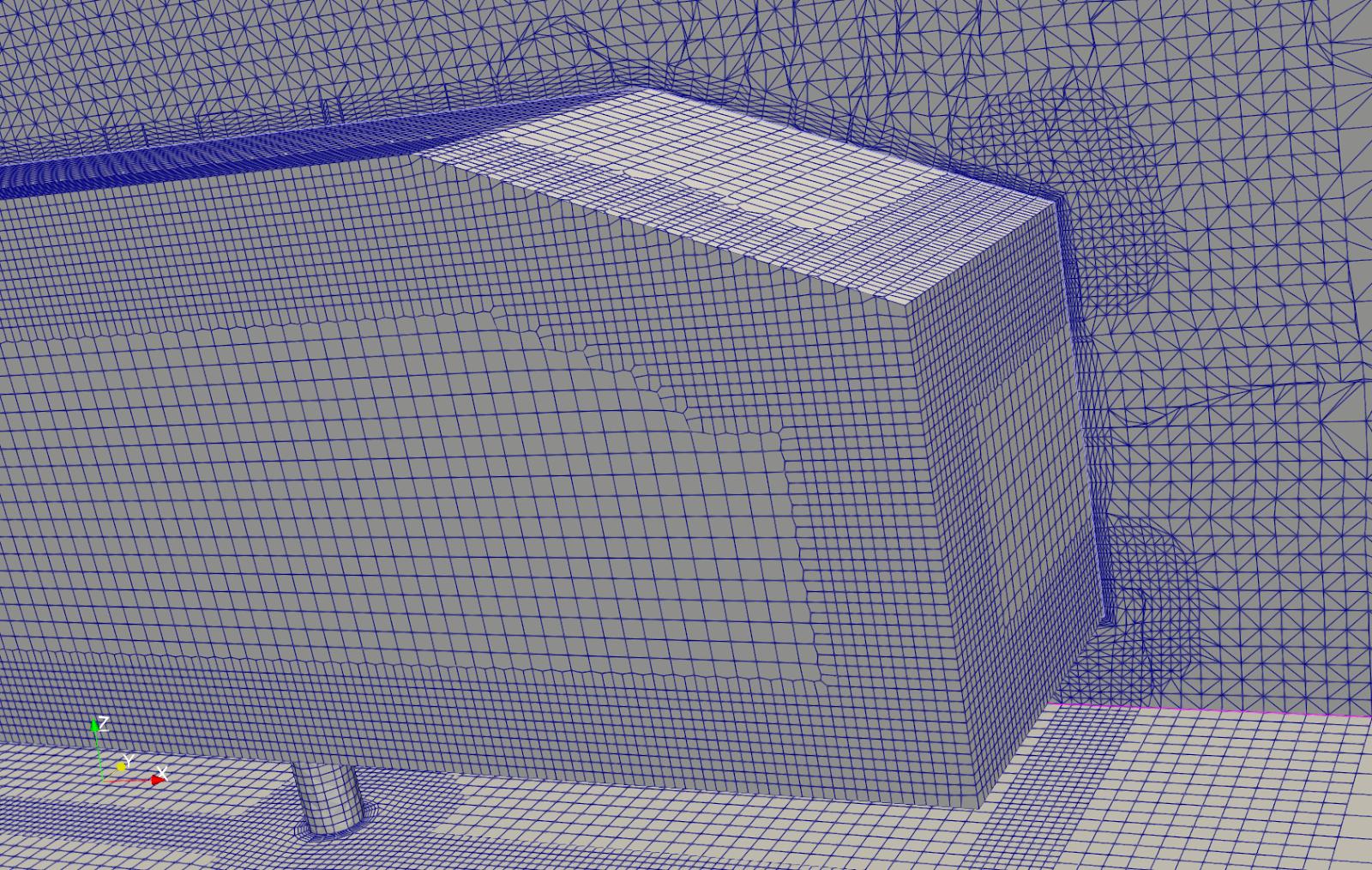
OpenFOAM's snappyHexMesh utility represents a powerful approach to automated mesh generation for computational fluid dynamics simulations. Unlike traditional structured meshing tools that require extensive manual intervention, snappyHexMesh generates high-quality hexahedral-dominant meshes from STL surface geometries with minimal user input, making it an essential tool for engineers working with complex industrial geometries.
The Challenge of Meshing Complex Geometries
Figure 1: snappyHexMesh mesh generation process showing refinement and surface conformity
Mesh generation remains one of the most time-consuming aspects of CFD workflows. Traditional approaches often require hours or days of manual refinement to achieve adequate resolution near walls, in wake regions, and around geometric features. For geometries with intricate details—such as automotive underbodies, heat exchangers, or turbomachinery—this manual process becomes prohibitively expensive and error-prone.

How snappyHexMesh Works
The snappyHexMesh algorithm operates in three distinct phases: castellated mesh generation, surface snapping, and layer addition. This multi-stage approach ensures both geometric fidelity and mesh quality.
During the castellated phase, the utility refines a background hexahedral mesh based on the input STL geometry and user-defined refinement regions. Cells are split recursively to capture geometric features, creating a stepped approximation of the surface. The refinement level can be controlled globally or locally, allowing engineers to concentrate computational resources where needed.
The snapping phase then projects cell faces onto the actual STL surface, transforming the stepped castellated mesh into a smooth representation of the geometry. This process maintains the predominantly hexahedral structure while conforming to curved surfaces—a critical advantage for numerical stability and convergence.
Finally, the layer addition phase generates boundary layer cells near walls. These prismatic layers are essential for accurately resolving viscous effects and wall shear stresses. The utility can automatically handle layer insertion even in regions with complex topology, though careful parameter tuning is required to prevent layer collapse in tight spaces.
Best Practices for Production Workflows
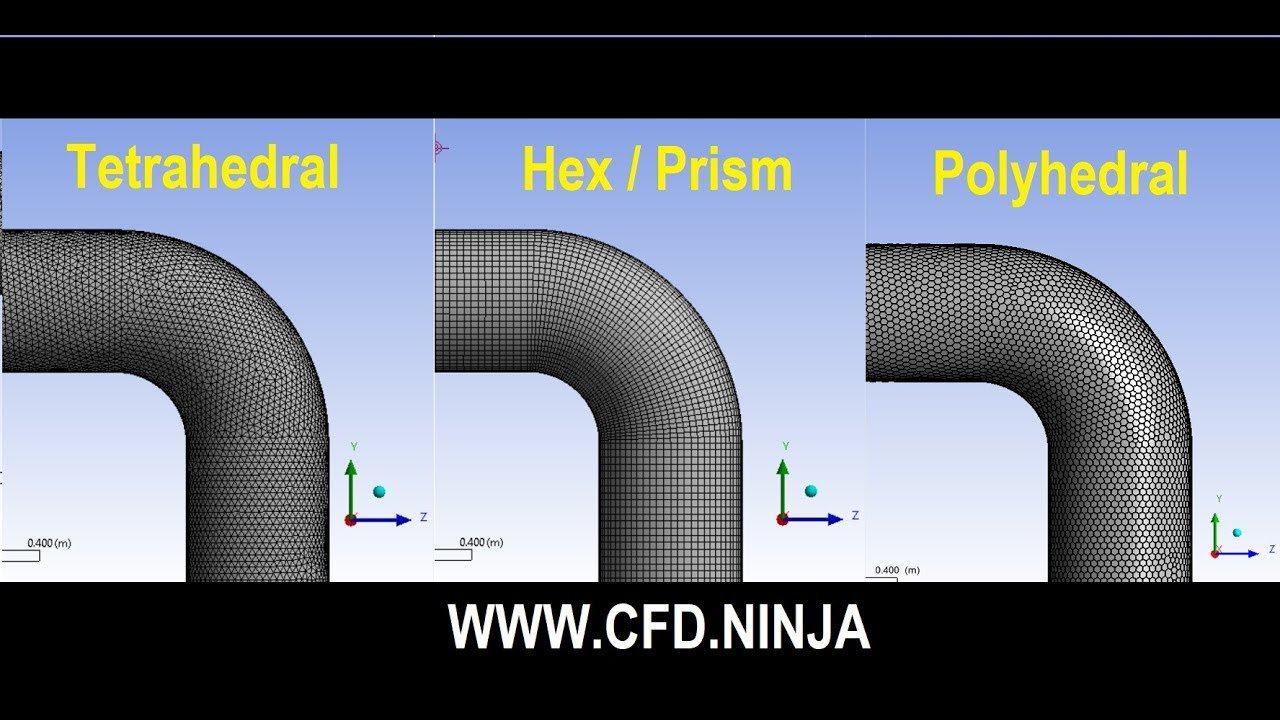
Figure 2: Comparison of different hexahedral mesh types and structures
Successful application of snappyHexMesh requires attention to several key parameters. The castellatedMeshControls dictionary governs refinement levels, with higher values producing finer meshes. A common strategy involves setting a base refinement level for the entire geometry, then specifying additional refinement for critical features like leading edges, gaps, or regions of expected flow separation.
The snapControls section determines how aggressively the mesh conforms to the surface. The nSmoothPatch parameter controls surface smoothing iterations—too few iterations may leave faceted surfaces, while excessive smoothing can distort the geometry. Typical values range from 3 to 10 depending on STL quality.
Layer addition parameters require particular care. The expansionRatio controls how quickly layers grow away from the wall, with values between 1.1 and 1.3 generally providing good results. The finalLayerThickness parameter should be set to ensure the first cell height yields an appropriate y+ value for the chosen turbulence model. For wall-resolved LES or low-Reynolds RANS models, this typically means y+ < 1, requiring very thin first layers.
Advanced Features and Capabilities
Beyond basic mesh generation, snappyHexMesh offers sophisticated capabilities for handling multi-region meshes, feature edge refinement, and gap refinement. The refinementRegions functionality allows specification of refinement boxes, spheres, or arbitrary surfaces, enabling targeted resolution of wake regions or areas of interest without globally refining the mesh.
Feature edge refinement automatically detects and refines sharp edges in the geometry, ensuring that important geometric features are captured even if the base refinement level is relatively coarse. This is particularly valuable for geometries with small radii or thin sections.
The gap refinement feature, introduced in recent OpenFOAM versions, automatically detects and refines narrow gaps between surfaces. This capability is crucial for automotive external aerodynamics, where small gaps around mirrors, door handles, and panel joints significantly influence drag and flow structures.
Integration with OpenFOAM Workflows
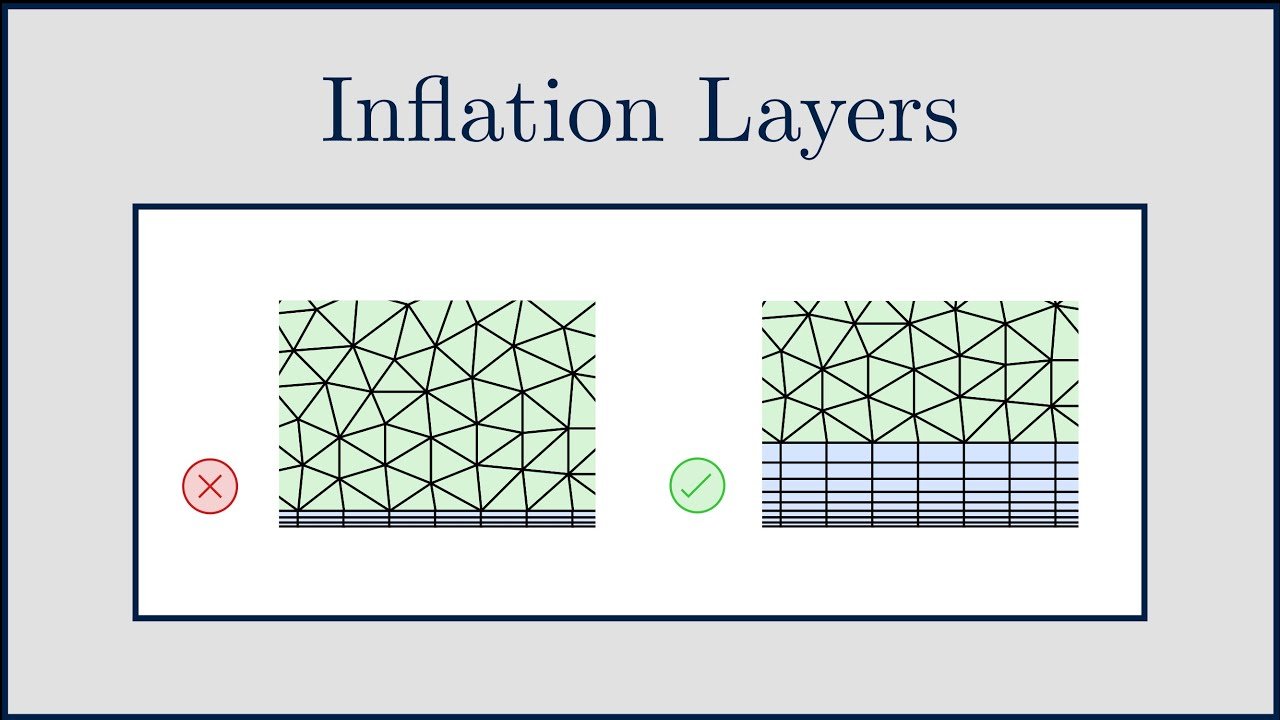
Figure 3: Boundary layer mesh showing prismatic inflation layers near walls
snappyHexMesh integrates seamlessly with the broader OpenFOAM ecosystem. The utility reads standard STL files and produces meshes in OpenFOAM's native polyMesh format, ready for immediate use with any OpenFOAM solver. The mesh can be checked using the checkMesh utility, which reports quality metrics including non-orthogonality, skewness, and aspect ratio.
For parallel workflows, snappyHexMesh supports domain decomposition, allowing mesh generation to be distributed across multiple processors. This capability is essential for large-scale industrial cases where serial meshing would be impractical. The redistributePar utility can be used to balance the mesh across processors after generation.
Performance Considerations
Mesh generation time scales with both geometry complexity and target cell count. For typical automotive external aerodynamics cases with 20-50 million cells, snappyHexMesh can complete in 1-4 hours on modern workstations when properly parallelized. Memory requirements are generally modest compared to the subsequent CFD simulation, though very fine meshes may require 32-64 GB of RAM during generation.
The quality of the input STL geometry significantly impacts both meshing time and final mesh quality. Clean, well-triangulated STL files with consistent normal directions produce the best results. The surfaceCheck utility can identify and report STL quality issues before meshing begins.
Conclusion
OpenFOAM's snappyHexMesh utility has matured into a robust, production-ready tool for automated mesh generation. Its ability to handle complex geometries with minimal manual intervention makes it invaluable for industrial CFD workflows where rapid turnaround is essential. While parameter tuning requires experience, the investment in learning snappyHexMesh pays dividends through reduced meshing time and improved mesh quality.
For engineers seeking to streamline their CFD workflows, mastering snappyHexMesh is essential. The combination of automated refinement, robust layer generation, and seamless OpenFOAM integration makes it a cornerstone of modern open-source CFD practice.