

PTV Vissim: Microscopic Traffic Flow Modeling for Complex Intersections
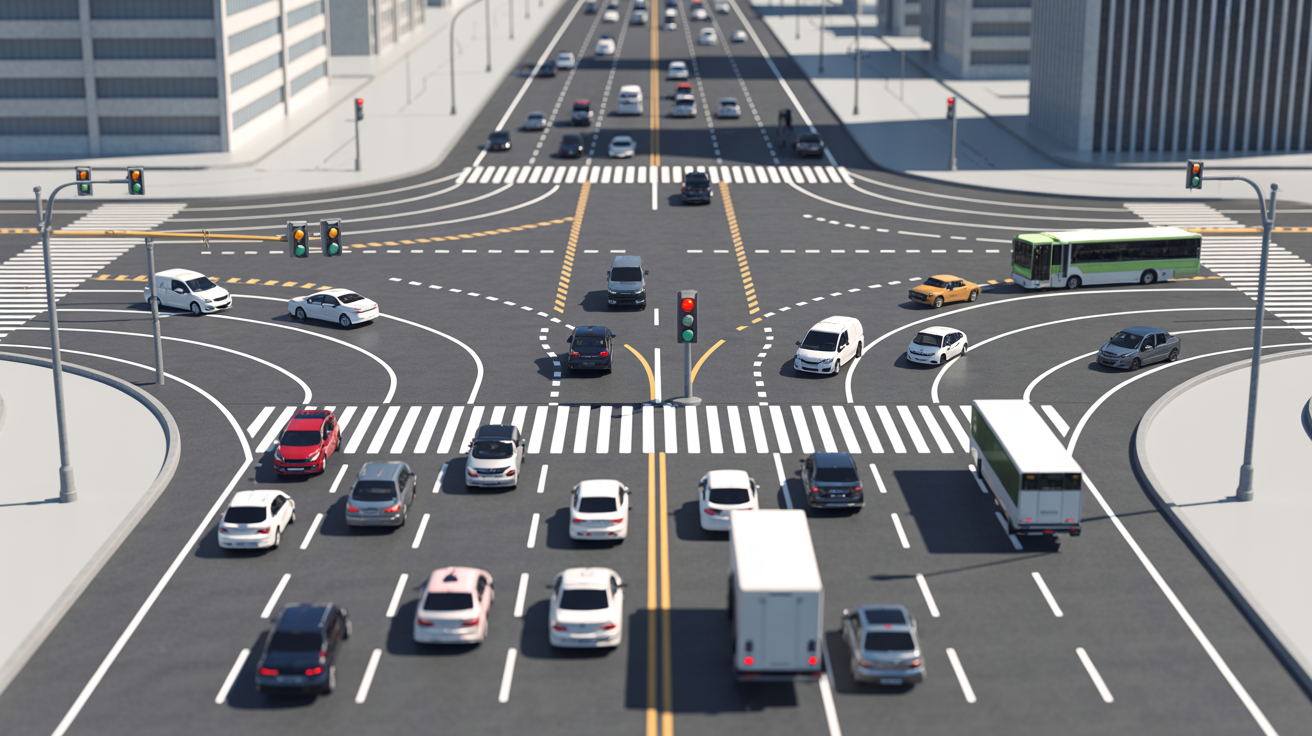
PTV Vissim stands as one of the most sophisticated microscopic traffic simulation platforms available for transportation engineers and urban planners. Developed by PTV Group, this powerful tool excels at modeling individual vehicle behavior and driver decision-making processes at complex intersections, making it invaluable for traffic signal optimization and intersection design validation.
Understanding Microscopic Traffic Simulation
Unlike macroscopic models that treat traffic as a continuous flow, Vissim operates at the microscopic level, simulating each vehicle as a discrete entity with its own characteristics, route, and behavior patterns. This granular approach enables engineers to capture the nuanced interactions between vehicles, pedestrians, and cyclists that occur in real-world traffic scenarios.
The software employs the psycho-physical car-following model developed by Wiedemann, which realistically represents driver behavior including acceleration, deceleration, and lane-changing decisions. This model accounts for human perception thresholds and reaction times, producing simulation results that closely mirror observed traffic patterns.

Advanced Signal Control Integration
One of Vissim's standout capabilities is its comprehensive signal control integration. The platform supports multiple signal control interfaces including:
- NEMA/170 controllers for North American traffic signals
- SCATS and SCOOT adaptive signal systems
- Custom signal logic through COM interface programming
- Hardware-in-the-loop (HIL) testing with actual signal controllers
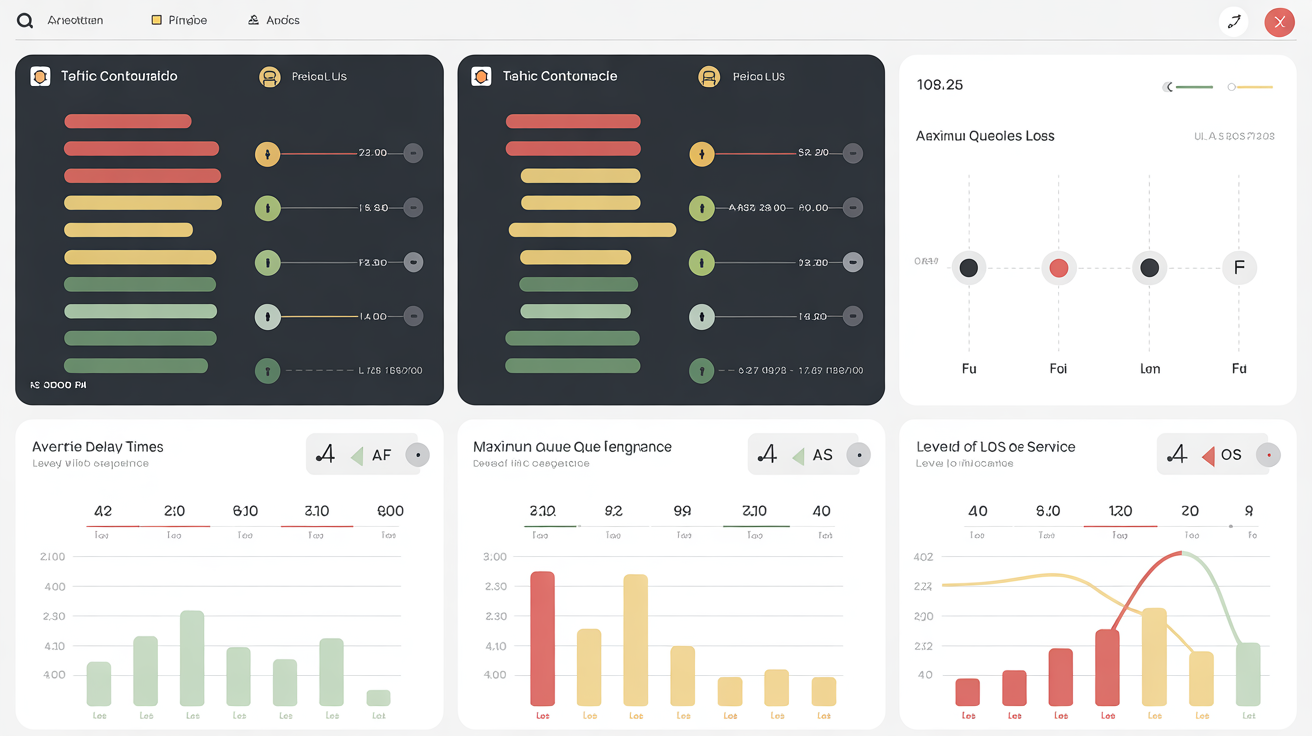
This flexibility allows traffic engineers to test signal timing plans before field implementation, potentially saving municipalities significant costs associated with trial-and-error optimization in live traffic conditions. Engineers can evaluate metrics such as average delay, queue length, and level of service (LOS) under various demand scenarios.
Multi-Modal Transportation Analysis
Modern transportation systems increasingly emphasize multi-modal integration, and Vissim addresses this need comprehensively. The software can simultaneously model:
- Private vehicles (cars, trucks, motorcycles)
- Public transit (buses, trams, light rail)
- Pedestrians with realistic walking behavior
- Cyclists with dedicated path networks
- Shared mobility services
This multi-modal capability proves essential when analyzing transit priority strategies, dedicated bus lanes, or protected bicycle infrastructure. Engineers can quantify the impacts of giving priority to high-occupancy vehicles or public transit on overall system performance.
3D Visualization and Stakeholder Communication
Vissim includes robust 3D visualization capabilities that transform complex simulation data into compelling visual presentations. The 3D environment can incorporate:
- Detailed road geometry and terrain
- Realistic vehicle models and animations
- Building facades and urban context
- Dynamic traffic signal displays
- Real-time performance metrics overlays
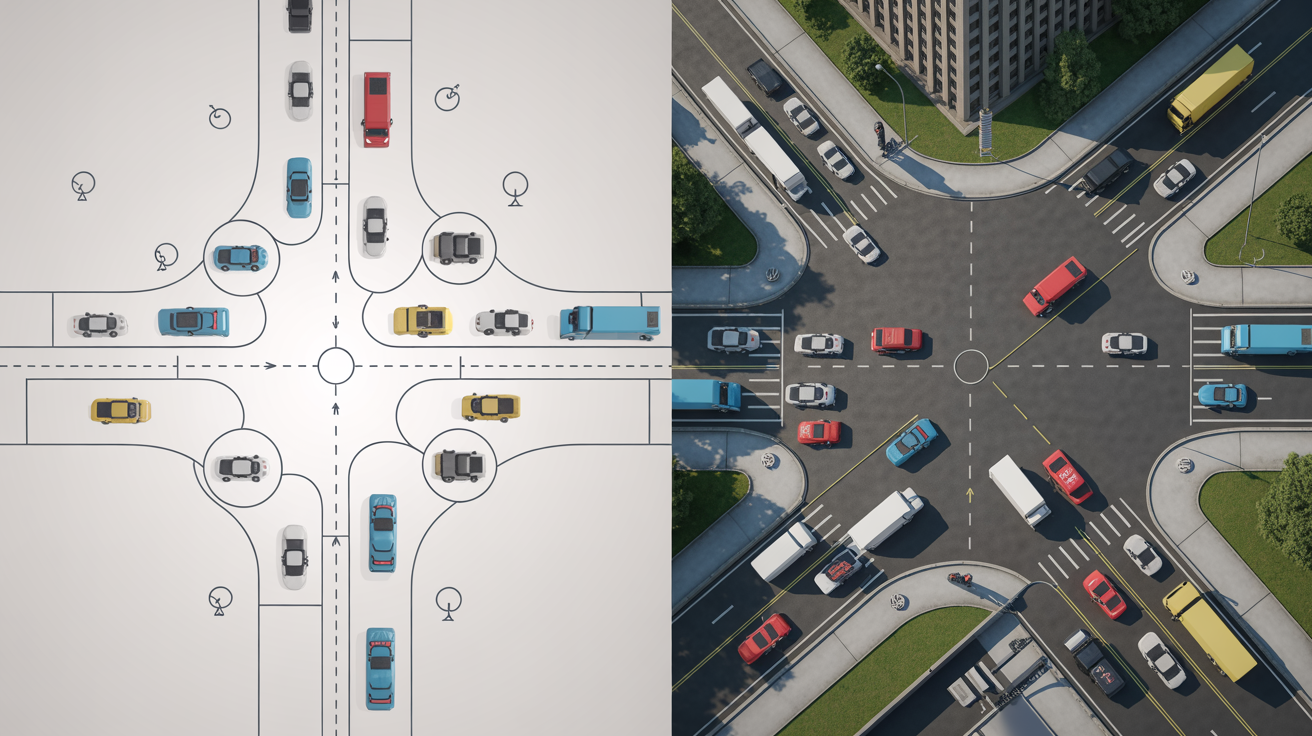
These visualization features prove invaluable during public meetings and stakeholder presentations, helping non-technical audiences understand proposed transportation improvements. The ability to "see" how a new intersection design will function builds public confidence and facilitates project approval processes.
Calibration and Validation Best Practices
To ensure simulation accuracy, Vissim models require careful calibration against field-observed data. Key calibration parameters include:
- Desired speed distributions matching observed free-flow speeds
- Car-following parameters (CC0-CC9) tuned to local driver behavior
- Lane-change distances reflecting regional driving aggressiveness
- Gap acceptance values for turning movements
Validation typically involves comparing simulated travel times, queue lengths, and throughput against field measurements. Industry standards recommend achieving less than 15% error in key performance metrics before using a model for decision-making.
Integration with Traffic Engineering Workflows
Vissim integrates seamlessly with other transportation planning tools through standard data exchange formats. Engineers commonly use:
- Synchro/SimTraffic for initial signal timing development
- VISUM for demand modeling and network assignment
- AutoCAD/Civil 3D for geometric design import
- Python/COM API for automated scenario analysis
This interoperability enables efficient workflows where demand forecasts from regional models feed directly into detailed operational analysis in Vissim, creating a comprehensive planning framework.
Conclusion
PTV Vissim represents a mature, feature-rich platform for microscopic traffic simulation, particularly excelling in complex intersection analysis and signal optimization studies. Its combination of behavioral realism, signal control flexibility, and visualization capabilities makes it a standard tool in transportation engineering practice. While the software requires significant expertise to use effectively, the insights gained from properly calibrated Vissim models can substantially improve transportation system performance and justify infrastructure investments.
For transportation professionals seeking to master intersection design and signal timing optimization, developing proficiency with Vissim's advanced features—particularly its signal control interfaces and calibration methodologies—represents a valuable career investment.