
SWMM Low Impact Development Controls: Modeling Green Infrastructure for Urban Stormwater Management
Urban stormwater management has evolved from traditional gray infrastructure approaches to integrated green infrastructure solutions. The EPA's Storm Water Management Model (SWMM) provides sophisticated Low Impact Development (LID) controls that enable engineers and planners to simulate the hydrologic and water quality performance of green infrastructure practices with unprecedented accuracy.
Understanding LID Controls in SWMM
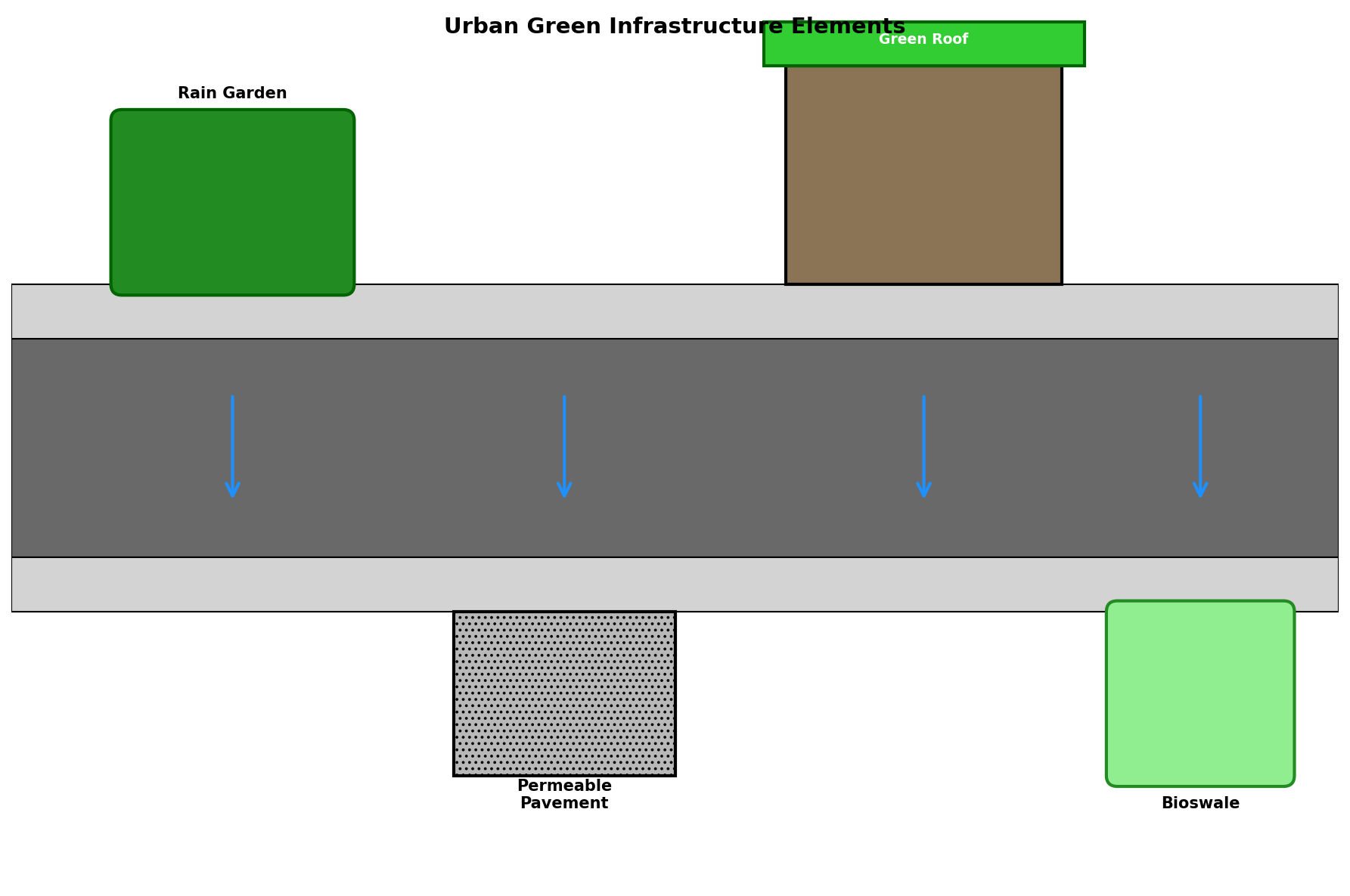
SWMM's LID module represents a paradigm shift in urban drainage modeling. Rather than treating stormwater as a waste product to be conveyed away as quickly as possible, LID controls simulate nature-based solutions that infiltrate, evapotranspire, and treat runoff at its source. The model includes eight distinct LID practice types: bio-retention cells, rain gardens, green roofs, infiltration trenches, permeable pavement, rain barrels, rooftop disconnection, and vegetative swales.
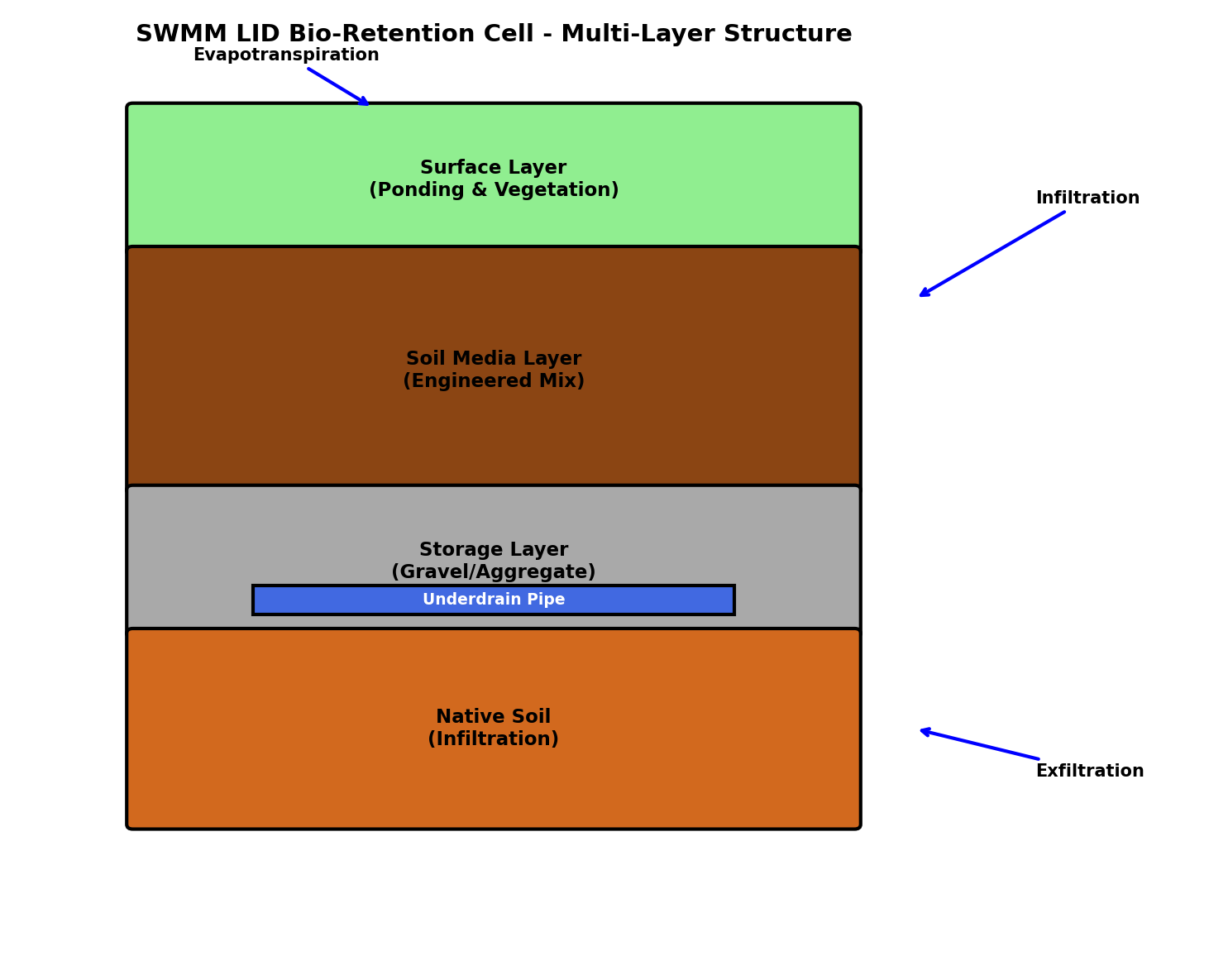
Each LID control in SWMM is represented as a vertical stack of functional layers—surface, pavement, soil, storage, and underdrain—with physically-based equations governing water movement between layers. This multi-layer approach captures the complex hydrology of green infrastructure, including surface ponding, infiltration through engineered media, subsurface storage, and drainage dynamics.

Configuring Bio-Retention Systems
Bio-retention cells represent one of the most versatile LID practices, and SWMM's implementation allows detailed specification of design parameters. Engineers define the surface layer with parameters including berm height (typically 6-12 inches), vegetation volume fraction (0.0-1.0), surface roughness (Manning's n), and surface slope. The soil layer requires specification of thickness, porosity, field capacity, wilting point, conductivity, and suction head—parameters that directly influence infiltration rates and storage capacity.
The storage layer beneath the soil media can be configured with void ratio, seepage rate, and optional underdrain specifications. Underdrains are particularly important for sites with low-permeability native soils, where complete infiltration is not feasible. SWMM allows specification of underdrain diameter, offset height, and flow coefficient, enabling accurate representation of partial exfiltration systems common in urban retrofits.
Calibration and Performance Metrics
Effective use of SWMM's LID controls requires careful calibration against observed data or established design standards. Key calibration parameters include the saturated hydraulic conductivity of soil media, which typically ranges from 0.5 to 2.0 inches per hour for bio-retention systems, and the conductivity decay factor that represents clogging over time.
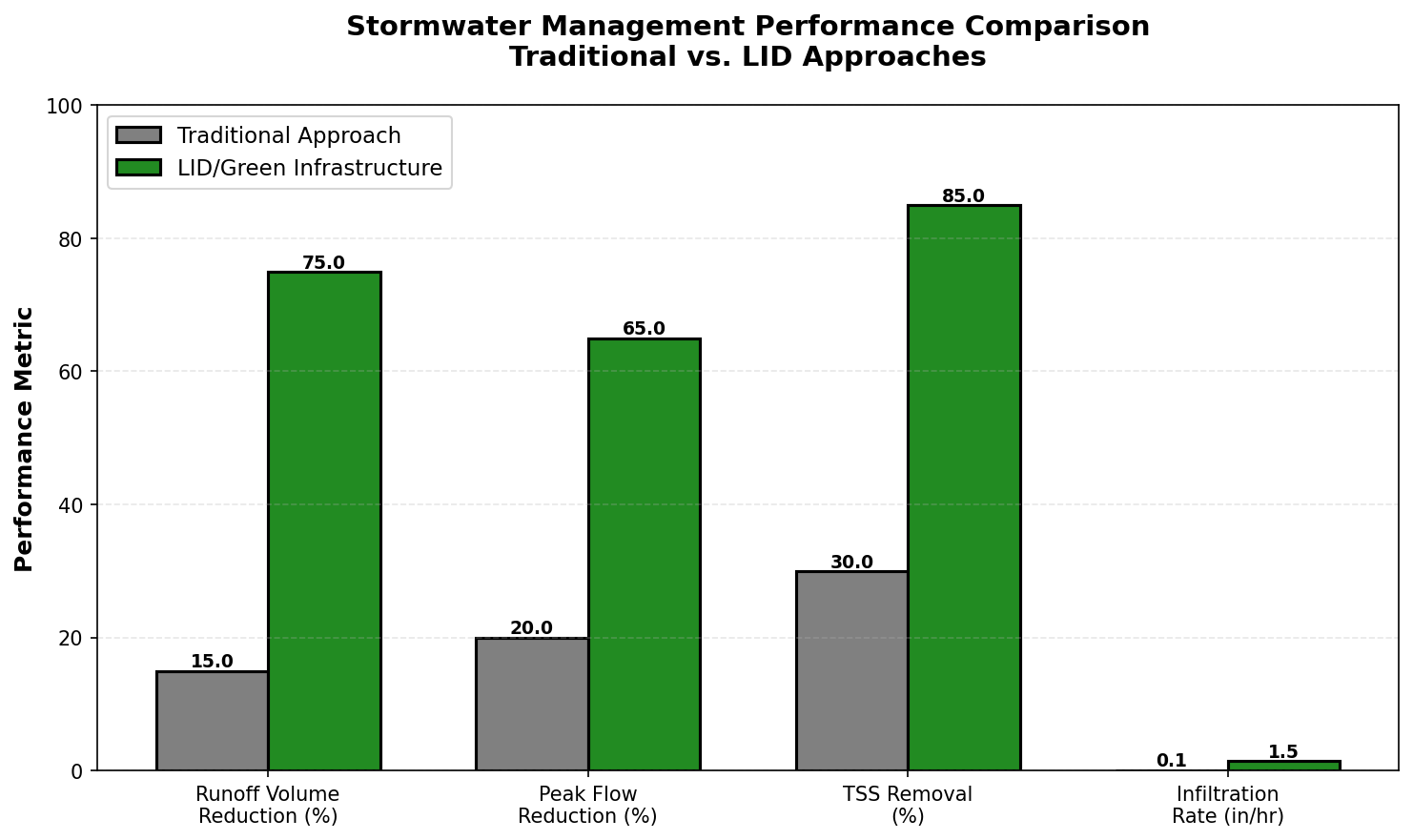
SWMM generates comprehensive performance metrics for LID controls, including total inflow volume, evaporation losses, infiltration volumes, surface outflow, underdrain flow, and initial abstraction. These outputs enable engineers to calculate critical performance indicators such as runoff volume reduction percentage, peak flow attenuation, and pollutant load removal. For regulatory compliance, SWMM can demonstrate whether LID implementations meet requirements such as the 95th percentile storm capture or specific annual runoff volume reduction targets.
Spatial Distribution and Optimization
One of SWMM's most powerful capabilities is the ability to distribute LID controls across multiple subcatchments with varying implementation percentages. This feature enables scenario analysis comparing centralized versus distributed green infrastructure strategies. Engineers can model situations where bio-retention cells occupy 5% of one subcatchment's area while permeable pavement covers 20% of another, reflecting realistic site constraints and opportunities.
The model also supports cost-benefit optimization studies by allowing rapid iteration of different LID combinations and sizing scenarios. By coupling SWMM with optimization algorithms or conducting systematic sensitivity analyses, planners can identify the most cost-effective portfolio of green infrastructure practices to achieve specific performance targets. This capability is particularly valuable for municipal stormwater master planning and watershed-scale green infrastructure implementation.
Integration with Water Quality Modeling
Beyond hydrology, SWMM's LID controls include water quality treatment functions that simulate pollutant removal through filtration, biological uptake, and sedimentation. Each LID practice can be assigned removal efficiencies for various pollutants including total suspended solids, nutrients, metals, and bacteria. The model tracks pollutant mass balances through the LID treatment train, accounting for processes such as first-flush capture, media adsorption, and breakthrough during high-intensity events.
This integrated approach enables comprehensive evaluation of green infrastructure performance for both quantity and quality objectives. Engineers can demonstrate compliance with Total Maximum Daily Load (TMDL) requirements, municipal separate storm sewer system (MS4) permits, and water quality certification programs through detailed simulation of LID treatment effectiveness across the full spectrum of storm events.
Practical Applications and Resources
SWMM's LID capabilities have been applied to projects ranging from individual site development to citywide green infrastructure master plans. Notable applications include the Philadelphia Water Department's Green City, Clean Waters program, which used SWMM to model the performance of thousands of distributed green infrastructure installations across the city's combined sewer area.
For practitioners seeking to implement LID controls in SWMM, the EPA provides comprehensive documentation including the LID Controls chapter in the SWMM User's Manual and the LID Control Editor guide. The Open Water Analytics community maintains additional resources, example models, and Python-based tools for automating LID scenario analysis. Academic research continues to refine LID representation in SWMM, with recent studies addressing topics such as biofilm development in permeable pavement and the influence of antecedent moisture conditions on bio-retention performance.