

Arena Simulation: Modeling Hospital Surgical Suite Capacity and Throughput
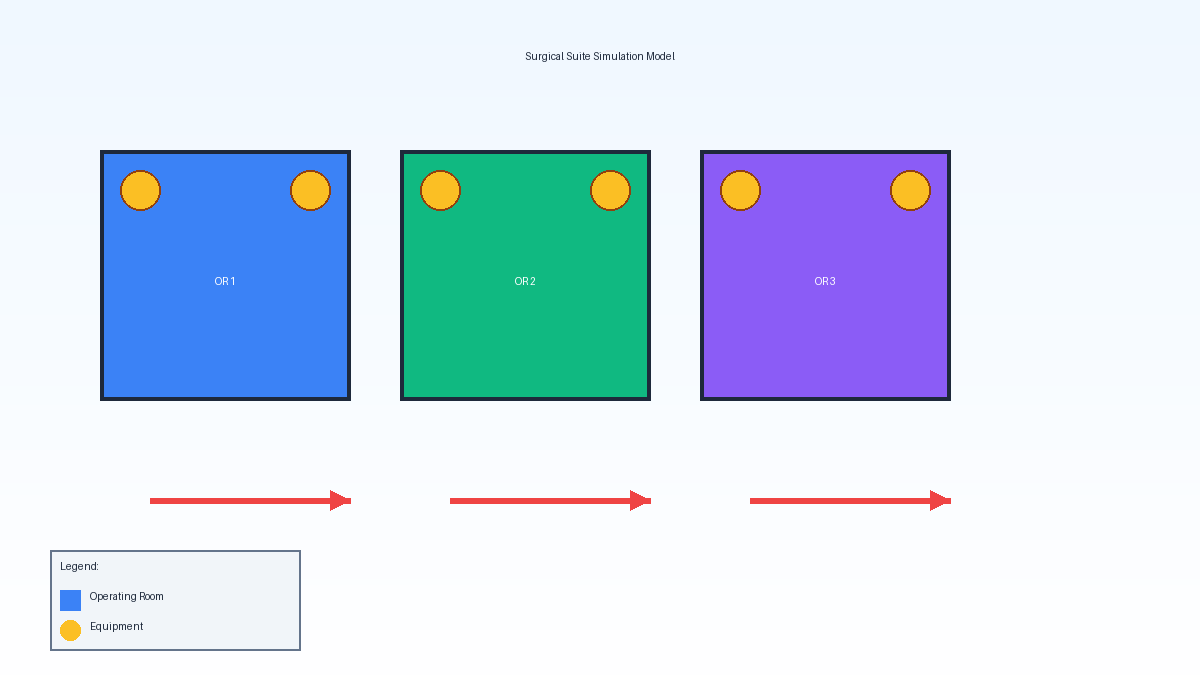
Operating room (OR) efficiency represents one of the most critical bottlenecks in hospital operations, directly impacting patient outcomes, revenue generation, and resource utilization. Arena Simulation Software, developed by Rockwell Automation, provides healthcare administrators with powerful discrete-event simulation (DES) capabilities specifically suited for analyzing and optimizing surgical suite operations.
Understanding Surgical Suite Complexity
Modern surgical suites involve intricate coordination between multiple resources: surgeons, anesthesiologists, nurses, specialized equipment, pre-operative holding areas, post-anesthesia care units (PACU), and the operating rooms themselves. Each surgical procedure follows a complex pathway with variable durations, resource requirements, and priority levels. Traditional spreadsheet-based capacity planning often fails to capture the stochastic nature of these processes and the cascading effects of delays or resource conflicts.
Arena's process-oriented modeling approach allows healthcare operations analysts to represent these complex workflows with high fidelity. The software's built-in constructs—such as Create, Process, Decide, and Dispose modules—map naturally to patient arrival patterns, surgical procedures, decision points (e.g., emergency vs. elective cases), and discharge processes.

Key Modeling Capabilities for Surgical Suites
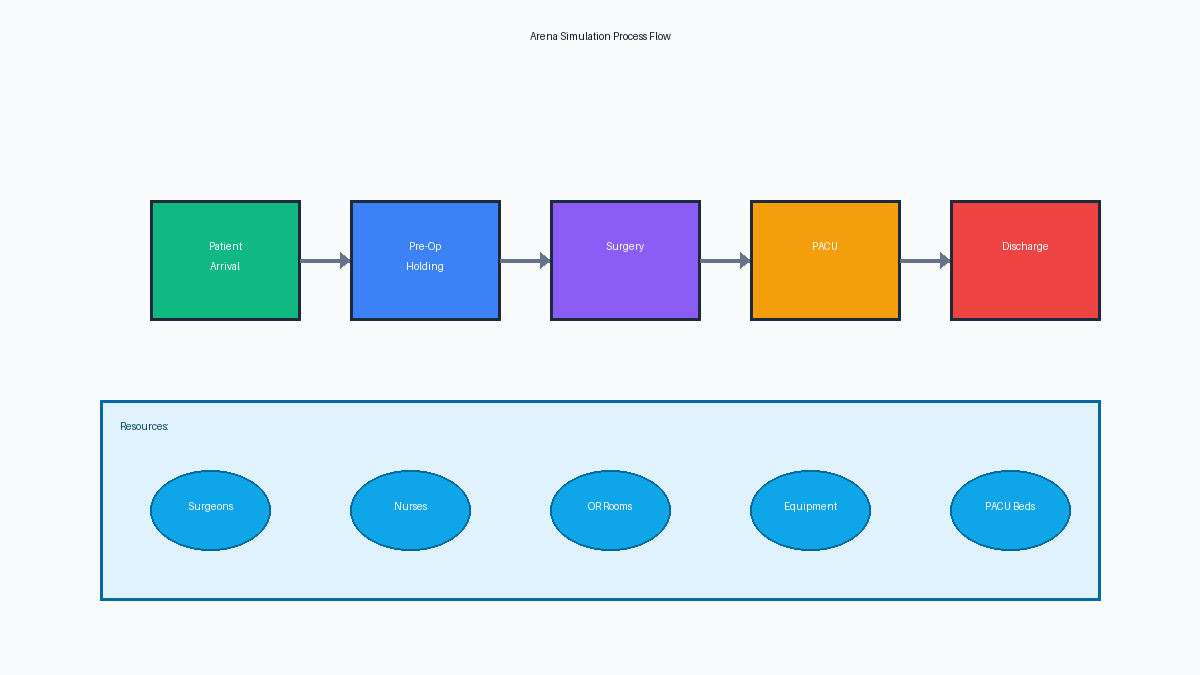
Resource Allocation and Scheduling: Arena enables detailed modeling of constrained resources including OR rooms, surgical teams, and specialized equipment. The Resource module allows specification of capacity, schedules (accounting for shift changes and breaks), and failure/maintenance patterns. This granularity is essential for evaluating "what-if" scenarios such as adding an additional OR, extending operating hours, or cross-training staff.
Stochastic Process Representation: Surgical durations exhibit significant variability even for the same procedure type. Arena supports multiple probability distributions (Normal, Lognormal, Triangular, Empirical) to accurately represent procedure times, turnover durations, and patient arrival patterns. The Input Analyzer tool facilitates fitting distributions to historical data, ensuring model validity.
Priority-Based Scheduling Logic: Emergency cases must preempt scheduled elective procedures, creating complex scheduling dynamics. Arena's Seize-Delay-Release construct combined with priority queuing allows realistic representation of these interruptions and their downstream effects on PACU capacity and overall throughput.
Bottleneck Identification: Arena's animation capabilities and statistical output provide clear visualization of queue lengths, resource utilization, and patient flow. The software automatically tracks metrics such as time-in-system, waiting times by stage, and resource utilization percentages—critical KPIs for surgical suite performance.
Implementation Best Practices
When building surgical suite models in Arena, practitioners should follow several key practices:
-
Warm-up Period Analysis: Surgical suites typically operate in a non-steady-state environment, especially at the start of each day. Use Arena's warm-up period feature to exclude initialization bias from statistics collection.
-
Validation with Historical Data: Compare model outputs against actual historical throughput, average case durations, and overtime hours. Arena's Output Analyzer facilitates statistical comparison of model results with real-world data.
-
Scenario Analysis: Leverage Arena's Scenario Manager to systematically evaluate multiple configurations (e.g., different staffing levels, block scheduling policies, or equipment investments) without rebuilding the model.
-
Integration with Hospital Systems: Arena supports reading input data from Excel, databases, or text files, enabling integration with electronic health record (EHR) systems and surgical scheduling software for data-driven analysis.
Quantifiable Impact
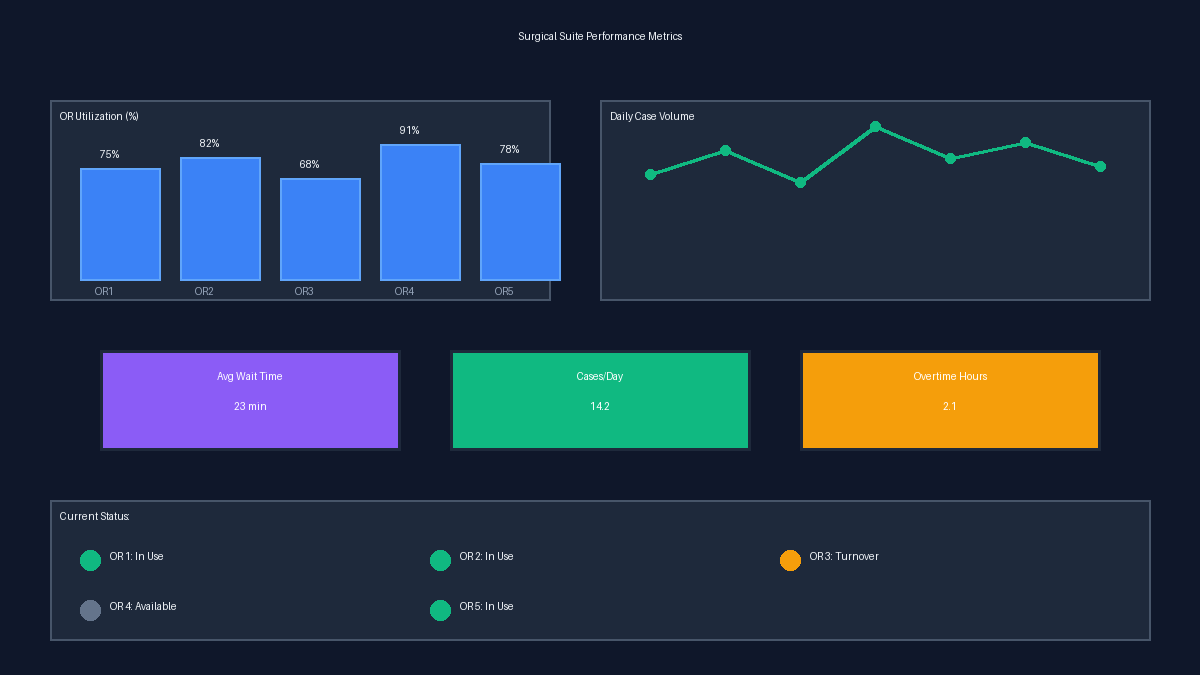
Healthcare organizations using Arena for surgical suite optimization have reported significant improvements: 10-15% increases in daily case volume, 20-30% reductions in patient waiting times, and more efficient utilization of expensive OR resources (often exceeding 80% utilization while maintaining quality of care). The ability to test operational changes in a risk-free virtual environment before implementation reduces costly trial-and-error approaches.
Further Resources
For healthcare professionals interested in implementing Arena for surgical suite modeling, Rockwell Automation offers specialized training modules and healthcare-specific model templates. The Arena user community maintains an active forum with shared models and best practices. Additionally, academic literature provides numerous case studies demonstrating successful implementations in hospitals ranging from small community facilities to large academic medical centers.
Arena Simulation Software represents a mature, proven platform for healthcare operations improvement, particularly well-suited for the complex, stochastic nature of surgical suite management. Its combination of ease-of-use, analytical depth, and integration capabilities makes it an essential tool for evidence-based healthcare facility planning.