
Aspen Plus: Advanced Chemical Process Simulation and Optimization
Aspen Plus stands as a preeminent process simulation software, widely recognized and utilized across the chemical engineering industry and related sectors. Developed by Aspen Technology, a leader in asset optimization software, it serves as a crucial tool for chemical engineers to design, optimize, and troubleshoot a vast array of chemical processes.
Overview and Philosophy
Aspen Plus operates by representing a chemical process through a system of mathematical equations, complex calculations, and rigorous thermodynamic models. This allows for the precise modeling of thermodynamics, reaction kinetics, and separation processes, providing a comprehensive understanding of how a system will behave. Its core functionality revolves around creating digital representations of chemical plants and processes, allowing engineers to simulate their behavior under diverse operating conditions.
The software is fundamental for advancing circular economy initiatives, responding to global economic challenges, navigating dynamic market conditions, and addressing competitive pressures by improving performance, quality, and time-to-market. For both students and seasoned professionals, mastering Aspen Plus is crucial for leveraging its extensive capabilities in chemical engineering applications.

Core Features and Capabilities
Aspen Plus boasts a comprehensive suite of features designed to enhance the accuracy, efficiency, and reliability of process simulations. These capabilities enable engineers to tackle complex challenges, streamline processes, and deliver superior design solutions.
Versatile Process Modeling
Aspen Plus offers the ability to simulate a wide spectrum of processes, ranging from simple, individual unit operations to highly complex, integrated chemical systems. It provides an extensive library of pre-defined unit operation models, allowing engineers to precisely mimic virtually any process.
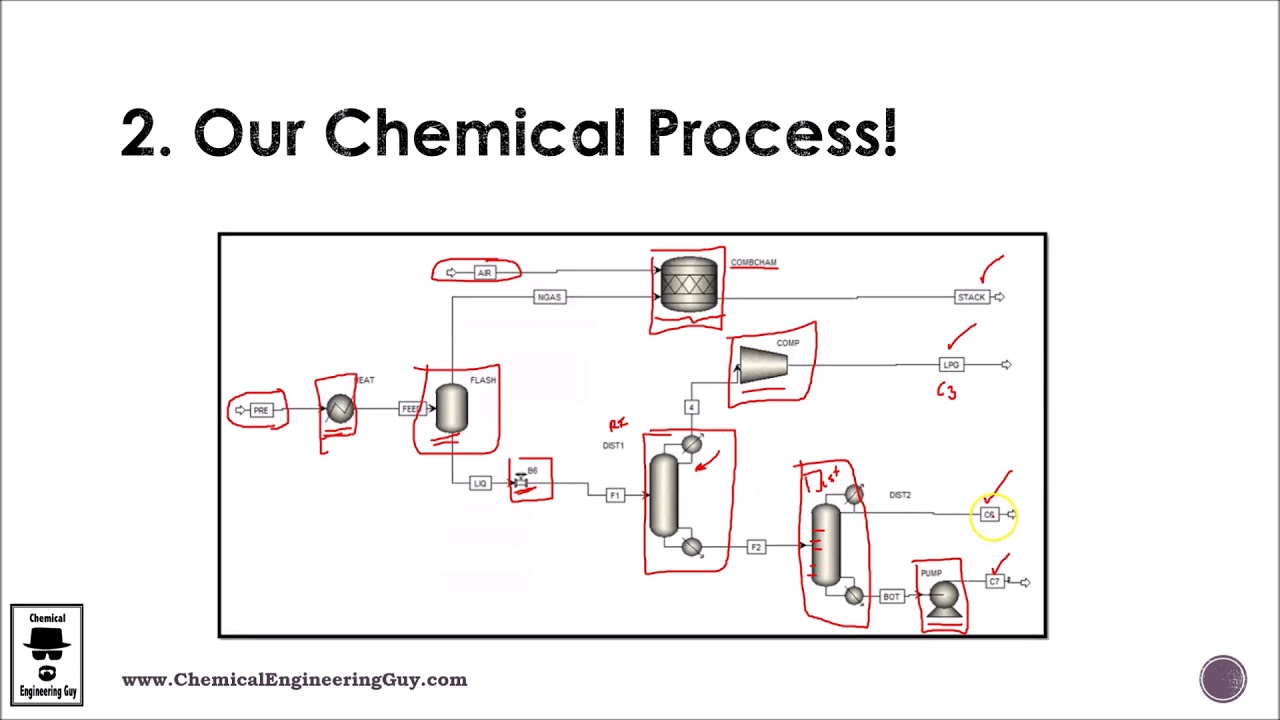
These models include, but are not limited to, reactors, distillation columns, heat exchangers, pumps, compressors, valves, and pipes. The software's graphical interface facilitates the intuitive construction of process flowsheets, which are visual and computational representations of the chemical process, dictating the arrangement of unit operations and the flow of materials and energy between them.
Sophisticated Thermodynamic and Physical Property Models
A cornerstone of Aspen Plus's accuracy is its rich database of thermodynamic and physical property models. This allows for the generation of realistic fluid thermophysical properties and the rigorous modeling of non-ideal chemical and electrolyte systems. Users have the flexibility to alter and expand these models to ensure their simulations are as realistic and feasible as possible.
Key aspects of its property modeling capabilities include:
Phase Equilibrium Calculations: The software predicts phase equilibria, such as vapor-liquid equilibrium (VLE) and liquid-liquid equilibrium (LLE), which are essential for simulating separation processes like distillation and extraction.
Property Estimation Methods: For properties not readily available experimentally, Aspen Plus employs various estimation methods, including group contribution methods, to predict these properties.
Equation of State (EOS) Selection: The platform offers fundamental Equations of State like Peng-Robinson or Soave-Redlich-Kwong, which are vital for calculating volumetric and thermodynamic properties of fluids.
Activity Coefficient Models: For non-ideal systems, activity coefficient models such as NRTL or UNIQUAC are available to account for deviations from ideal solution behavior.
Data Regression: Aspen Plus facilitates data regression for both pure component data and mixture data, including vapor-liquid, liquid-liquid, and salt saturation experimental data.
Dynamic Simulation and Optimization
Aspen Plus supports both steady-state and dynamic simulations, providing insights into process behavior over time. Its robust optimization features assist engineers in determining ideal operating conditions for their operations, leading to reduced costs and increased performance. This includes advanced techniques for boosting production rates, yields, energy utilization, and overall process quality.
The software offers Sequential Modular (SM) Optimization capabilities, allowing users to set up and run optimization cases to achieve specific objectives.
Integration with Other Tools
Aspen Plus seamlessly connects with other AspenTech products and third-party applications, enabling thorough process analysis and optimization. This integration facilitates efficient data transfer between multiple tools, significantly improving the overall engineering workflow. It also smoothly connects with detailed engineering processes, supporting the Front-End Engineering Design (FEED) execution phase.
Comprehensive Toolset and Specialized Features
Process Safety Analysis
Aspen Plus helps engineers identify hazards, evaluate risks, and implement safety measures, contributing to safer workplaces and regulatory compliance. The software provides tools for analyzing process safety scenarios and implementing appropriate mitigation strategies.
Distillation Improvement
The software offers specialized tools for optimizing distillation columns, allowing engineers to explore scenarios for better separation, high product purity, and reduced energy consumption. This includes rigorous design and rating of distillation columns, which are both capital and energy intensive.
Energy Management
Aspen Plus facilitates the optimization of energy use in chemical processes by accurately modeling systems like heat exchangers, leading to improved energy efficiency, cost reduction, and sustainability.
Physical Property Estimation
The software leverages strong physical property databases to build realistic process models, crucial for accurate design and risk reduction. This includes comprehensive thermodynamic property prediction and validation capabilities.
Polymer Process Optimization
Aspen Plus excels at optimizing polymer production by modeling polymerization reactions and allowing engineers to adjust conditions for desired product properties and increased productivity.
Solid Process Optimization
The software provides unique modeling tools for solid handling processes, enabling better equipment design and improved material flow, enhancing efficiency and cost savings.
Applications Across Industries
Aspen Plus is a highly acclaimed process modeling program widely used across a multitude of industries, including chemical and petrochemicals, pharmaceuticals, power generation, oil and gas, and life sciences. Its applications span the entire lifecycle of a chemical process, from conceptual design to operational optimization and troubleshooting.
Process Design and Improvement
Developing New Processes: Engineers use Aspen Plus to develop or improve new processes by simulating different scenarios and combinations, leading to efficient and cost-effective designs. This includes designing complex chemical plants from the ground up.
Optimizing Existing Processes: It is crucial for optimizing current processes by examining process flows, identifying inefficiencies, and investigating potential improvements, resulting in high performance and cost-effectiveness.
Concurrent Conceptual Engineering: In the early design stages, Aspen Plus helps quickly evaluate different designs to find the best one, significantly reducing time and costs.
Feasibility Studies
Aspen Plus is extensively used for project assessment, providing a thorough understanding of the technical and financial elements of proposed initiatives. This detailed analysis aids in determining the viability and potential risks, enabling more informed decision-making. Engineers can check if their projects are technically and economically feasible, utilizing tools for checking process performance, energy use, resource consumption, and costs.
Equipment Sizing and Selection
The program is instrumental in precisely sizing and selecting critical equipment, such as heat exchangers, distillation columns, and reactors, ensuring that the chosen equipment optimally matches the individual needs of each process.
Troubleshooting and Bottlenecking
Aspen Plus is highly effective in diagnosing operational issues and detecting potential bottlenecks in current procedures. By simulating existing processes and testing various scenarios, engineers can identify problems and provide efficient design packages that improve process efficiency and reliability.
Energy Management and Sustainability
Optimizing Energy Use: Aspen Plus facilitates the optimization of energy in chemical processes by accurately modeling systems like heat exchangers, leading to improved energy efficiency, reduced costs, and enhanced sustainability.
Net Zero Initiatives: It plays a vital role in net zero efforts by helping engineers improve processes to reduce greenhouse gas emissions and save energy, supporting the creation of sustainable and environmentally friendly solutions.
Environmental and Regulatory Compliance: The software's modeling features assist users in evaluating the environmental impact of processes and ensuring regulatory compliance.
Best Practices for Effective Aspen Plus Usage
Thorough Understanding of the Process
Before initiating any simulation, a deep understanding of the chemical process being modeled is paramount. This includes knowledge of reaction mechanisms, phase behavior, operating conditions, and potential interactions between components. A clear understanding helps in defining the flowsheet, selecting appropriate models, and interpreting results.
Accurate Flowsheet Creation
The process flowsheet is the foundation of any simulation:
Start Simple: Begin with a simplified flowsheet and gradually add complexity.
Correct Unit Operation Selection: Choose the most appropriate unit operation models from the library (e.g. RADFRAC for rigorous distillation, HeatX for heat exchangers).
Accurate Input Parameters: Ensure all input parameters, such as feed compositions, operating pressures, and equipment dimensions, are accurate.
Manage Recycle Loops: Address potential challenges early on, such as stream recycle convergence, which can lead to oscillations and non-convergence.
Judicious Thermodynamic Property Selection
The chosen thermodynamic model directly dictates the calculation of physical properties and phase equilibria, profoundly affecting simulation results:
System-Specific Models: Select models appropriate for the specific chemical system (e.g. Peng-Robinson for hydrocarbons, NRTL/UNIQUAC for non-ideal mixtures, Electrolyte Wizard for ionic systems).
Validate Predictions: Always validate phase equilibrium predictions against experimental data or known literature values.
Data Regression: Utilize Aspen Plus's data regression features to fine-tune property models using experimental data, enhancing accuracy.
Property Estimation: Employ property estimation methods for components where experimental data is scarce, but be mindful of their limitations.
Effective Unit Operation Modeling
Parameter Specification: Specify all necessary parameters for each unit operation model (e.g. reaction kinetics, catalyst properties for reactors; column geometry, tray hydraulics for distillation columns).
Model Validation: Compare simulated results with real-world data or pilot plant results to validate the accuracy of the unit operation models.
Rigorous vs. Simple Models: Understand when to use simple models for preliminary analysis and when to switch to more rigorous models for detailed design and optimization.
Mastering Convergence Analysis and Troubleshooting
Convergence is critical for reliable results:
Monitor Convergence: Utilize the software's convergence monitoring tools to identify variables causing difficulty.
Troubleshooting Techniques: Apply techniques like adjusting damping factors, refining initial estimates, or switching to more robust thermodynamic models or solving algorithms to resolve non-convergence issues.
Identify Common Problems: Be familiar with common convergence problems in sequential modular mode and their solutions.
Leveraging Optimization and Sensitivity Analysis
Define Clear Objectives: Clearly define the objective function (e.g. minimize energy, maximize yield) and constraints for optimization.
Appropriate Algorithm Selection: Choose the optimization algorithm best suited for the problem (e.g. SQP for smooth functions, evolutionary algorithms for complex non-linear problems).
Parameter Prioritization: Use sensitivity analysis to identify parameters that have the most significant impact on process outputs, focusing optimization efforts on these influential variables.
Uncertainty Quantification: Employ sensitivity analysis to quantify uncertainty in model predictions and assess risks associated with parameter variations.
Documentation and Reporting
Customized Reports: Utilize the report generation functionality to create customized, informative reports that summarize key simulation results, process flow diagrams, and economic indicators.
Automated Data Extraction: Leverage automated data extraction to minimize manual errors and efficiently present large volumes of simulation data.
Clear Communication: Ensure reports are targeted to the intended audience and purpose, facilitating clear communication and informed decision-making.
Advanced Features and Future Developments
Continuous Learning and Training
Utilize Resources: Take advantage of online learning resources, video tutorials, user guides, and library resources such as specialized books on Aspen Plus applications.
Hands-on Practice: Engage in hands-on workshops and practical exercises to apply learned concepts and build troubleshooting skills.
Stay Updated: Keep abreast of new features and updates in Aspen Plus, as the software is continuously evolving with advanced AI, better optimization algorithms, and expanded database resources.
Integration with Digital Technologies
The future outlook for Aspen Plus is promising, with continuous advancements in AI and optimization algorithms poised to further empower engineers in tackling increasingly complex problems and achieving sustainability goals. The software continues to evolve with enhanced digital twin capabilities, cloud computing integration, and advanced analytics.
Conclusion
Aspen Plus represents a cornerstone technology in chemical process simulation and optimization, offering unparalleled capabilities for modeling, analyzing, and optimizing complex chemical processes. Its comprehensive feature set, robust thermodynamic modeling capabilities, and extensive application range make it an indispensable tool for chemical engineers across diverse industries.
By adhering to best practices in model development, thermodynamic property selection, and optimization techniques, chemical engineers can maximize the utility of Aspen Plus, transforming it from a mere simulation tool into a powerful decision-making aid that drives innovation, enhances efficiency, reduces costs, and ensures the safety and sustainability of chemical processes.
The software's continued evolution and integration with emerging digital technologies position it at the forefront of the digital transformation in chemical engineering, enabling engineers to address the complex challenges of modern process industries while contributing to a more sustainable and efficient future.
References
- AspenTech Official Website (https://www.aspentech.com/)
- Aspen Plus Product Information (https://www.aspentech.com/products/engineering/aspen-plus/)
- Chemical Process Design and Simulation Resources (https://www.aspentech.com/en/resources)
- Process Simulation Best Practices (https://www.aiche.org/)
- Thermodynamic Property Modeling Guidelines (https://www.nist.gov/srd)