

Berkeley Madonna: Differential Equation Modeling for Infectious Disease Outbreak Prediction
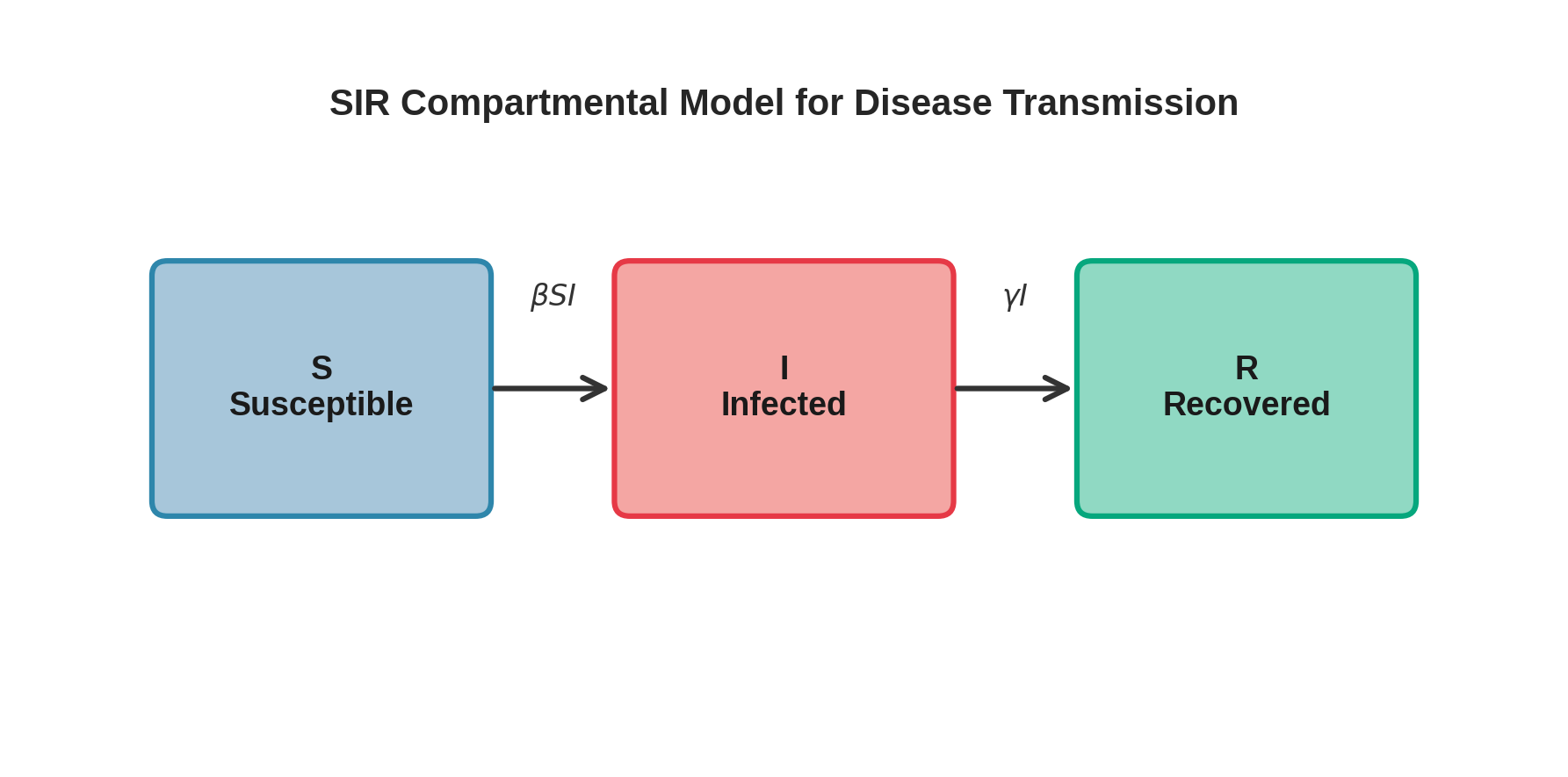
Berkeley Madonna is a powerful differential equation solver that has become an essential tool for epidemiologists modeling infectious disease dynamics. Originally developed at the University of California, Berkeley, this specialized simulation platform excels at implementing compartmental models such as SIR (Susceptible-Infected-Recovered), SEIR (Susceptible-Exposed-Infected-Recovered), and more complex variants that capture the nuances of disease transmission in populations.
Core Capabilities for Epidemiological Modeling
Berkeley Madonna's strength lies in its ability to rapidly prototype and solve systems of ordinary differential equations (ODEs) that describe disease progression through populations. The software provides an intuitive equation editor where researchers can define compartmental transitions using straightforward mathematical notation. For instance, a basic SIR model can be implemented with just a few lines of code, specifying transmission rates (β), recovery rates (γ), and population flows between compartments.
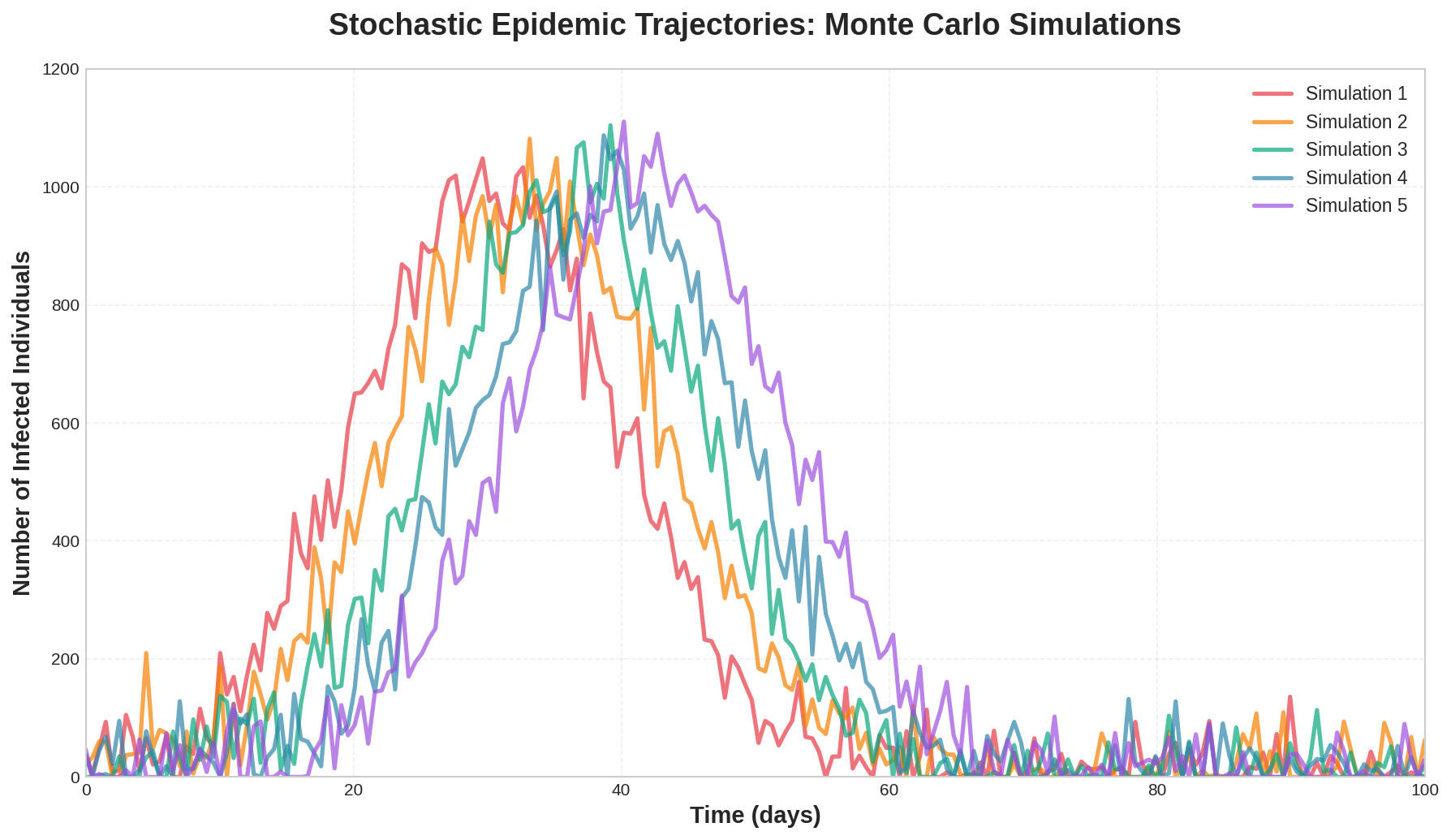
The platform supports both deterministic and stochastic modeling approaches. While deterministic models provide smooth, predictable trajectories useful for understanding general trends, stochastic implementations account for random variation in transmission events—critical when modeling small populations or early outbreak phases where chance plays a significant role. Berkeley Madonna's Gillespie algorithm implementation enables researchers to run Monte Carlo simulations that capture this inherent randomness.

Advanced Features for Outbreak Analysis
One of Berkeley Madonna's distinguishing features is its parameter estimation capability. Epidemiologists can fit model parameters to real-world outbreak data using built-in optimization algorithms. This allows researchers to estimate key epidemiological parameters like the basic reproduction number (R₀) directly from case count time series, providing quantitative insights into disease transmissibility and intervention effectiveness.
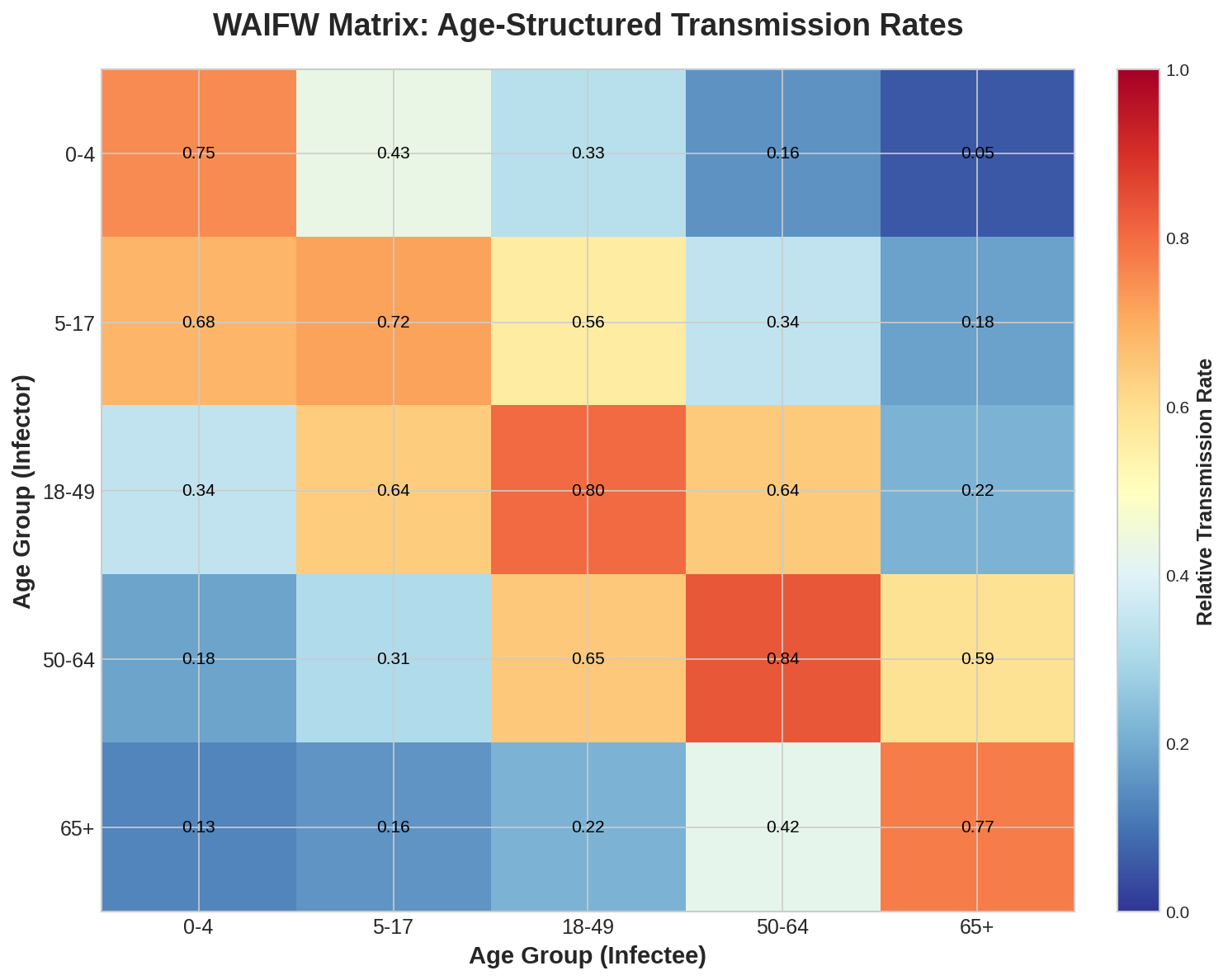
The software also supports age-structured and spatially-explicit models through matrix formulations. Researchers can implement WAIFW (Who Acquires Infection From Whom) matrices to capture heterogeneous mixing patterns between age groups—essential for diseases like influenza where transmission dynamics vary significantly across demographics. Similarly, metapopulation models can represent disease spread across connected geographic regions, accounting for human mobility patterns.
Berkeley Madonna's sensitivity analysis tools enable systematic exploration of parameter uncertainty. By varying input parameters across plausible ranges, researchers can identify which factors most strongly influence outbreak trajectories and assess the robustness of their predictions. This is particularly valuable when informing public health policy decisions that must account for uncertainty in disease characteristics.
Practical Applications in Public Health
During the COVID-19 pandemic, Berkeley Madonna was employed by numerous research groups to project hospital capacity needs, evaluate social distancing interventions, and assess vaccination strategies. The software's rapid computation speed—solving complex models in seconds—enabled real-time scenario analysis as new data emerged. Researchers could quickly test "what-if" scenarios: How would a 50% reduction in contact rates affect peak hospitalizations? What vaccination coverage is needed to prevent future waves?
The platform has also proven valuable for vector-borne disease modeling. Researchers studying malaria, dengue, and Zika virus use Berkeley Madonna to implement models that couple human and mosquito population dynamics, incorporating temperature-dependent transmission rates and vector control interventions. These models help predict seasonal outbreak patterns and optimize resource allocation for vector control programs.
Integration with Data Analysis Workflows
Berkeley Madonna supports batch processing and scripting, allowing researchers to automate parameter sweeps and integrate simulations into larger analytical pipelines. Results can be exported in standard formats for further analysis in statistical software like R or Python. The software also provides publication-quality plotting capabilities, enabling researchers to generate figures directly from simulation outputs.
For teams working on collaborative projects, Berkeley Madonna's text-based model files facilitate version control through systems like Git. Models can be easily shared, reviewed, and modified by multiple researchers, promoting reproducibility and transparency in epidemiological research.
Conclusion
Berkeley Madonna occupies a unique niche in the epidemiological modeling ecosystem. While more general-purpose platforms like MATLAB or Python offer greater flexibility, Berkeley Madonna's specialized focus on differential equation systems makes it exceptionally efficient for compartmental disease models. Its combination of ease of use, computational speed, and sophisticated analysis tools has made it a go-to platform for researchers needing to rapidly develop and analyze outbreak scenarios. As infectious disease threats continue to emerge globally, tools like Berkeley Madonna remain essential for evidence-based public health decision-making.
Further Resources
- Berkeley Madonna Official Website
- CDC Epidemic Modeling Resources
- MIDAS Network Modeling Resources
- Keeling, M.J. & Rohani, P. (2008). Modeling Infectious Diseases in Humans and Animals. Princeton University Press.