

GridLAB-D: Advanced Battery Energy Storage System Modeling for Distribution Grid Analysis
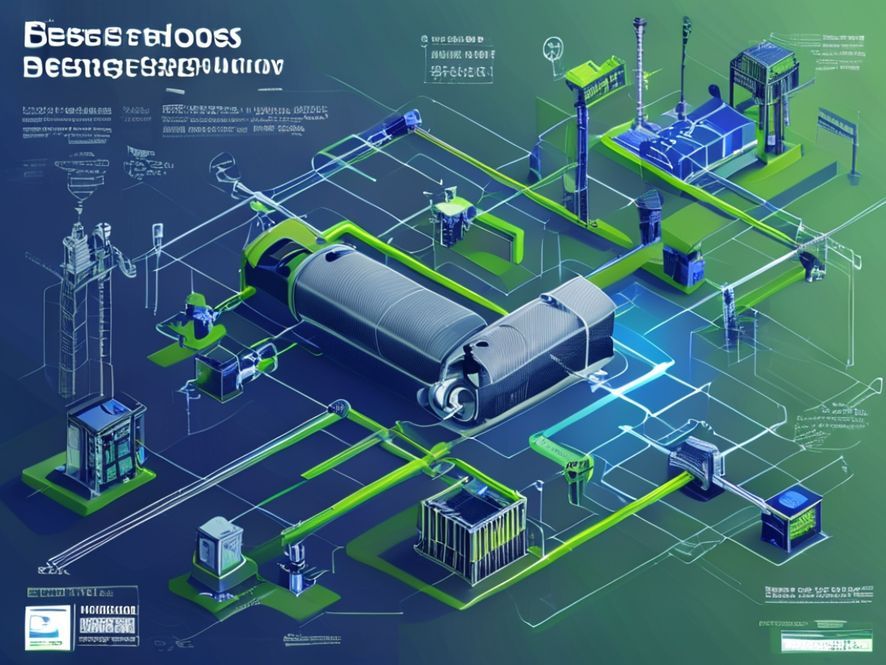
Battery Energy Storage Systems (BESS) are becoming critical components of modern distribution grids, providing frequency regulation, peak shaving, and renewable energy integration support. GridLAB-D, the open-source distribution system simulator developed by Pacific Northwest National Laboratory (PNNL), offers sophisticated BESS modeling capabilities that enable engineers to analyze complex storage system interactions with distribution networks under realistic operating conditions.
Advanced Battery Modeling Architecture
GridLAB-D's battery module implements a comprehensive electrochemical-thermal model that captures both electrical performance and thermal dynamics. Unlike simplified equivalent-circuit approaches, GridLAB-D's implementation accounts for state-of-charge (SOC) dependent voltage characteristics, internal resistance variations, and capacity fade mechanisms. The simulator supports multiple battery chemistries including lithium-ion (LFP, NMC, NCA), lead-acid, and flow batteries, each with chemistry-specific degradation models.
The battery object integrates seamlessly with GridLAB-D's powerflow solver, enabling co-simulation of electrical and control dynamics. Engineers can model bidirectional inverter characteristics, including efficiency curves, reactive power capability, and grid-forming or grid-following control modes. This level of detail is essential for evaluating BESS performance during voltage regulation, frequency response, and islanded microgrid operation.

Time-Series Control and Optimization Integration
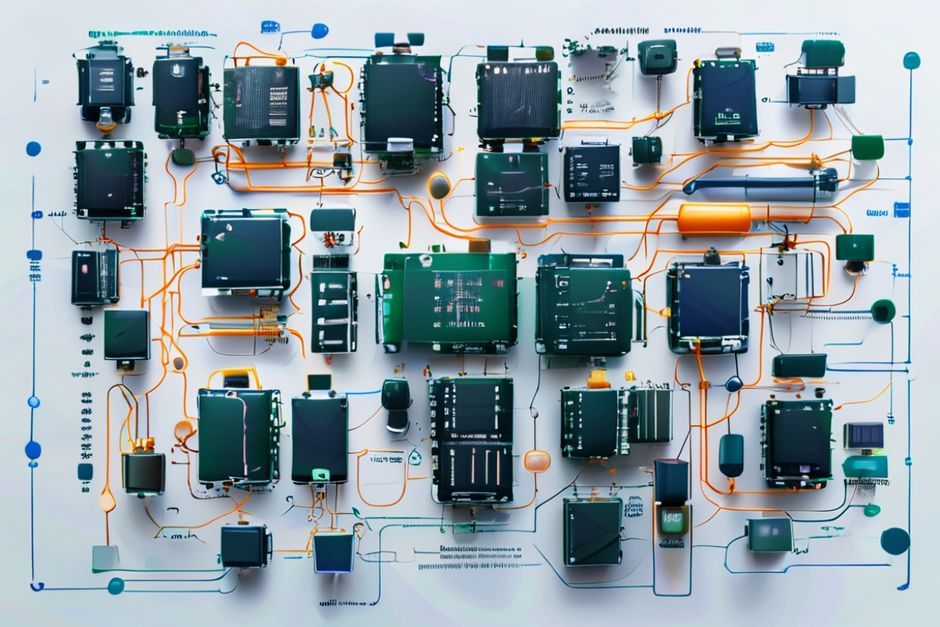
One of GridLAB-D's most powerful features for BESS analysis is its native support for time-series control strategies and external optimization interfaces. The simulator can execute rule-based control logic, such as time-of-use arbitrage or demand charge reduction, while simultaneously solving the distribution powerflow at sub-second resolution. This capability allows engineers to validate control algorithms under realistic grid conditions before field deployment.
For advanced applications, GridLAB-D provides Python and MATLAB interfaces through its GridLAB-D Python API (gridlabd-python) and FNCS (Framework for Network Co-Simulation) middleware. These interfaces enable model predictive control (MPC) implementations where external optimization engines compute optimal charge/discharge schedules based on forecasted load, renewable generation, and electricity prices. The co-simulation framework ensures that optimization decisions account for actual grid constraints including voltage limits, thermal ratings, and protection coordination.
Stochastic Analysis and Uncertainty Quantification
GridLAB-D excels at Monte Carlo simulation for BESS planning studies where uncertainty in load growth, renewable generation, and battery degradation must be quantified. The simulator's multi-run capability allows engineers to execute thousands of scenarios with varying input parameters, generating statistical distributions of key performance metrics such as battery cycle life, energy throughput, and economic returns.
The platform's climate module integrates historical weather data to model temperature-dependent battery performance and solar/wind generation variability. This feature is particularly valuable for evaluating BESS sizing and placement in distribution systems with high renewable penetration. Engineers can assess how seasonal temperature variations affect battery capacity, efficiency, and degradation rates across multi-year simulation horizons.
Practical Implementation Considerations
When implementing BESS models in GridLAB-D, several best practices enhance simulation accuracy and computational efficiency. First, selecting appropriate time-step resolution is critical—while sub-second steps capture fast transient dynamics, hourly or 15-minute intervals suffice for long-term planning studies. Second, validating battery parameters against manufacturer datasheets and field measurements ensures realistic performance predictions. GridLAB-D's parameter estimation tools can fit model coefficients to measured charge/discharge curves.
Third, proper modeling of inverter control modes significantly impacts results. Grid-forming inverters, which establish voltage and frequency references during islanded operation, require different control parameters than grid-following inverters that inject power based on grid voltage. GridLAB-D's inverter object supports both modes with configurable droop characteristics, virtual impedance, and fault ride-through capabilities.
Integration with Distribution System Planning
GridLAB-D's BESS modeling capabilities integrate naturally with broader distribution planning workflows. The simulator can evaluate how strategically placed battery systems defer traditional infrastructure upgrades such as transformer replacements or feeder reconductoring. By modeling BESS dispatch strategies that reduce peak loading, engineers can quantify the economic value of storage as a non-wires alternative.

The platform also supports advanced applications like transactive energy systems where BESS units participate in local energy markets. GridLAB-D's auction mechanism enables simulation of peer-to-peer energy trading and dynamic pricing schemes, providing insights into how distributed storage affects market clearing prices and grid stability.
Conclusion
GridLAB-D provides a robust, open-source platform for detailed BESS modeling in distribution system analysis. Its electrochemical-thermal battery models, flexible control interfaces, and stochastic simulation capabilities make it an essential tool for engineers designing and operating modern grids with energy storage. As battery deployment accelerates, GridLAB-D's comprehensive modeling framework will continue to support innovation in storage integration, control optimization, and grid resilience planning.
For more information, visit the GridLAB-D documentation and explore the PNNL GridLAB-D GitHub repository for the latest features and community contributions.