

Modelica and OpenModelica: Equation-Based Modeling for Multi-Domain Energy System Simulation
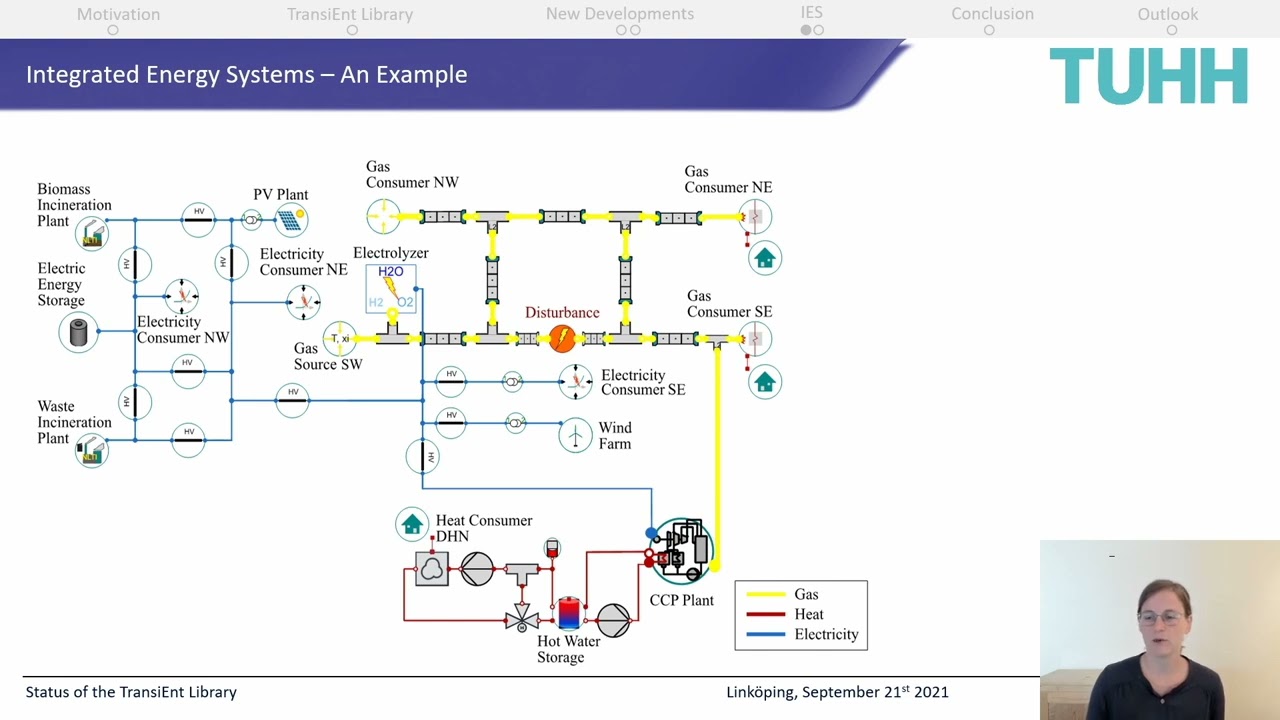
Modelica is an open, object-oriented, equation-based modeling language designed for the simulation of complex, multi-domain physical systems. Unlike tool-specific scripting environments, Modelica provides a vendor-neutral standard that enables engineers to model electrical grids, thermal plants, hydraulic networks, and control systems within a single unified framework. OpenModelica—the leading open-source implementation—brings this capability to a broad audience without licensing barriers, making it an increasingly popular choice for energy system engineers tackling integrated power-plant and grid-level studies.
Why Equation-Based Modeling Matters for Energy Systems
Traditional simulation tools often require the user to manually derive and implement differential equations in a procedural language. Modelica takes a declarative approach: the engineer describes what the system is (components and their connections), and the compiler automatically generates the underlying differential-algebraic equation (DAE) system. For energy applications this is transformative:
- Multi-domain coupling — A combined-cycle power plant model can simultaneously capture thermodynamic cycles, electrical generator dynamics, and PID control loops in one model, with physical connectors enforcing conservation laws at every interface.
- Reusable component libraries — The Modelica Standard Library (MSL) ships with hundreds of validated components: transformers, motors, heat exchangers, and more. Domain-specific libraries such as Buildings (LBNL) and PowerSystems extend coverage to district energy networks and transmission-level electrical models.
- Acausal connections — Unlike block-diagram tools that require explicit signal direction, Modelica connectors carry both effort and flow variables (e.g., voltage and current), allowing the same component model to be used in radically different circuit topologies without modification.
OpenModelica: Getting Started
OpenModelica (OMEdit IDE + OMC compiler) is freely available at openmodelica.org. Installation on Linux, Windows, and macOS is straightforward via package managers or installers.

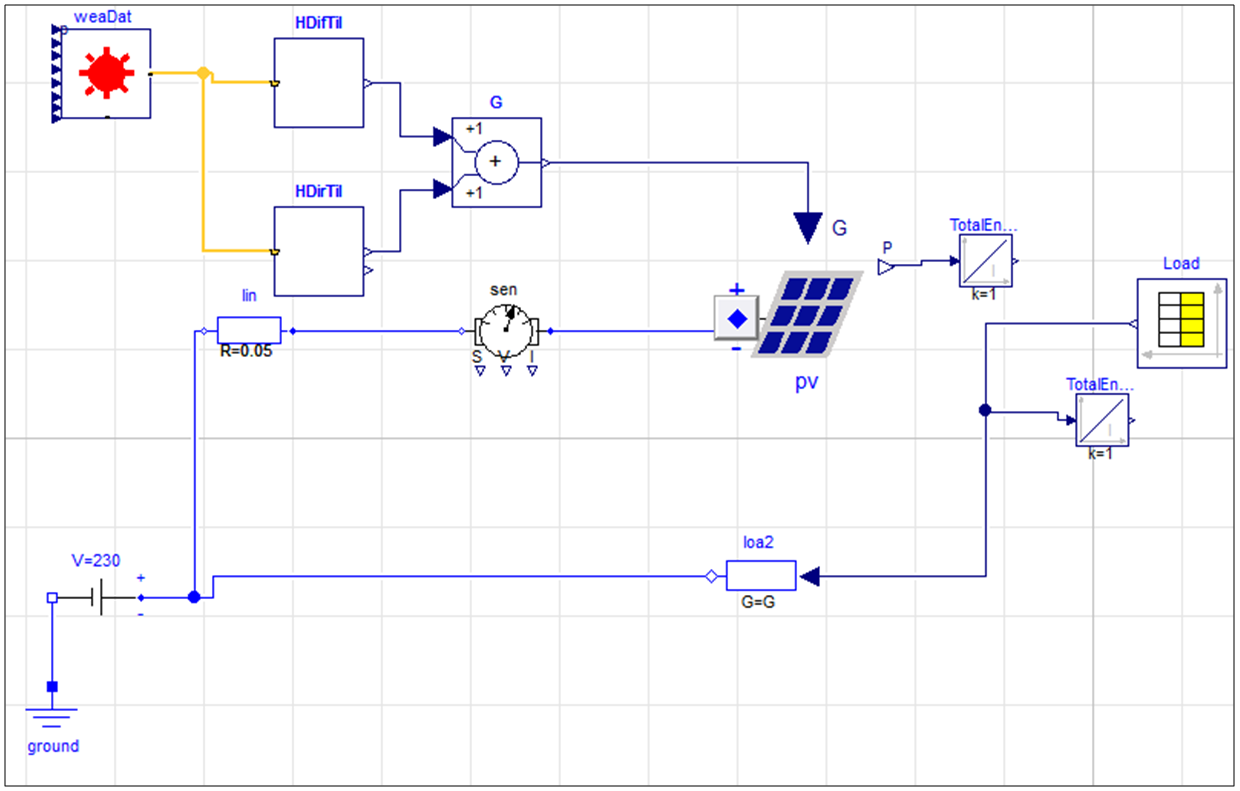
A minimal single-phase AC circuit illustrates the workflow:
model SimpleACGrid
  import Modelica.Electrical.Analog.Basic.*;
  import Modelica.Electrical.Analog.Sources.*;

  SineVoltage source(V=230, freqHz=50);
  Resistor    load(R=10);
  Ground      gnd;
equation
  connect(source.p, load.p);
  connect(load.n, source.n);
  connect(source.n, gnd.p);
end SimpleACGrid;
The compiler performs index reduction (Pantelides algorithm) and generates optimized C code for numerical integration. Simulation results are available in the OMEdit plot window or exported to CSV/MAT for post-processing in Python or MATLAB.
Key Capabilities for Power and Energy Engineers
1. Dynamic Power Plant Modeling
The ThermoPower library provides validated models of steam turbines, boilers, condensers, and feedwater heaters. Engineers can simulate start-up transients, load-following ramps, and fault responses—studies that are difficult to perform in steady-state process simulators. Coupling ThermoPower with Modelica's electrical library enables full unit-level dynamic studies including governor and AVR interactions.
2. Renewable Integration and Grid Dynamics
The PowerSystems library (available on the Modelica Association GitHub) supports phasor-domain and EMT-domain electrical models. Wind turbine and PV inverter models can be connected to multi-bus network representations to study frequency response, voltage regulation, and islanding behavior under high renewable penetration scenarios.
3. Building and District Energy Networks
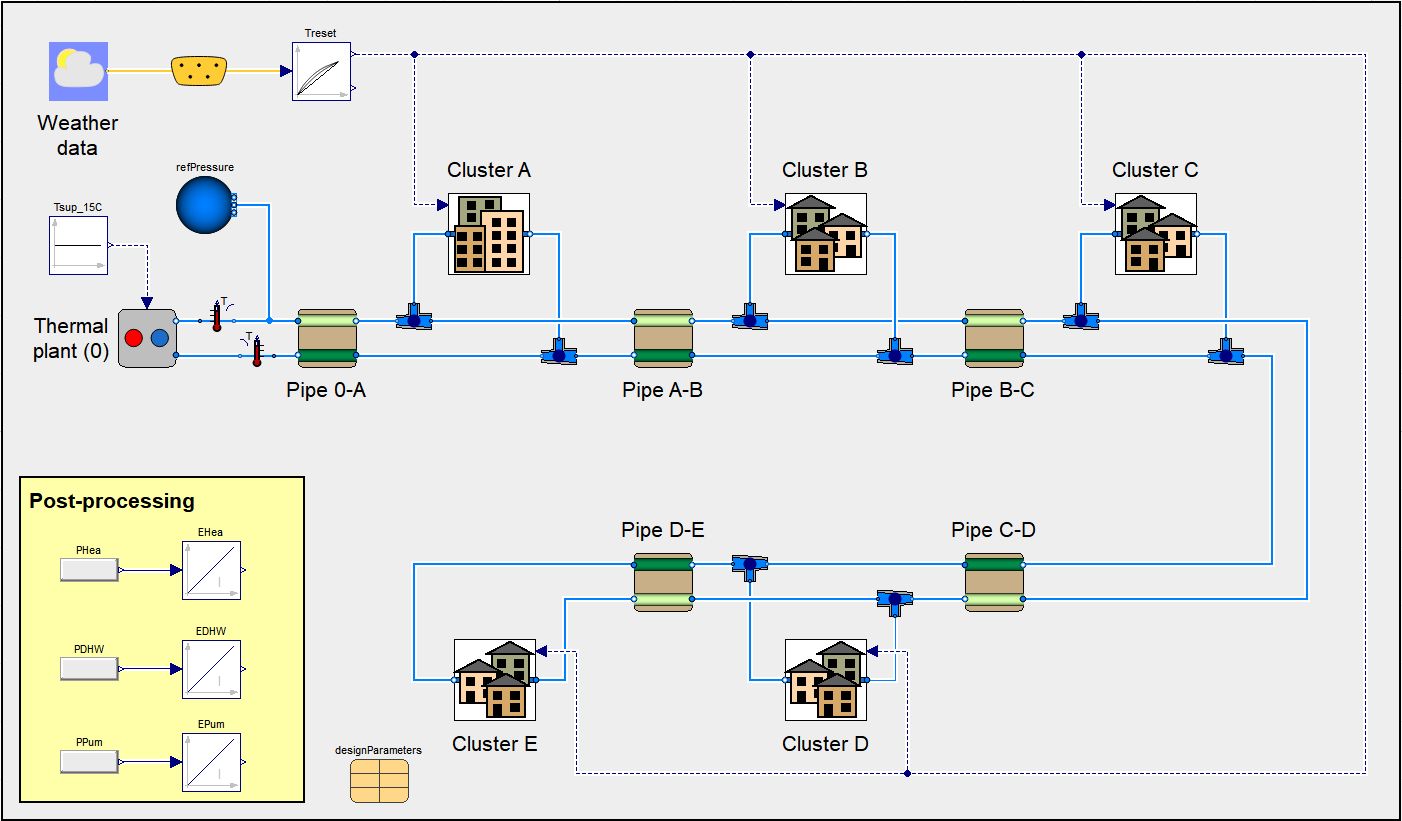
LBNL's Buildings library is the de facto standard for HVAC and district energy simulation. It integrates seamlessly with electrical models, enabling co-simulation of building thermal loads, heat pumps, battery storage, and grid tariff signals—a critical capability for demand-response and virtual power plant studies.
4. Hardware-in-the-Loop and Real-Time Targets
OpenModelica supports FMI (Functional Mock-up Interface) export, allowing compiled models to run inside Simulink, Dymola, or real-time platforms such as dSPACE and OPAL-RT. This makes it practical to validate control algorithms against high-fidelity plant models before hardware commissioning.
Practical Tips for Large-Scale Models
- Tearing and sorting: For large DAE systems, enable the
--matchingAlgorithm=PFPlusExtendedoption in OMC to improve equation sorting and reduce simulation time. - Initialization: Modelica's
initial equationsection is powerful but can be tricky. Usehomotopy()for models with strong nonlinearities (e.g., transformer saturation) to guide the solver to a physically meaningful steady state. - Vectorized components: Use
forloops and arrays of connectors to build scalable bus-bar or pipeline network models without copy-pasting component instances. - Version control: Store
.mofiles in Git. Modelica's text-based format diffs cleanly, unlike binary simulation files.
Comparison with Other Energy Simulation Tools
| Feature | OpenModelica | PSCAD | PSS®E | pandapower |
|---|---|---|---|---|
| License | Open-source (OSMC-PL) | Commercial | Commercial | Open-source (BSD) |
| Multi-domain | ✅ Full | ⚠️ Electrical/EMT only | ⚠️ Electrical only | ⚠️ Electrical only |
| EMT simulation | ✅ (PowerSystems) | ✅ Best-in-class | ❌ | ❌ |
| Thermal/HVAC | ✅ (Buildings, ThermoPower) | ❌ | ❌ | ❌ |
| FMI export | ✅ | ❌ | ❌ | ❌ |
| Scripting API | Python/OMPython | FORTRAN/Python | Python | Python |
Further Resources
- OpenModelica Documentation
- Modelica Standard Library on GitHub
- Buildings Library (LBNL)
- PowerSystems Library
- ThermoPower Library
- Modelica Association
Modelica and OpenModelica occupy a unique niche in the energy simulation landscape: no other open-source tool offers the same breadth of multi-domain physical modeling with a standardized, reusable component ecosystem. For engineers designing integrated energy systems—where electrical, thermal, and control domains interact—mastering Modelica pays dividends across the entire project lifecycle, from concept studies through hardware commissioning.