
PSS®E Dynamic Simulation: Mastering Transient Stability Analysis for Large-Scale Power Systems

Power system stability analysis has become increasingly critical as electrical grids integrate more renewable energy sources and face growing complexity. PSS®E (Power System Simulator for Engineering), developed by Siemens PTI, stands as one of the industry's most trusted tools for dynamic simulation and transient stability analysis. This article explores PSS®E's dynamic simulation capabilities and best practices for conducting effective transient stability studies.
Understanding PSS®E's Dynamic Simulation Engine
PSS®E's dynamic simulation module excels at modeling the time-domain behavior of power systems following disturbances such as faults, generator trips, or load changes. Unlike steady-state power flow analysis, dynamic simulation captures the evolving response of generators, excitation systems, governors, and protective relays over seconds to minutes following an event.
The software employs sophisticated numerical integration methods to solve the differential-algebraic equations (DAEs) that govern power system dynamics. PSS®E supports multiple integration algorithms, including the modified Euler method and implicit trapezoidal integration, allowing engineers to balance computational speed with accuracy requirements.

Key Features for Transient Stability Studies
PSS®E provides an extensive library of pre-built dynamic models covering synchronous machines, wind turbines, solar inverters, HVDC systems, and FACTS devices. The software's model library is continuously updated to reflect the latest IEEE and IEC standards, ensuring that simulations accurately represent modern grid equipment.
One of PSS®E's standout capabilities is its ability to handle extremely large systems—networks with tens of thousands of buses can be simulated efficiently. This scalability makes it the tool of choice for transmission system operators and regional reliability coordinators who must analyze interconnected grids spanning multiple states or countries.
The software's contingency analysis automation features allow engineers to define and execute hundreds of fault scenarios systematically. Users can specify fault locations, types (three-phase, line-to-ground, etc.), clearing times, and post-fault topology changes. PSS®E then automatically runs each scenario and generates comprehensive reports identifying stability margins and potential violations.
Best Practices for Effective Dynamic Simulation
Successful transient stability analysis in PSS®E begins with proper model initialization. Engineers must ensure that the steady-state power flow solution converges before launching dynamic simulations. Any mismatches in generator output, voltage setpoints, or load levels will propagate into the dynamic study, producing unreliable results.
Model validation is equally critical. PSS®E users should compare simulation results against field measurements or disturbance recordings whenever possible. Many utilities maintain libraries of validated dynamic models derived from commissioning tests and actual system events. Leveraging these validated models significantly improves simulation fidelity.
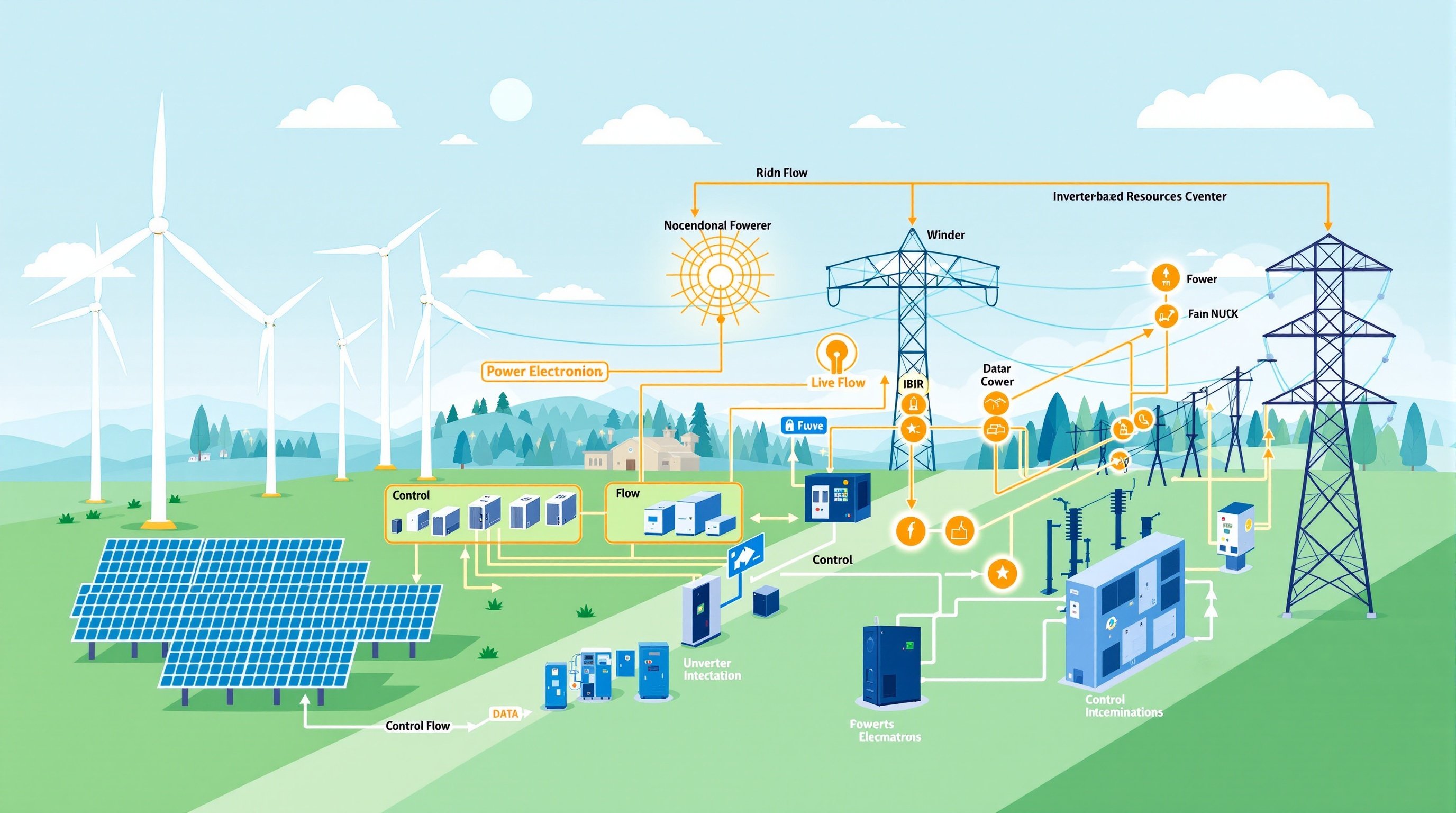
When analyzing systems with high renewable penetration, special attention must be paid to inverter-based resource (IBR) models. Modern wind and solar plants exhibit fundamentally different dynamic characteristics than conventional synchronous generators. PSS®E's generic renewable energy system models (REGC_A, REEC_B, etc.) provide standardized representations, but proper parameterization requires detailed manufacturer data and sometimes field testing.
Advanced Analysis Techniques
PSS®E supports modal analysis capabilities that complement time-domain simulation. Small-signal stability analysis using eigenvalue methods helps identify oscillatory modes and their damping characteristics. This information guides the tuning of power system stabilizers (PSS) and the design of supplementary damping controllers for FACTS devices.
The software's Python API (psspy) enables advanced users to automate complex workflows, perform parametric studies, and integrate PSS®E with other analysis tools. Python scripting is particularly valuable for Monte Carlo simulations that assess stability under uncertain conditions such as variable renewable generation or load forecast errors.
Integration with Planning and Operations
PSS®E dynamic simulation results inform critical planning decisions including transmission expansion, generator interconnection studies, and protection system coordination. The software's ability to export results in multiple formats facilitates integration with visualization tools and reporting systems.
For real-time operations, some utilities use PSS®E models as the foundation for online dynamic security assessment (DSA) systems. These applications continuously evaluate system stability margins and provide operators with early warnings of potential instability.
Conclusion
PSS®E's dynamic simulation capabilities provide power system engineers with a robust platform for transient stability analysis. Its comprehensive model library, scalability, and automation features make it indispensable for analyzing modern grids with diverse generation portfolios. By following best practices in model initialization, validation, and IBR representation, engineers can leverage PSS®E to ensure reliable grid operation in an era of rapid transformation.

For more information, visit the Siemens PTI PSS®E product page or consult the IEEE Power & Energy Society for standards and technical papers on power system stability analysis.