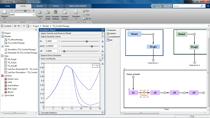
MATLAB SimBiology: Advanced Biomedical Simulation and Systems Biology Modeling

title: “MATLAB SimBiology: Advanced Biomedical Simulation and Systems Biology Modeling”
slug: “matlab-simbiology-biomedical-simulation-systems-biology”
category: “Healthcare & Biomedical”
tags: [“MATLAB”, “SimBiology”, “biomedical simulation”, “systems biology”, “pharmacokinetics”,
“pharmacodynamics”, “drug development”]
featured_image: “https://i.ytimg.com/vi/FLM1xPOiaSs/maxresdefault.jpg”
excerpt: “Discover MATLAB SimBiology, the comprehensive toolbox for modeling, simulating, and ana‐
lyzing biological systems, enabling breakthrough research in pharmacokinetics, systems biology, and
quantitative systems pharmacology.”
seo_keywords: [“MATLAB SimBiology”, “biomedical simulation”, “systems biology”, “pharmacokinetics
modeling”, “drug development”, “biological systems modeling”]
MATLAB SimBiology: Advanced Biomedical
Simulation and Systems Biology Modeling
MATLAB SimBiology is a specialized toolbox within the MATLAB environment designed for the compre‐
hensive modeling, simulation, and analysis of biological systems. It serves as a powerful platform for
researchers and engineers in fields such as systems biology, pharmacokinetics (PK), pharmacodynam‐
ics (PD), and quantitative systems pharmacology (QSP), enabling them to gain deep insights into
complex biological processes and drug interactions.
Overview and Purpose
SimBiology simplifies the often intricate process of setting up and solving models that would otherwise
demand extensive expertise in differential equations and considerable debugging effort. It offers both
1

a graphical, intuitive interface through its Model Builder app and a robust programmatic interface via
MATLAB scripts, allowing for flexibility, customization, and automation of analyses.
The toolbox translates biological descriptions into a system of ordinary differential equations (ODEs)
based on mass-balance principles, which are then numerically integrated to simulate the system’s be‐
havior over time. This approach enables researchers to move from conceptual biological
understanding to quantitative predictions and insights.
Core Components and Model Structure
SimBiology models are constructed from fundamental biological and chemical entities, which interact
according to defined rules and reactions. The basic concepts and components that form the
foundation of any SimBiology model include:
Fundamental Building Blocks
Compartments: These define the spatial context or “space” within which biological reactions and
processes occur. A model can have one or multiple compartments, representing different cellular loca‐
tions (e.g., cytoplasm, nucleus), organs (e.g., central compartment, peripheral compartment), or even
abstract spaces. Each compartment can have a defined capacity or volume.
Species: Species represent the chemical or biological entities that exist within compartments and par‐
ticipate in reactions. These can be molecules (e.g., drugs, enzymes, substrates, products), cells (e.g.,
tumor cells), or other quantifiable biological components. Species have initial amounts or
concentrations that define their starting state in a simulation.
Parameters: Parameters are constants or variables that represent fixed values, such as reaction rate
constants, clearance rates, volumes of distribution, or maximum drug effects. They are crucial for
defining the kinetics of reactions and the properties of the system.
Reactions: Reactions define how species interact and transform within or between compartments.
They describe the conversion of one species into another, the binding of molecules, or the elimination
of substances. SimBiology automatically derives the underlying ODEs from these reactions using
mass-balance principles.
Rules: Rules define mathematical relationships or constraints within the model that are not directly
represented by reactions. These can include assignment rules, rate rules, or algebraic rules.
Events: Events represent discrete, instantaneous transitions in the value of a quantity or expression
within a model. Events are triggered when a specified condition is met and can be used to model
sudden changes, such as bolus drug administration or environmental condition changes.
2
Key Features and Capabilities
Model Builder App
The SimBiology Model Builder app provides a graphical interface where users can visually construct
and manage model components. It uses contextual icons to provide additional information about mod‐
el components in browser tables and blocks in the Diagram tab, aiding in model development and de‐
bugging.
Simulation and Analysis
For model simulation, SimBiology employs numerical integration techniques to solve the derived
ODEs. Users can configure simulation settings, including the solver type (e.g., ode15s for stiff sys‐
tems) and control the accuracy of integration using AbsoluteTolerance and RelativeTolerance para‐
meters.
Programmatic Interface
The programmatic interface using MATLAB scripts allows for greater control and flexibility. Functions
like sbiomodel , addcompartment , addspecies , addreaction , adddose , getconfigset , and sbiosimu‐
late are essential for programmatic model creation and simulation.
Applications in Biomedical Research
Pharmacokinetics (PK) and Pharmacodynamics (PD) Modeling
SimBiology is extensively used in drug development for modeling and simulating PK/PD processes,
which are critical for understanding how drugs are absorbed, distributed, metabolized, and excreted
(PK) and how they exert their effects on the body (PD).
One-Compartment PK Model: A fundamental model used to describe drug concentration in the
body as if the body were a single, well-mixed compartment. This involves a Central compartment
and a Drug species, with parameters like CL (Clearance) and V (Volume of distribution) defining the
elimination rate.
Two-Compartment PK Model: This model provides a more refined representation of drug distribu‐
tion, accounting for drug exchange between a central compartment (blood, highly perfused organs)
and a peripheral compartment (tissues). It includes bidirectional exchange between compartments
and more complex elimination patterns.
Tumor Growth with Drug Intervention: This demonstrates how SimBiology can model disease pro‐
gression and therapeutic effects. The model incorporates tumor growth dynamics (often using Gom‐
pertzian growth models) and drug effects using Emax models to show how therapeutic interventions
affect disease progression.
Systems Biology and Metabolic Pathways
SimBiology is well-suited for modeling complex biological networks, including metabolic pathways,
signal transduction cascades, and gene regulatory networks.
Enzyme Kinetics (Michaelis-Menten): This classic example illustrates how SimBiology can model
biochemical reactions using established kinetic principles. The model demonstrates substrate deple‐
tion and product formation over time, showing characteristic saturation kinetics of enzyme-catalyzed
reactions.
3

Biological Variability and Population Studies
SimBiology allows for the simulation of responses to biological variability and different dosing regi‐
mens. This is crucial for understanding population-level responses and designing optimal treatment
strategies. The toolbox can be extended with add-ons for advanced model analysis, such as virtual
population simulations.
Integration with MATLAB Ecosystem
Broader MATLAB Capabilities
While SimBiology focuses on dynamic biological systems, MATLAB as a whole provides extensive
capabilities for biomedical engineering:
Medical Data Analysis: MATLAB facilitates the import, preprocessing, visualization, and analysis of
diverse medical data types, including physiological signals, genomic data, and clinical data.
Signal Processing: The Signal Processing Toolbox enables extraction of valuable information from
physiological signals like ECG, EEG, and EMG through filtering, spectral analysis, and feature extrac‐
tion.
Image Analysis: The Image Processing Toolbox enables biomedical engineers to enhance, segment,
and analyze medical images, particularly useful for MRI analysis, image registration, and
histopathological image analysis.
Machine Learning and Statistics: MATLAB’s Statistics and Machine Learning Toolbox offers power‐
ful tools for analyzing clinical and genomic data, enabling classification, regression, and clustering to
identify patterns and make predictions.
Best Practices for SimBiology Projects
Model Development and Validation
Modularize Code: Break down complex models and analysis scripts into smaller, reusable functions
to improve organization, readability, and maintainability.
Rigorous Verification and Validation: Implement a clear V&V plan early in development, including
documentation of testing procedures, validation criteria, and methods for assessing model accuracy.
Systematic Model Testing: Conduct unit testing of individual agent behaviors, integration testing of
agent interactions, and comprehensive validation against real-world data when available.
Documentation and Collaboration
Thorough Documentation: Add comprehensive comments to MATLAB scripts and detailed descrip‐
tions within SimBiology models for compartments, species, reactions, and parameters to enhance
readability and reproducibility.
Version Control: Implement version control systems (e.g., Git) to track changes in code and models,
crucial for collaborative projects.
Community Engagement: Engage with the SimBiology community through platforms like MATLAB
Central for access to shared models, code, discussions, and resources.
4
Performance Optimization
Optimize Performance: For computationally intensive simulations, especially those involving large
virtual populations or complex models, optimize code execution speed using MATLAB techniques like
vectorization and parallel computing.
Sensitivity Analysis: Perform sensitivity analysis to understand how changes in model parameters
affect simulation outputs, helping identify critical parameters and guide experimental design.
Uncertainty Quantification: Account for uncertainty in model parameters and initial conditions, us‐
ing SimBiology’s capabilities to propagate uncertainties through simulations.
Advanced Features and Extensions
Parameter Estimation and Optimization
SimBiology includes tools for optimizing control system models and estimating model parameters from
experimental data. Optimization algorithms can be used to tune controller parameters, enhance sys‐
tem performance, and minimize control errors. Parameter estimation tools facilitate system
identification from input-output data.
Integration with Other Tools
LiveLink for MATLAB: SimBiology seamlessly integrates with other MATLAB toolboxes and external
tools, enabling comprehensive analysis workflows.
Data Import/Export: The platform supports various data formats for importing experimental data
and exporting results for further analysis.
Virtual Population Modeling
Advanced add-ons enable virtual population simulations, which help explore the impact of inter-
individual variability on drug response, crucial for personalized medicine approaches.
Comparison with Other Biomedical Software
While MATLAB SimBiology is a leading choice for biomedical engineering, other software options in‐
clude:
Python: Offers powerful libraries like NumPy, SciPy, and scikit-learn with similar functionalities.
Python is open-source with a vast community.
R: Widely used for statistical analysis and visualization in biomedical fields, also open-source with rich
bioinformatics packages.
LabVIEW: Specialized software excelling in data acquisition and analysis from laboratory instruments.
Specialized Modeling Software: Tools like COPASI, CellDesigner, or SBML-compliant software for
specific aspects of systems biology modeling.
Conclusion
MATLAB SimBiology stands as a cornerstone for biomedical simulations, offering a comprehensive and
user-friendly environment for modeling, simulating, and analyzing complex biological systems. Its abil‐
ity to handle diverse applications, from drug pharmacokinetics to intricate cellular processes, coupled
5
with its robust features and the broader MATLAB ecosystem, makes it an invaluable tool for advancing
research and innovation in biomedical engineering and health sciences.
By adhering to best practices in model development, validation, and documentation, researchers can
leverage SimBiology’s full potential to derive meaningful insights, accelerate drug development, and
contribute to improved healthcare outcomes. The platform’s continued evolution and integration with
emerging technologies position it at the forefront of computational biology and biomedical research.
References
MATLAB SimBiology Official Documentation (https://www.mathworks.com/products/simbiology.html)
SimBiology Model Builder (https://www.mathworks.com/help/simbio/simbiology-apps.html)
SimBiology Community (https://www.mathworks.com/matlabcentral/simbiology.html)
Pharmacokinetic Modeling with SimBiology (https://www.mathworks.com/help/simbio/ex‐
amples.html)
Systems Biology Modeling Resources (https://www.mathworks.com/solutions/computational-bio‐
logy.html)
•
•
•
•
•
6